Plant Science Research Weekly
A weekly plant science research roundup curated and summarized by our Plantae Editors and Fellows


A weekly plant science research roundup curated and summarized by our Plantae Editors and Fellows
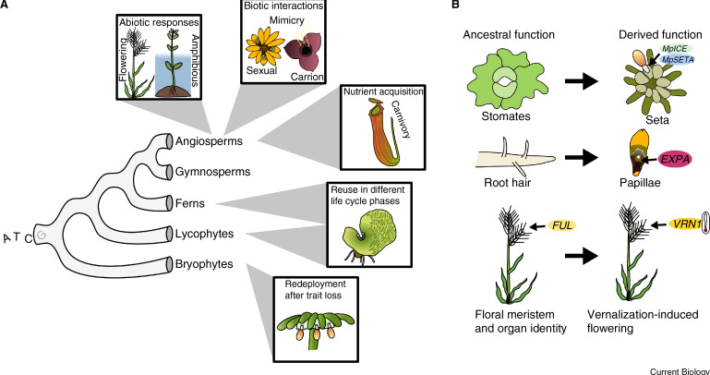
The diversity in plants’ adaptations and evolution is vast. One driver of this variety gaining traction in evolutionary studies is gene co-option, or “tinkering”, the ability to repurpose existing genes for new purposes. In a recent review by Di Stilio and Garcia, the authors bring together recent…

Spirogyra is not your typical bottom-of-the-lake green sludge. It is a freshwater green alga in the class Zygnematophyceae. This group is considered to contain the closest living relatives of land plants.…

A recent study from Miguel Blázquez´s lab addressed the question of how plants integrate light and temperature information through a comparative analysis of four plant lineages, from algae to flowering…

Iron is essential for plant growth and development, but its availability in soil is often limited. Besides absorbing iron from the soil, plants can also reuse iron stored in their cell walls, although…

As leaves age, they gradually lose chlorophyll and begin to turn yellow, a process known as leaf senescence. Although this process helps plants recycle nutrients, delaying it can be beneficial for crops…

The root system architecture of dicot plants relies on lateral root spacing. Lateral roots are primed via auxin maxima in the main root that mark prebranch sites where lateral roots may later develop.…

How does a plant determine the angle at which a new lateral root should grow? A recent study by Farkas et al. reveals that the answer may depend not only on how plants perceive gravity, but when they perceive…

Karrikins (KARs) are a class of molecules that are hypothesized to mimic an undiscovered plant hormone KL (KAI2 Ligand). The signaling cascade triggered by KAR/KL is initiated by the α/β-hydrolase,…

Flowering at the right time is essential for plants to balance vegetative growth and reproduction. In Arabidopsis, long days induce CONSTANS (CO) to activate the transcription of FLOWERING LOCUS T (FT)…

Meiosis, the process of generating gametes in sexually reproducing organisms, typically includes the shuffling of genetic information between homologous chromosomes from each parent. This process leads…

In plants, maternal inheritance of mitochondria is a common phenomenon, resulting from the elimination of paternal mitochondrial DNA during pollen development or by the degradation of paternal mitochondria…

Salicylic acid (SA) is a plant hormone that plays a central role in defence against pathogens. In Arabidopsis thaliana, SA is perceived by NPR1, NPR3 and NPR4, but how these receptors regulate defence…
Each week, the Plantae editors select new plant science research articles to highlight. The short summaries describe the question addressed and key findings, with links to the article.
