No need for shuffling: Sexual reproduction without crossovers results in clonal reproduction
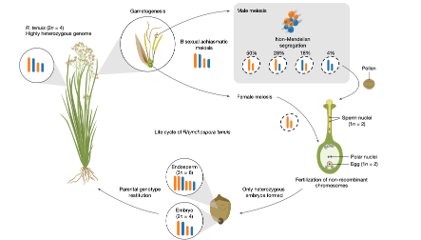 Meiosis, the process of generating gametes in sexually reproducing organisms, typically includes the shuffling of genetic information between homologous chromosomes from each parent. This process leads to the exchange of DNA between these chromosomes, ultimately contributing to greater genetic diversity for the offspring. In the quill beak-sedge Rhynchospora tenuis, which is native to tropical America, sexual reproduction occurs without crossovers and leads to clonal reproduction. Combining chromosome-scale pangenomics, molecular cytogenetics, immunohistochemistry and single-gamete sequencing, a team of researchers investigated the unique reproduction of this species. The absence of chiasmata (crossovers) appears to be present in the formation of both male and female gametes. In male gamete formation, meiosis appears to happen normally, with core meiotic machinery expressed as usual. However, a key crossover gene SHOC1 is transcriptionally silenced due to epigenetic repression. Interestingly, only one of four resultant meiotic products in male games matures into functional pollen, leading to male meiotic drive where larger, transposable-element rich chromosomes are favoured. The researchers assessed whether this behaviour could be caused by apomixis, where seed formation happens without fertilization or meiosis. They found that in R. tenuis, seed formation requires fertilization, and strong post-fertilization selection supports the survival of only heterozygous zygotes, ultimately leading to clonal-like inheritance. This research opens an interesting question on whether this type of reproduction could be an intermediate stage in a transition to obligate asexuality. (Summary by Anastasia Kolesnikova Linkedin: https://www.linkedin.com/in/n-ksci/) Nature 10.1038/s41586-026-11057-7