Autophagy “eats” paternal mitochondria in rice
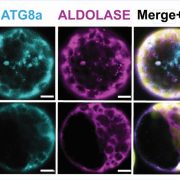
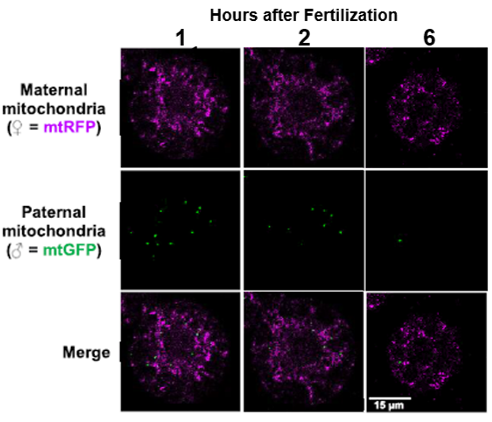 In plants, maternal inheritance of mitochondria is a common phenomenon, resulting from the elimination of paternal mitochondrial DNA during pollen development or by the degradation of paternal mitochondria after fertilization. A recent study by Aini et al. provides new insights into the fate of paternal mitochondria in rice. Visualization of mitochondria (with and without detectable nucleoids, DNA condensates) in sperm cells suggested that mitochondrial DNA degradation may begin during microgametogenesis. The authors fertilized egg cells expressing mtRFP in vitro with sperm cells expressing mtGFP. Strikingly, paternal mitochondria progressively declined after fertilization, with only a small number detectable after 6 hours, whereas maternal mitochondria abundance remained unchanged. To elucidate the selective degradation pathway, the authors treated rice zygotes with inhibitors targeting cysteine proteinases, the proteasome, and autophagy. Cysteine proteinase and proteasome inhibitors showed no effects on the stability of paternal mitochondria. In contrast, an autophagy inhibitor stabilized paternal mitochondria in developing zygotes. Autophagic bodies were observed in zygotes, with mitochondria engulfed within a possible autophagosome. This study provides direct evidence that autophagy selectively and rapidly eliminates paternal mitochondria after fertilization in plants. (Summary by Priyanka Babuta) Plant Physiol. 10.1093/plphys/kiag609