
Review: Shuffling genes for better breeds
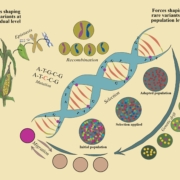
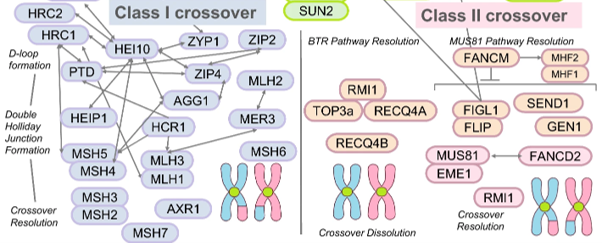 During meiosis, the cell division process that generates four distinct gametes, chromosomes exchange genetic material during homologous recombination. Homologous recombination is a complex process that is tightly controlled in location and frequency – each chromosome must have at least one crossover (where the genetic material is exchanged). But why is this process so important and what do we get out of understanding it? Plant breeders work within the constraints of recombination to generate new plant varieties that are better adapted to future climates or have better trait combinations. Therefore, understanding the molecular processes happening during recombination can offer new strategies and tools to generate desirable plant varieties. Kolesnikova et al. present a visual summary of the complex protein players in homologous recombination. They then cover recent developments in harnessing the molecular knowledge of this process to change recombination frequencies, locations or even decrease recombination all together. This primer should be useful for those interested in the molecular detail of homologous recombination, as well as for those curious about how we can use it to our advantage to breed better crops for the future. (Summary by Anastasia Kolesnikova) Theoretical and Applied Genetics 10.1007/s00122-026-05297-4