The Spirogyra genome is out: What does it mean for plant evolution research?
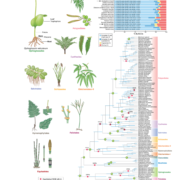
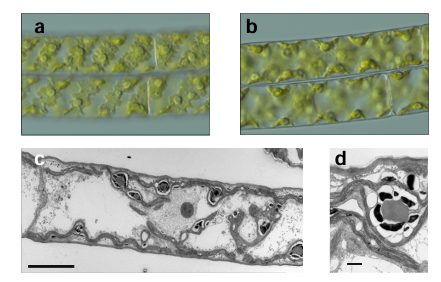 Spirogyra is not your typical bottom-of-the-lake green sludge. It is a freshwater green alga in the class Zygnematophyceae. This group is considered to contain the closest living relatives of land plants. Since the true ancestor of land plants is extinct, we look to this group for clues about how plants emerged from water onto land. This is exactly what a recent study by Goldbecker et al. set out to achieve. They performed whole-genome sequencing of Spirogyra pratensis. They found that, although it has a relatively small genome, it has a high gene density (221.2 genes/Mbp) and many gene duplication events. Using the mapped genes, the authors performed transcriptional tracing of the Spirogyra life cycle and found transcriptional differences between the vegetative and generative phases. In addition, they performed physiological tests using high-light stress, followed by global RNA-seq analysis, and found upregulation of stress-signaling modules and downregulation of the photosynthetic machinery. Most remarkable of all was the discovery of how its spiral chloroplasts divide. Spirogyra lacks most plastid division genes, including FtsZ, a protein of the inner division ring in plastids and bacteria. Instead, it appears to rely on dynamin proteins, of which it has eight homologs. That brings us back to why these findings matter for plant evolution research. Spirogyra represents a unique model for studying genome reduction and for understanding stress responses that predate plant terrestrialization. (Summary by Katarina Kurtović, katarinakurtovic.bsky.social) Plant Cell 10.1093/plcell/koag224