

Plant Science Research Weekly: September 18, 2026
Review: Plant digital twins, the future of crop production
 Imagine how cool it would be if, just like we check weather apps before going out, we could “grow” a plant in our computer before planting it into our backyard, in order to predict its future success. Pauli et al. discuss this possibility through the use of Digital Twins (DTs), virtual plants that are continuously updated with data from their real counterparts. The authors suggest that DTs could help to study crop performance and how genetic differences lead to changes in plant growth, physiology, architecture, and yield under different environments. The system could collect 3D point-cloud data (a digital representation of a 3D object), thermal and hyperspectral images, leaf traits, soil moisture, temperature, humidity, wind, and light from the real plant. An AI-enabled cyberinfrastructure system would process this data and integratae it into a functional–structural plant model. A bi-directional ray-tracing simulator can calculate the light and shading in a canopy and multiple plant DTs could be combined to make an in silico crop canopy as a crop growth model. The most ambitious idea of this paper is to predict the various biological parameters, such as flowering behavior, developmental rate, and photosynthetic capacity, use genomic predictions to create a genotype-specific virtual plant, let that virtual plant interact with different simulated environments, and observe the predicted crop performance. Overall, this paper offers a new avenue to understand genetic variation and proposes a framework that connects genes, biology, environment and crop performance is a single frame. (summary by Kavita Joshi @JoshiKvita) Trends Plant Sci. 10.1016/j.tplants.2026.06.005
Benzaldehyde reductases complete the salicylic acid biosynthesis puzzle
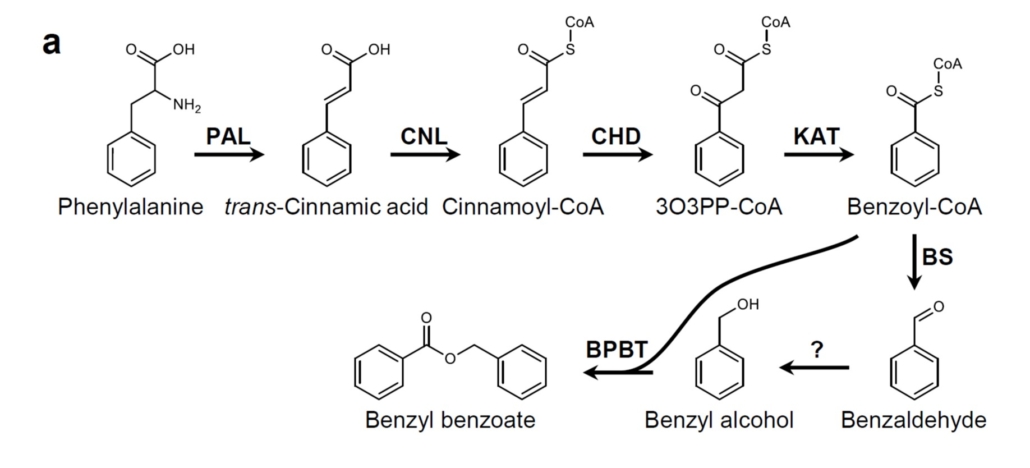
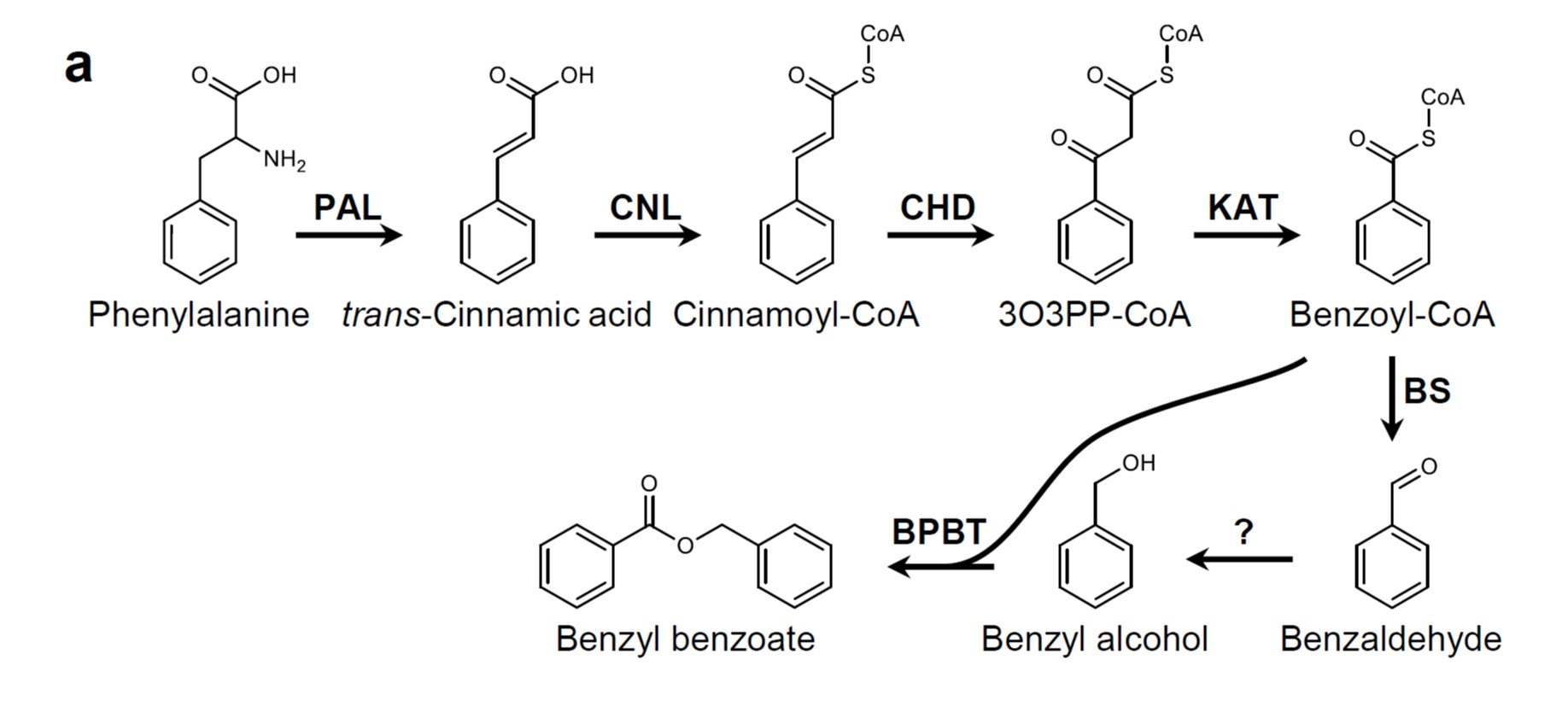 Benzyl alcohol is a volatile compound and the scent molecule of several seed plants. It also can be converted to benzyl benzoate, which is one of the routes to salicylic acid (SA) production in plants. The flowers of Petunia hybrida are wonderful factories of benzyl alcohol, prompting Lee et al. to use it as a model to study benzyl alcohol synthesis. Previous work indicated that benzyl alcohol could potentially be produced by phenylacetaldehyde reductase (PAR) or cinnamoyl alcohol dehydrogenase (CAD) enzymes using nicotinamide adenine dinucleotide phosphate (NADPH) as a cofactor. Leveraging the powerful combination of sequence similarity-based homolog search for these two enzymes and proteomic analyses involving anion exchange chromatography and NAD(P)-binding domains, Lee and colleagues discovered two benzaldehyde reductases (BRs) that differed in three amino acid residues in P. hybrida. Heterologous expression in E. coli confirmed the activity of these two proteins in reducing benzaldehyde to give benzyl alcohol that subsequently leads to SA biosynthesis. Interestingly, computational predictions and experiments on the localization of these proteins across a number of plant species identified a species-specific localization. Phylogenetic analyses of the petunia BRs placed them in a distinct clade in the cinnamyl alcohol dehydrogenase (CAD) phylogenetic tree that showed a mixed occurrence of protein localization as opposed to the uniform localization in other CAD clades. Nature is indeed a marvelous tinkerer and customization specialist! (Summary by Shakunthala Natarajan @shakunthalan.bsky.social) Nature Comms 10.1038/s41467-026-75494-8
Oxygen: A hidden developmental cue in leaf morphogenesis
 Oxygen is always considered something living forms need to survive. But wait, its role is beyond just respiration. Would you believe if I told you oxygen guides the development of young leaves? A recent study by Panicucci et al. reveals that oxygen acts as a signalling molecule, affecting cell proliferation and differentiation during leaf development. New leaves maintain low oxygen as they emerge from the shoot apical meristem, and progressive oxygenation creates an oxygen gradient from the distal to proximal base that helps in shaping leaf development. To investigate how this oxygen gradient affects development, the authors observed Arabidopsis leaf development under modified oxygen atmospheres. Hypoxia (4% O₂) caused complex, deeply serrated leaves, while hyperoxia (40% O₂) resulted in reduced leaf size. The authors also linked this effect to the Cys branch of the N-degron (oxygen-sensing) pathway, in which plant cysteine oxidases (PCOs) perceive hypoxia and stabilize ERFVII transcription factors. Interestingly, PCO mutant plants showed persistent hypoxia signalling with smaller, rounder, and more highly serrated leaves. Transcriptomic and cellular phenotyping showed impaired stomatal complexes, trichome patterning and chlorophyll biosynthesis, and inhibiting ERFVII rescued these phenotypes. Together, the findings position oxygen as a positional cue that influences leaf morphology. (Summary by Priyanka Babuta) Science Advances 10.1126/sciadv.aef2430
How chromatin changes shift CHH methylation pathways in soybean
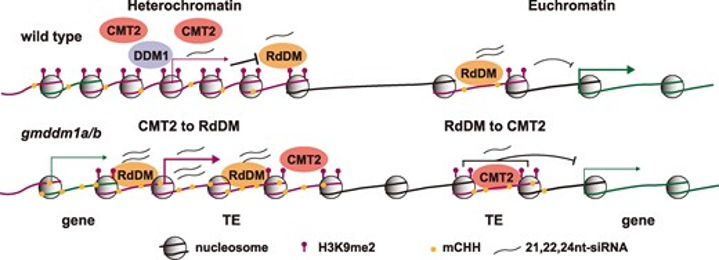 DECREASED IN DNA METHYLATION 1 (DDM1) is a chromatin remodeler that regulates nucleosome organization and facilitates access of DNA methyltransferases to heterochromatic regions enriched in transposable elements (TEs), contributing to DNA methylation, TE silencing, and genome stability. In plants, CHH methylation is established and maintained through distinct pathways operating in different chromatin contexts: CHROMOMETHYLASE 2 (CMT2) primarily targets heterochromatic regions enriched in H3K9me2 and associated with long TEs, whereas RNA-directed DNA methylation (RdDM) contributes to CHH methylation in more accessible regions, including small TEs and the ends of long TEs. Cao et al. investigated how changes in DDM1-dependent chromatin organization affect these patterns in soybean by generating ddm1a, ddm1b, and ddm1a/b mutants and profiling chromatin states, histone modifications, DNA methylation, 24-nt siRNAs, and gene expression. While the single mutants were similar to the wild type, the ddm1a/b mutant showed impaired growth and failed to complete its life cycle, indicating redundant functions of the two DDM1 homologs and an essential role for DDM1 in soybean growth and development. Loss of DDM1 caused genome-wide chromatin homogenization, with heterochromatin becoming more relaxed and euchromatin more condensed. This altered chromatin architecture changed where CMT2 and RdDM were more active: in relaxed heterochromatin, increased small RNA release promoted the RdDM pathway in regions of long TEs normally associated with CMT2, whereas TEs in more condensed euchromatin became enriched in CMT2 activity. This “CMT2-to-RdDM switch” resulted in a genome-wide increase in CHH methylation and transcriptional dysregulation, including increased expression of stress-response genes and reduced expression of photosynthesis-related genes, leading to a severe phenotype in ddm1a/b plants. Together, these findings reveal how chromatin organization can reshape CHH methylation pathways in plants. (Summary by Flavia Darqui @flavia-darqui.bsky.social) Plant Cell 10.1093/plcell/koag250
Could the transcription factor HHO5 hold the key to breaking fertilizer dependency?
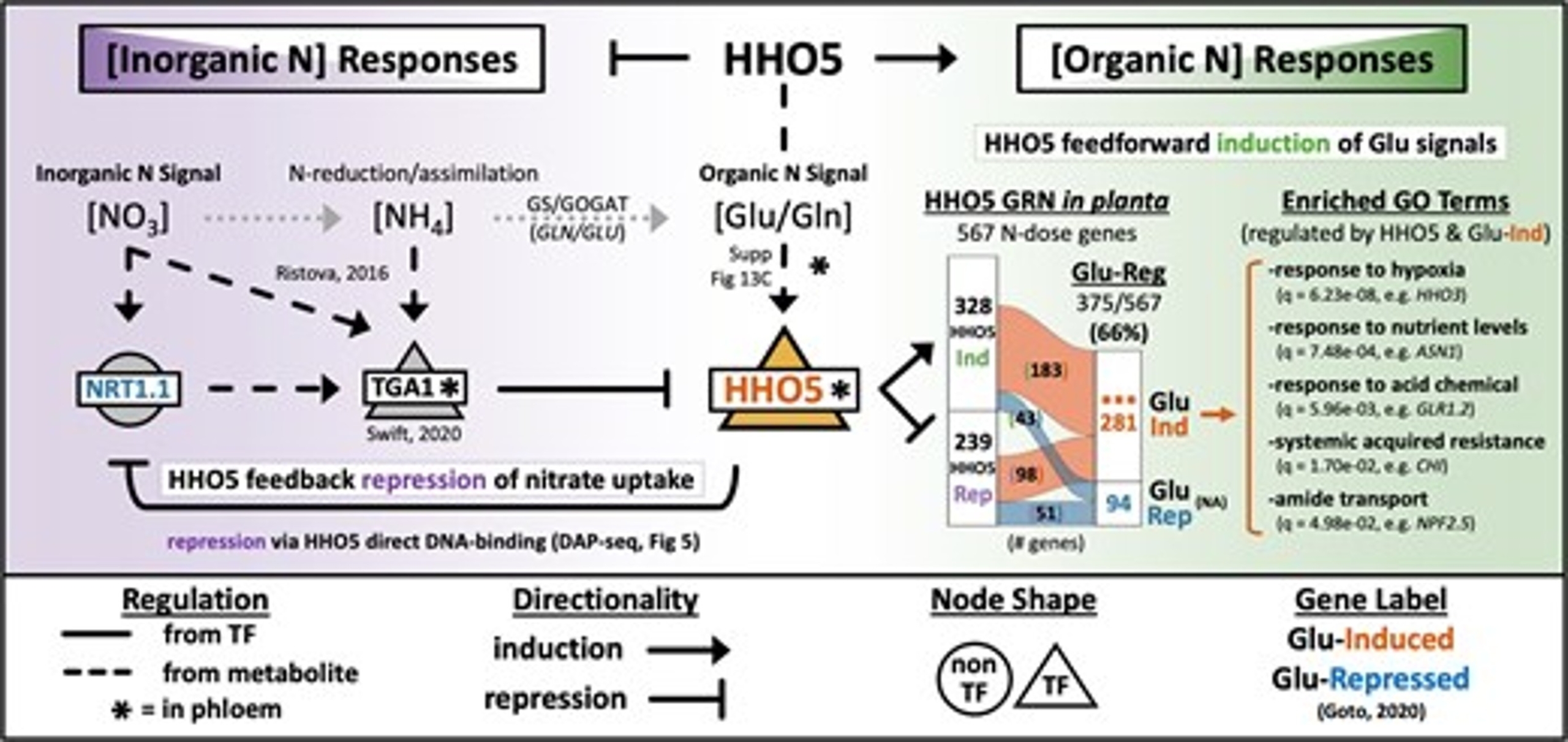 Efficient nitrogen uptake is essential for plant growth. Hinckley et al. have characterized HRS1 HOMOLOG 5 (HHO5), a transcription factor in Arabidopsis that had been previously overlooked compared to the NIGT1 family. Through a single T-DNA insertion mutation, the authors show HHO5 acts as a non-redundant and physiologically distinct regulatory player in the nitrogen uptake and response. hho5 mutants exhibit reduced nitrogen-dose-dependent growth, lower seed nitrogen content and blunted root responses to glutamate. The authors applied six nitrogen concentrations across a 10,000-fold range to hydroponically grown seedlings and sequenced whole-root transcriptomes two hours later. They found that HHO5 expression is repressed by inorganic nitrogen but induced by organic nitrogen. When organic nitrogen accumulates, HHO5 levels rise and directly repress crucial nitrate transporter genes, including NRT1.1 and NRT2.1. At the same time, HHO5 activates organic nitrogen-response genes indirectly via a WRKY partner. The authors deployed DoubleTARGET, a cell-based co-perturbation assay that tests transcription factor pairs simultaneously to untangle dense regulatory networks. They then revealed that HHO5 controls around 828 nitrogen-responsive genes and behaves according to enzyme kinetics by sensing dose instead of just presence or absence. The authors conclude by suggesting HHO5 as an agronomically significant gene with obvious implications for engineering crops that yield more from less fertilizer. (Summary by Sonal Sachdev, sci3ntyst , sci3ntyst.bsky.social) Plant Cell 10.1093/plcell/koag201
Cellulose synthase complexes and remorins anchor the membrane to the cell wall under water stress
 Plant cells are under constant turgor pressure that pushes the plasma membrane tightly against the cell wall. Under severe water loss, cells shrink and membrane retracts without fully detaching from the wall. Narrow bands known as Hechtian strands remain tethered to the cell wall at membrane/wall contact sites. However, the identity and physiological role of these sites still remain poorly understood. Rui and colleagues used hyperosmotic stress to study them in Arabidopsis root epidermal cells, testing mutants deficient in cellulose or rhamnogalacturonan-I rhamnose. The two types of mutants had opposite phenotypes: cellulose-deficient mutants (cesa3, cesa6, and cob-1) showed severe plasmolysis, whereas rhamnose-deficient rhm1 mutants showed reduced plasmolysis. Proximity-labeling proteomics and live-cell imaging revealed rhm1 had elevated cellulose synthase complex (CSC) density at the plasma membrane and that CSCs accumulate at attachment sites under stress. Stress also triggered rapid nanodomain formation at attachment sites, and mutants lacking remorins (REMs), which are known markers of plasma membrane nanodomains, resisted plasmolysis and grew better. These mutants also carried more CSCs at the plasma membrane, pointing to REMs as negative regulators of attachment. Proximity labeling and FRET-FLIM identified the CSC exocytosis inhibitors SHOU4/4L as REM-associated proteins, and shou4;4l double mutants phenocopied rem mutants. Taken together, the authors showed that baseline CSC density, restrained by REM-SHOU4/4L module, sets wall-membrane attachment and root growth under hyperosmotic stress. (Summary by Aditi Bhat @jumpy_botanist) Cell 10.1016/j.cell.2026.05.009
ULTRAPETALA1: A molecular regulator that fine-tunes the transition to flowering
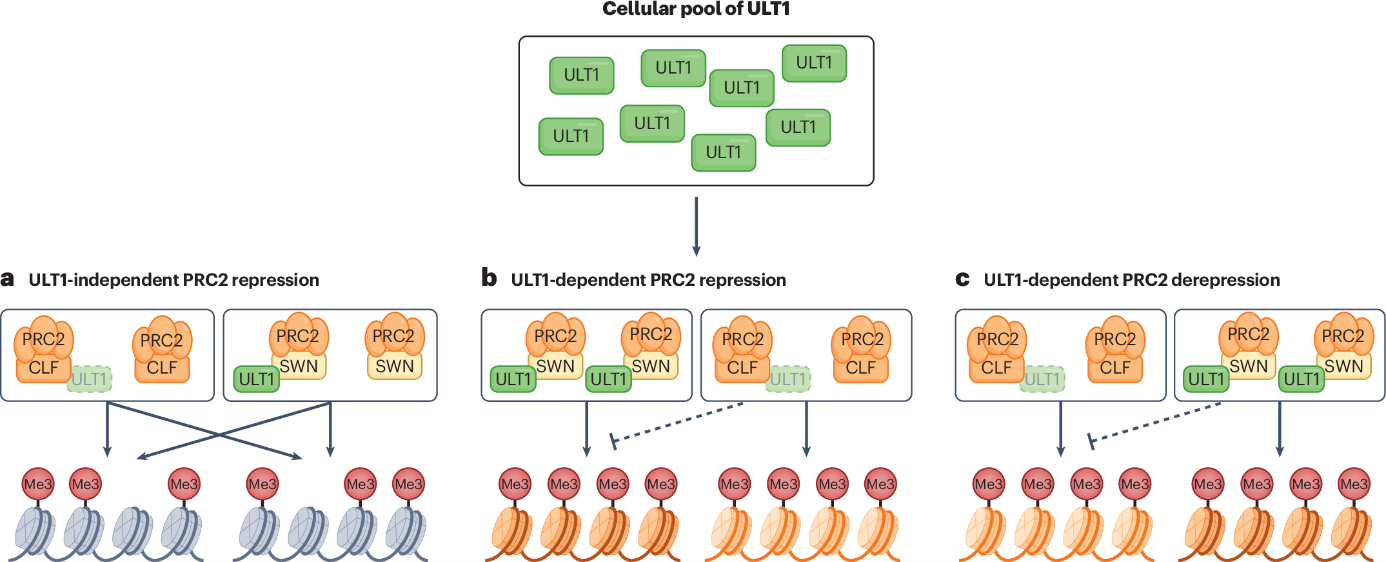 Plants need to carefully control which genes are active as they grow and switch from one developmental stage to another. A new study by Geshkovski et al. reveals that ULTRAPETALA1 (ULT1), previously thought to mainly counteract gene silencing, can also promote gene silencing by working directly with Polycomb Repressive Complex 2 (PRC2), a molecular machine that switches genes off. The researchers found that ULT1 increases the gene-silencing mark H3K27me3 at more than 1,000 genes. However, ULT1 can also reduce this mark at other genes involved in flower development; ULT1 does not simply act as an “on” or “off” switch. Instead, it helps fine-tune gene activity across the genome. The team also discovered that ULT1 physically interacts with two PRC2 components, CURLY LEAF (CLF) and SWINGER (SWN), but has a particularly strong effect on SWN. In laboratory experiments, ULT1 substantially increased the activity of SWN-containing PRC2, which otherwise has relatively low activity. This creates an intriguing biological puzzle: How can a protein that activates a gene-silencing complex also reduce gene silencing at certain genes? The authors propose that different PRC2 complexes may compete for limited cellular resources. By strongly activating one form of PRC2, ULT1 could indirectly influence where another form can act. Rather than being simply a factor that opposes PRC2, ULT1 appears to fine-tune the plant’s epigenetic machinery, helping coordinate gene activity during important reproductive transitions such as flowering. (Summary by Jahed Ahmed @Picrophilus) Nature Plants 10.1038/s41477-026-02363-z
Rhodanobacter enhances drought tolerance through a KAI2-interacting isoflavone
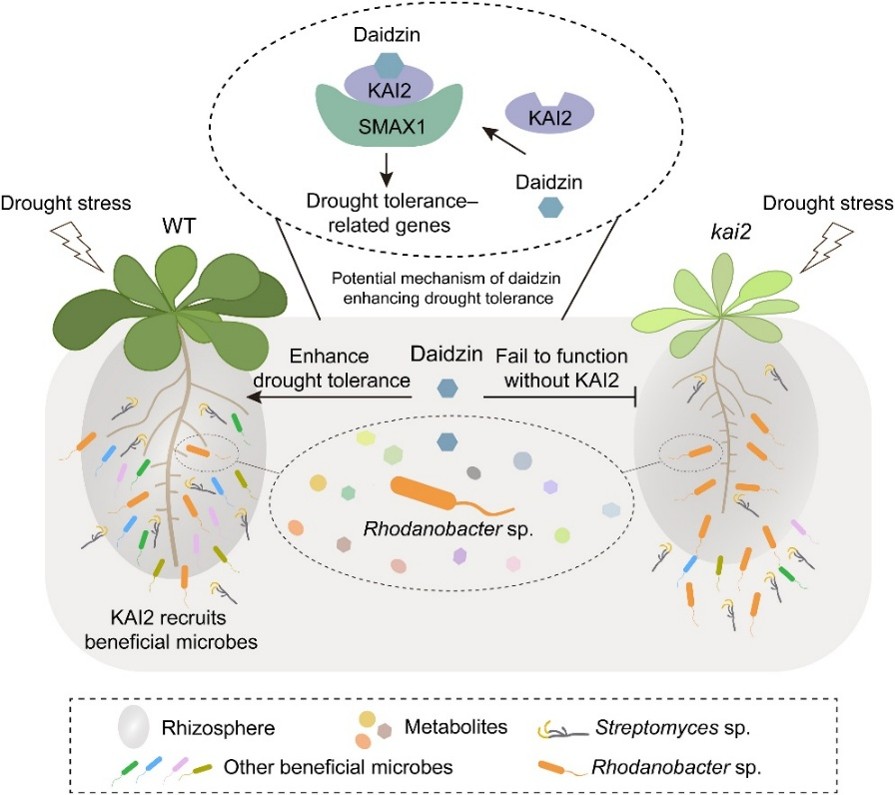 A new paper by Sun et al. demonstrates a pathway through which drought tolerance in Arabidopsis is influenced by soil microbiota. Using transcriptomic and metabolomic analyses, Sun et al. identified a strain of Rhodanobacter that is recruited to the rhizosphere of drought-stressed plants and can help them mitigate drought stress. The authors found that Rhodanobacter secretes a metabolite, daidzin, that enhances transcription of drought-tolerance associated genes. Daidzin is an isoflavone that is also found in plants like soybean, and genomic analysis of Rhodanobacter revealed a potential daidzin synthetic cluster similar to the daidzin synthetic cluster in soybean. Previous studies have shown that karrikins are plant growth regulating compounds that contribute to drought tolerance that this tolerance depends on KAI2, a putative karrikin receptor. The authors found that daidzin can function as a KAI2 agonist, and can induce an interaction between KAI2 and SMAX1, a repressor of karrikin signaling, thereby potentially triggering expression of genes for drought stress mitigation through an as-yet-unknown mechanism. This study characterizes a microbe-produced compound capable of altering plant transcription and enhancing drought tolerance. (Summary by Atharv Ambekar) Sci Advances 10.1126/sciadv.ads2698
Increases in cereal seed size were likely a plastic response before eventual genetic selection
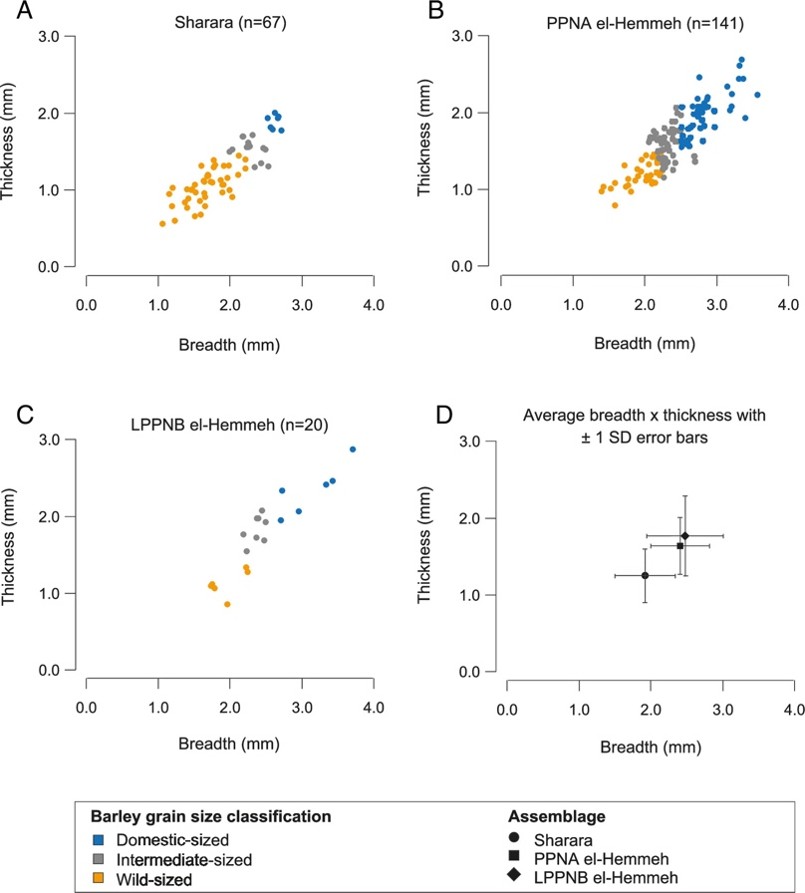 Plant domestication was a significant event in human history that occurred at multiple locations and time points. Barley, emmer wheat, and einkorn wheat are cereals that were domesticated about 10,000 years ago in southwest Asia, in a region called the Fertile Crescent. The hallmarks of cereal domestication were the loss of seed shattering, leading to seed retention on the plant, and increased seed size. It has previously been hypothesised that tillage led to the genetic selection of larger seed size, as larger seeds are more competitive under deeper burying, and non-shattering was selected after. New findings from two archaeological sites suggest a different story. Morphological analysis of seed rachis and grains show larger grain size was observed in both shattering (wild) and non-shattering (domesticated) populations of barley at these sites and could have been a plastic response to growing conditions. Stable carbon isotope analysis suggested that water availability likely contributed to greater seed size, while weed ecological analysis of plant remains suggested limited tillage at the sites. Therefore, it appears that developmental plasticity, the ability of a genotype to change an expressed phenotype in response to novel conditions, may have played an important role in domestication. The authors propose that plastic responses to water availability leading to larger seed size could have led to the intensification of human cultivation efforts, under which non-shattering, and then larger grain size was genetically selected for. Summary by Anastasia Kolesnikova (Linkedin: https://www.linkedin.com/in/n-ksci/) Proc. Natl Acad. Sci. USA 10.1073/pnas.2535274123
