


Plant Science Research Weekly: October 23, 2026
WWR Full PostReview: Old genes for new purposes: how gene co-option reshapes plant diversity
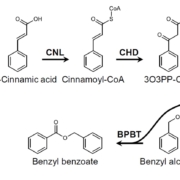
The diversity in plants’ adaptations and evolution is vast. One driver of this variety gaining traction in evolutionary studies is gene co-option, or “tinkering”, the ability to repurpose existing genes for new purposes.…
Plant Science Research Weekly: September 18, 2026
WWR Full PostReview: Plant digital twins, the future of crop production
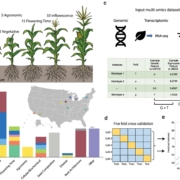
Imagine how cool it would be if, just like we check weather apps before going out, we could “grow” a plant in our computer before planting it into our backyard, in order to predict its future success. Pauli et al. discuss this possibility…
Plant Science Research Weekly: August 28, 2025
WWR Full PostReview: Tracing the evolution of plant cell types
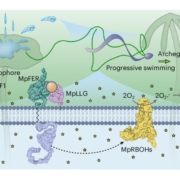
Plants. When we read this word, what comes to mind might be a rose, a tomato plant, or an oak tree. But plants belong to a green lineage that is far more diverse than what we encounter in daily life. This lineage also includes unicellular green algae.…
Plant Science Research Weekly: July 10, 2026
WWR Full PostA lichen super-pangenome spotlights its genetic architecture and interaction secrets
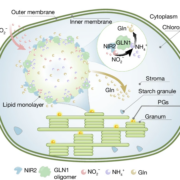
A lichen is a unique composite organism formed through close interactions between a filamentous fungus (mycobiont) and its photosynthetic partners [algae and/ or cyanobacteria, referred together as photobiont(s)].…
Plant Science Research Weekly: June 26 2026
WWR Full PostSpecial Issue of Current Biology on plant evolution
Current Biology has an excellent special issue on plant evolution full of fascinating articles. As an example, a Primer by Zhuo Feng looks at how plants were catastrophically impacted by the end-Permian mass extinction event approximately 250 million…
Plant Science Research Weekly: June 5, 2026
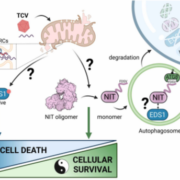
WWR Full PostSpecial issue on methods to assess crop stress resilience
Our food crops are threatened by ever-increasing environmental challenges as a consequence of climate change. It’s critical that we develop strategies to monitor and mitigate these stresses, but it’s also a huge undertaking. A new focus…
Plant Science Research Weekly: May 15, 2026
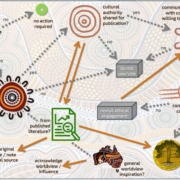
WWR Full PostReview: Revisiting endophyte-mediated plant protection across diverse host systems
Endophytic bacteria and fungi, the invisible allies within plant tissues, are emerging as powerful contributors to sustainable agriculture. They can enhance plant defense through multiple mechanisms, including antibiosis,…
Plant Science Research Weekly: May 1, 2026
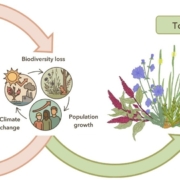
WWR Full PostReview. Beyond elite crops: Designing resilient agriculture from wild plant diversity
When looking at the foods that fill our supermarkets, it can be hard to imagine we are relying on just a handful of domesticated plant species. Thousands of wild plants, each with its own unique strengths, remain…
Plant Science Research Weekly: April 10, 2026
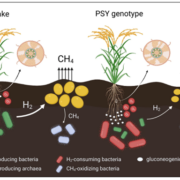
WWR Full PostReview: Plants calcium signaling is both conserved and plant-specific
Although calcium ions are universal second messengers, plants employ both conserved and unique strategies to decode Ca²⁺ signals. In a new review in Cell, Sheng Luan reviews the molecular tools used to study calcium signaling…