Increases in cereal seed size were likely a plastic response before eventual genetic selection
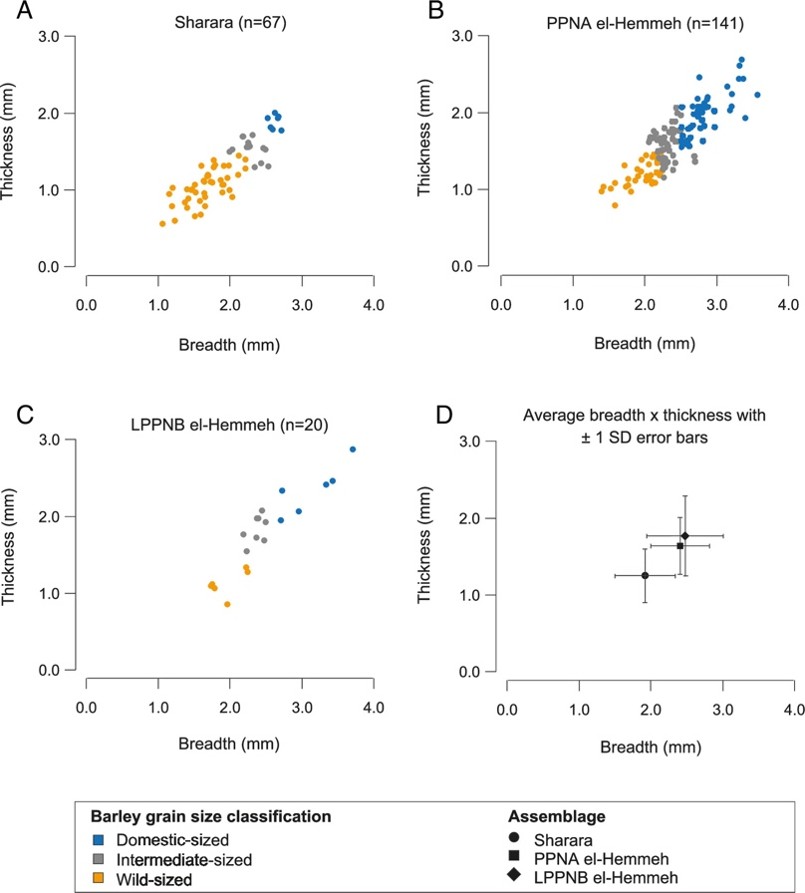 Plant domestication was a significant event in human history that occurred at multiple locations and time points. Barley, emmer wheat, and einkorn wheat are cereals that were domesticated about 10,000 years ago in southwest Asia, in a region called the Fertile Crescent. The hallmarks of cereal domestication were the loss of seed shattering, leading to seed retention on the plant, and increased seed size. It has previously been hypothesised that tillage led to the genetic selection of larger seed size, as larger seeds are more competitive under deeper burying, and non-shattering was selected after. New findings from two archaeological sites suggest a different story. Morphological analysis of seed rachis and grains show larger grain size was observed in both shattering (wild) and non-shattering (domesticated) populations of barley at these sites and could have been a plastic response to growing conditions. Stable carbon isotope analysis suggested that water availability likely contributed to greater seed size, while weed ecological analysis of plant remains suggested limited tillage at the sites. Therefore, it appears that developmental plasticity, the ability of a genotype to change an expressed phenotype in response to novel conditions, may have played an important role in domestication. The authors propose that plastic responses to water availability leading to larger seed size could have led to the intensification of human cultivation efforts, under which non-shattering, and then larger grain size was genetically selected for. Summary by Anastasia Kolesnikova (Linkedin: https://www.linkedin.com/in/n-ksci/) Proc. Natl Acad. Sci. USA 10.1073/pnas.2535274123