Rhodanobacter enhances drought tolerance through a KAI2-interacting isoflavone
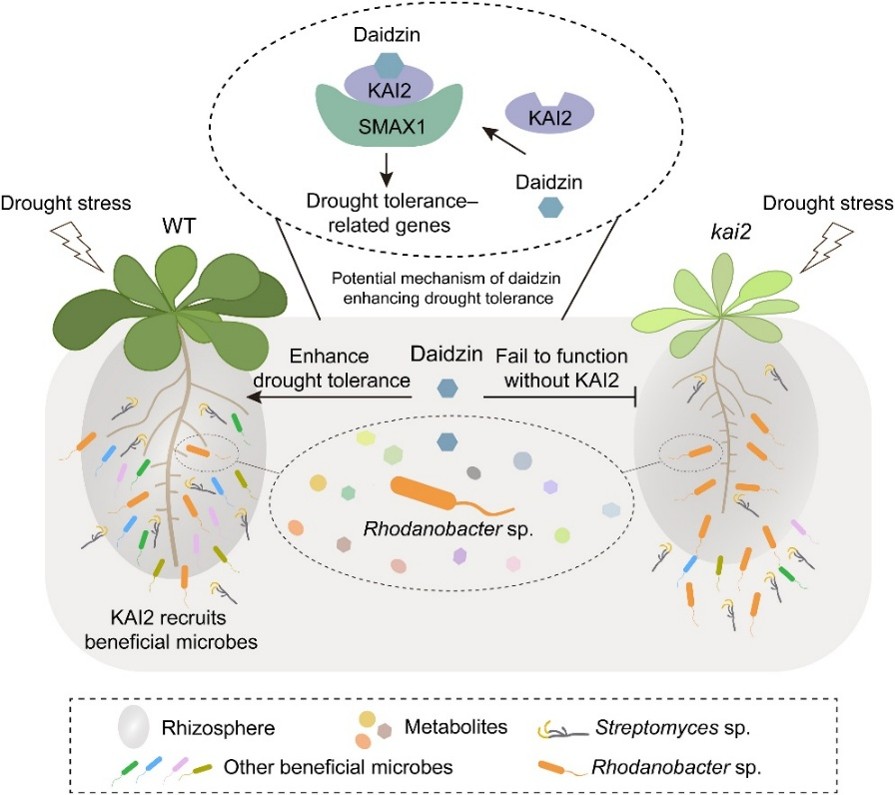 A new paper by Sun et al. demonstrates a pathway through which drought tolerance in Arabidopsis is influenced by soil microbiota. Using transcriptomic and metabolomic analyses, Sun et al. identified a strain of Rhodanobacter that is recruited to the rhizosphere of drought-stressed plants and can help them mitigate drought stress. The authors found that Rhodanobacter secretes a metabolite, daidzin, that enhances transcription of drought-tolerance associated genes. Daidzin is an isoflavone that is also found in plants like soybean, and genomic analysis of Rhodanobacter revealed a potential daidzin synthetic cluster similar to the daidzin synthetic cluster in soybean. Previous studies have shown that karrikins are plant growth regulating compounds that contribute to drought tolerance that this tolerance depends on KAI2, a putative karrikin receptor. The authors found that daidzin can function as a KAI2 agonist, and can induce an interaction between KAI2 and SMAX1, a repressor of karrikin signaling, thereby potentially triggering expression of genes for drought stress mitigation through an as-yet-unknown mechanism. This study characterizes a microbe-produced compound capable of altering plant transcription and enhancing drought tolerance. (Summary by Atharv Ambekar) Sci Advances 10.1126/sciadv.ads2698