ULTRAPETALA1: A molecular regulator that fine-tunes the transition to flowering
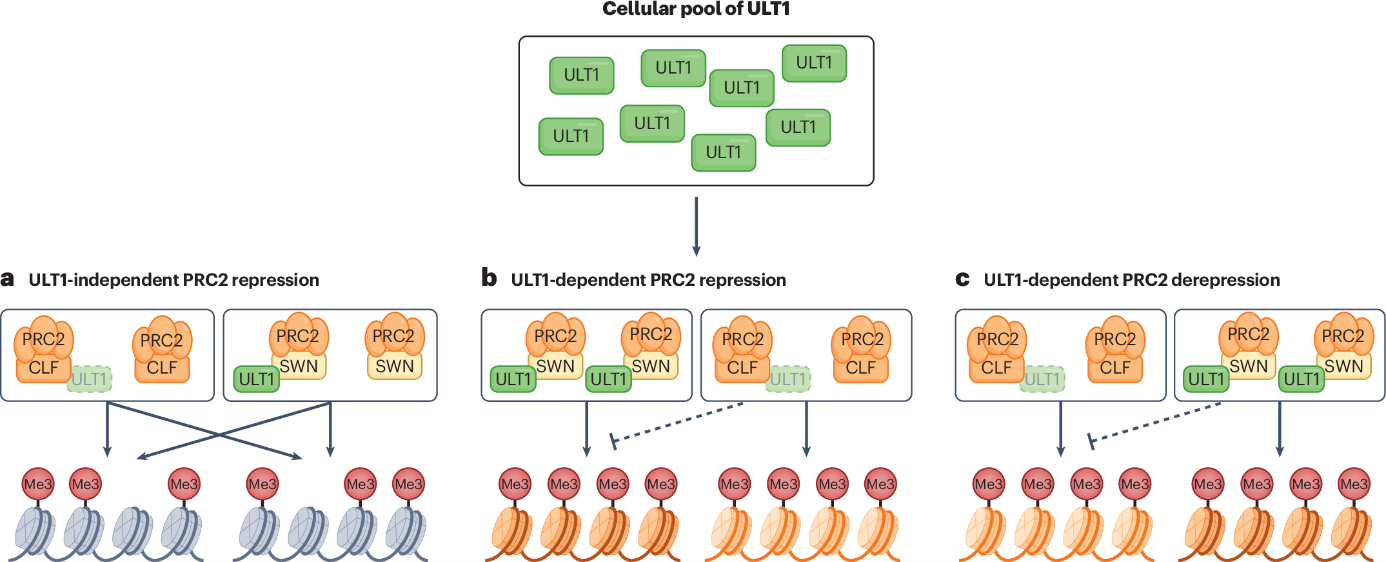 Plants need to carefully control which genes are active as they grow and switch from one developmental stage to another. A new study by Geshkovski et al. reveals that ULTRAPETALA1 (ULT1), previously thought to mainly counteract gene silencing, can also promote gene silencing by working directly with Polycomb Repressive Complex 2 (PRC2), a molecular machine that switches genes off. The researchers found that ULT1 increases the gene-silencing mark H3K27me3 at more than 1,000 genes. However, ULT1 can also reduce this mark at other genes involved in flower development; ULT1 does not simply act as an “on” or “off” switch. Instead, it helps fine-tune gene activity across the genome. The team also discovered that ULT1 physically interacts with two PRC2 components, CURLY LEAF (CLF) and SWINGER (SWN), but has a particularly strong effect on SWN. In laboratory experiments, ULT1 substantially increased the activity of SWN-containing PRC2, which otherwise has relatively low activity. This creates an intriguing biological puzzle: How can a protein that activates a gene-silencing complex also reduce gene silencing at certain genes? The authors propose that different PRC2 complexes may compete for limited cellular resources. By strongly activating one form of PRC2, ULT1 could indirectly influence where another form can act. Rather than being simply a factor that opposes PRC2, ULT1 appears to fine-tune the plant’s epigenetic machinery, helping coordinate gene activity during important reproductive transitions such as flowering. (Summary by Jahed Ahmed @Picrophilus) Nature Plants 10.1038/s41477-026-02363-z