
Host transcriptional regulation shapes microbiome-mediated nitrogen uptake
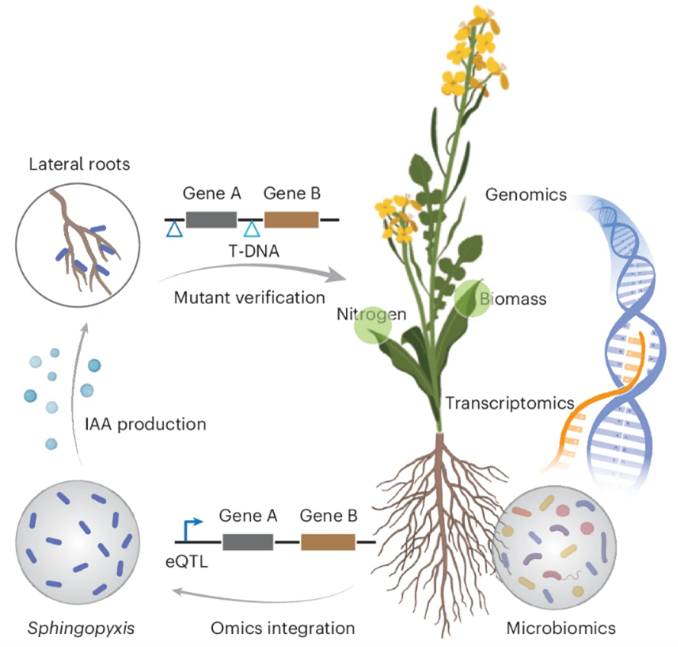 Nitrogen is a key nutrient for plant development, and plant nutrient acquisition is highly influenced by the rhizosphere microbiome. However, how host genomic variation and root transcriptional regulation shape microbiome assembly under field conditions remains unclear. Li and colleagues addressed this important question through a large-scale multi-omics study across 175 Brassica napus accessions. The authors identified highly heritable bacterial amplicon sequence variants (ASVs) associated with root nitrogen level. Surprisingly, root gene expression predicted microbiome composition better than host genomic markers, highlighting transcriptional regulation as a “Rosetta stone” between host genotype and microbial recruitment. By integrating microbial features with genomic and transcriptomic data the authors improved prediction accuracy for nitrogen uptake. Among microbial taxa, there was one that plays a key role, the genus Sphingopyxis. An isolated strain from this genus promoted lateral root growth and enhanced nitrogen uptake under low nitrogen conditions. This strain produces biologically active auxin and modulates host auxin signaling, linking host gene regulation to microbiome-driven changes in root architecture. Altogether, this study provides a very exciting framework for microbiome‑assisted breeding strategies for improving nitrogen use efficiency and crop resilience. (Summary by Adrian Gonzalez Ortega‑Villaizan @adrigov98 @adrigov.bsky.social) Nature Plants 10.1038/s41477-025-02210-7