Unlocking stored iron: The role of ANAC017 in plant iron homeostasis
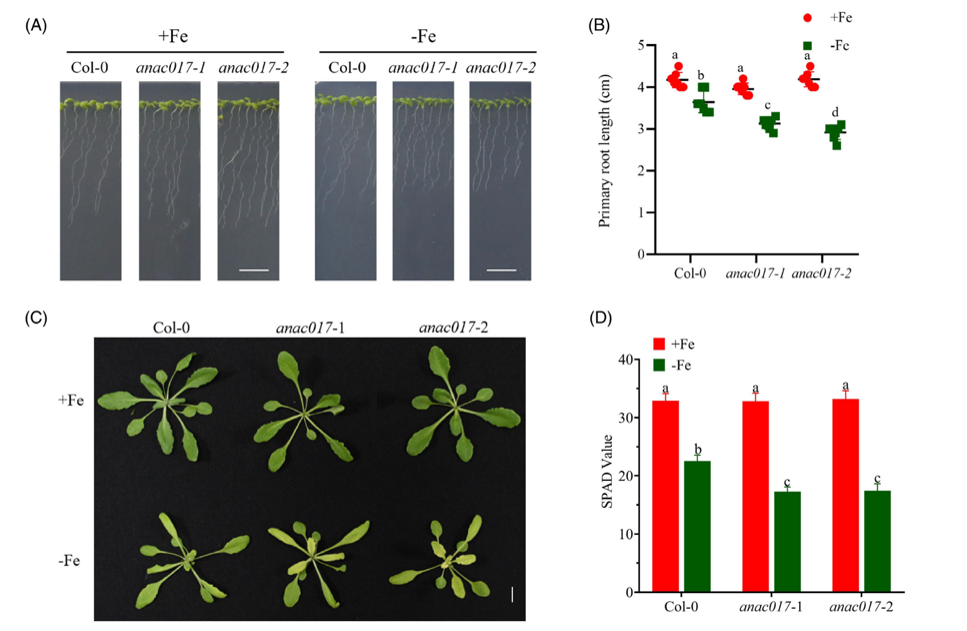
Iron is essential for plant growth and development, but its availability in soil is often limited. Besides absorbing iron from the soil, plants can also reuse iron stored in their cell walls, although the mechanisms regulating this process remain unclear. In a recent study, Chunyan Tu and colleagues investigated how the transcription factor ANAC017 regulates iron homeostasis in Arabidopsis thaliana. They found that ANAC017 expression increased rapidly under iron-deficient conditions. Plants lacking functional ANAC017 exhibited shorter roots, severe leaf chlorosis, and reduced iron accumulation, whereas plants overexpressing ANAC017 showed improved tolerance. Interestingly, the mutants retained more iron in their root cell walls, particularly in hemicellulose, despite having lower overall iron concentrations. This suggests that ANAC017 helps mobilize stored iron for reuse during deficiency. Further experiments revealed that bHLH121/URI directly binds to the ANAC017 promoter and activates its expression. ANAC017, in turn, regulates MAT1/SAM1, which encodes an enzyme involved in producing S-adenosylmethionine, a precursor for ethylene and nicotianamine biosynthesis. Overexpressing MAT1/SAM1 in the mutants improved root growth, reduced chlorosis, and increased iron accumulation. These findings identify a regulatory pathway that supports iron homeostasis and highlights the importance of internal iron redistribution during deficiency. (Summary by Deborah Ighalo) Plant J. 10.1111/tpj.71157