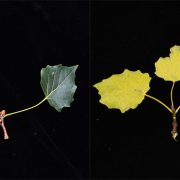
AHL15 helps leaves stay greener for longer
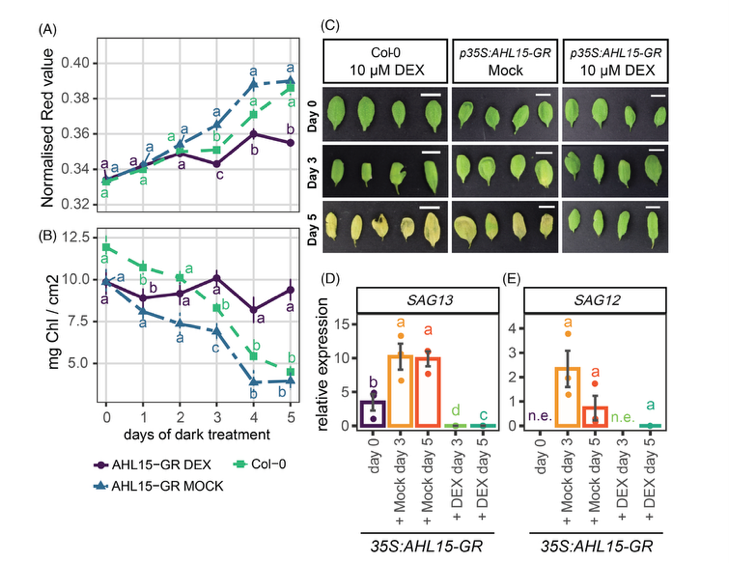 As leaves age, they gradually lose chlorophyll and begin to turn yellow, a process known as leaf senescence. Although this process helps plants recycle nutrients, delaying it can be beneficial for crops where leaf quality matters. Luden and colleagues investigated how the transcription factor AHL15 influences leaf senescence in Arabidopsis thaliana. The researchers found that plants overexpressing AHL15 retained more chlorophyll and showed delayed senescence under both dark-induced and age-dependent conditions. In contrast, plants lacking AHL15 showed slightly earlier senescence. To understand why, they examined genes involved in leaf aging and cytokinin metabolism. They found that AHL15 represses ORE1, a key regulator of senescence, as well as CKX2, CKX3, and CKX5, which encode enzymes responsible for cytokinin degradation. Further experiments showed that activating AHL15 slowed the decline in cytokinin levels during senescence, particularly trans-zeatin and trans-zeatin riboside. Treating leaves with cytokinin or blocking its degradation also delayed senescence. This suggests that AHL15 helps leaves stay green by limiting cytokinin breakdown while suppressing genes that promote aging. The study provides a better understanding of how leaf senescence is regulated and suggests that AHL15 and related proteins could be useful for improving the shelf life of leafy vegetables and ornamental plants. (Summary by Deborah Ighalo) Plant J. 10.1111/tpj.71177