

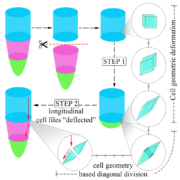
Divide and conquer : How roots adjust division to restore shape after wounding
Plant Science Research WeeklyA fascinating biological phenomenon is where a root tip can be surgically removed at a distance from the stem cell niche, yet the root still robustly grows back to its initially tapered shape. Mathew et al. investigated the cellular mechanism for how root regeneration can re-develop this tapered shape…
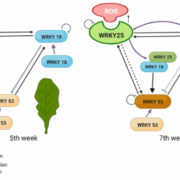
Redox-driven WRKY25 unlocks WRKY53 to orchestrate leaf senescence
Plant Science Research WeeklyLeaf senescence, which overlaps with the reproductive growth phase in annual plants, constitutes the last stage in the development of a leaf, and several endogenous and exogenous factors control this, ultimately influencing the plant’s fitness, crop yield quantity and quality. The WRKY family of transcription…
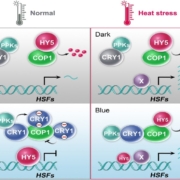
Turning down the heat: A photoreceptor-based repression of plant thermotolerance
Plant Science Research WeeklyPlants use several photoreceptors to perceive light including the cryptochromes (CRYs), which are implicated in blue-light reception and coordinate developmental processes including photomorphogenesis. Here, Liu et al. shed light on how light and temperature cues simultaneously affect plants. They identified…
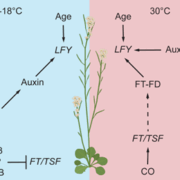
Florigen takes the heat: Flower production under fluctuating temperatures
Plant Science Research WeeklyFlowers are not only a source of beauty and awe but also an important agronomical trait, since many crop yields depend on the proper timing of flowering. With increasing fluctuations in temperature, plants must finely tune the flowering process. In Arabidopsis thaliana, flower primordia formation at…

GIG1-based in vivo haploid induction offers a rapid breeding strategy in rapeseed
Plant Science Research WeeklyProducing completely homozygous lines in a single generation is crucial for accelerating hybrid breeding in crops like rapeseed (Brassica napus), yet conventional in vitro methods are time-consuming and genotype-sensitive. In this study, Bakhsh et al. developed an efficient in vivo haploid induction…
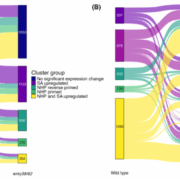
Priming and reverse priming: A new twist in plant immunity
Plant Science Research WeeklyPlants have their own version of an immune system—and it’s smarter than you might think. Through a process called Systemic Acquired Resistance (SAR), plants can “remember” an attack and prepare for the next one, arming themselves with long-lasting, broad-spectrum immunity. When one leaf is infected,…
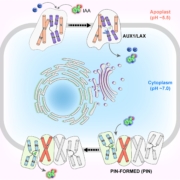
Plant Science Research Weekly: August 29, 2025
WWR Full PostRunning on empty: How does the absence of mtDNA shape mitochondrial movement and connectivity?
Mitochondria move within cells to support bioenergetic function and enable sharing of content, including mitochondrial DNA (mtDNA). Since not all plant mitochondria carry a full set of, or any mtDNA, sharing…
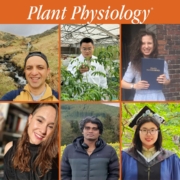
Plant Physiology Spotlights January and February 2025 First Authors
Blog, Community, Plant Physiology: Author ProfilesBehind the Plant Physiology manuscripts are researchers, professors, professionals and students dedicated to advancing the field of plant science. You’ve seen our First Authors on Bluesky, Facebook, and Twitter — now, read more about why they chose to pursue plant sciences and click on the links…
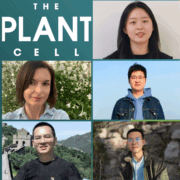
The Plant Cell Features January and February 2025 First Authors
Blog, Community, The Plant Cell: Author ProfilesBehind the manuscripts are researchers, professors, professionals and students dedicated to advancing the field of plant science. You’ve seen our First Authors on Bluesky, Twitter and Facebook— now, read more about why they chose to pursue plant sciences and click on the links to read their articles.
Guoyong…