
Under pressure: Interdisciplinary research into the mechanics of the cell wall
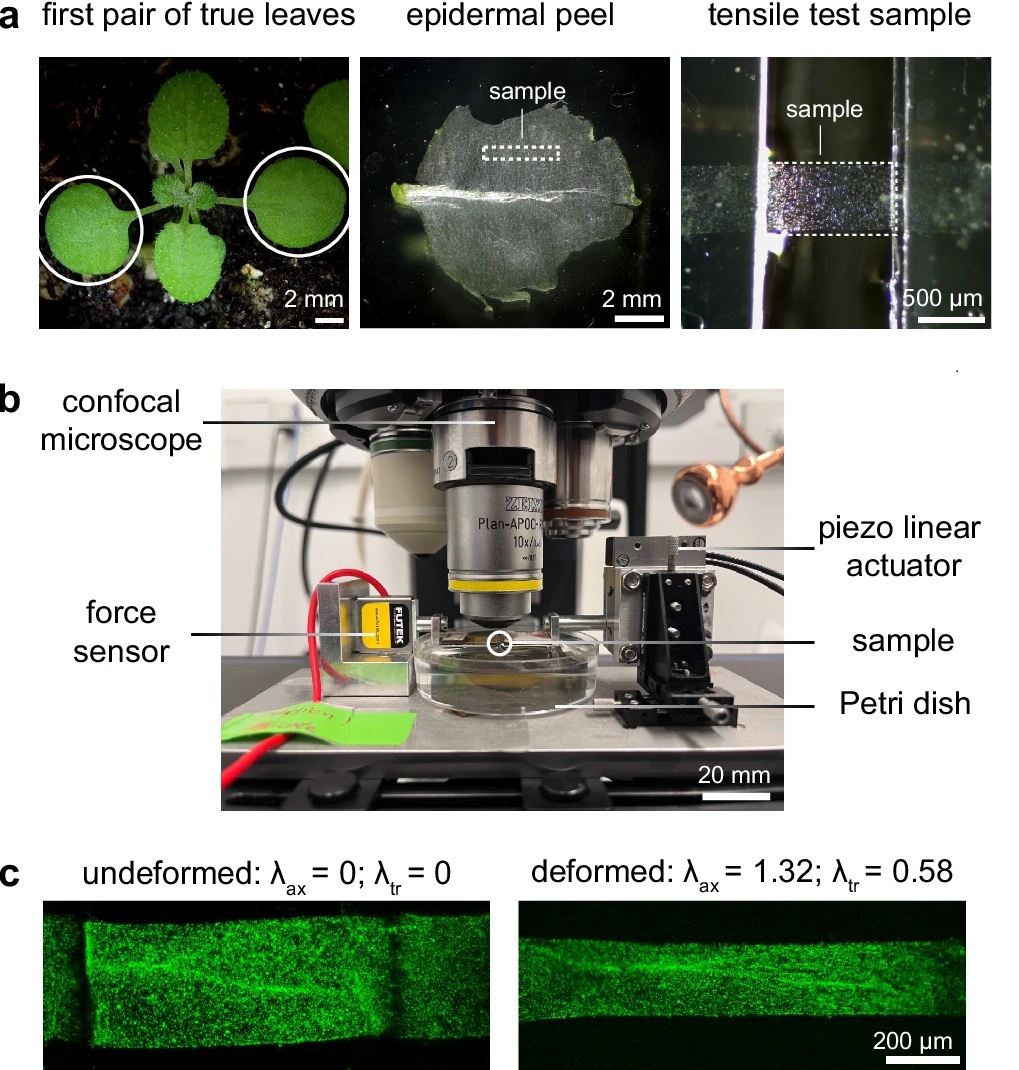 The architecture of the plant cell wall is very intricate: strings of cellulose microfibrils provide structure while allowing the cell to expand and grow. This growth is primarily driven by turgor pressure, which applies pressure and allows for expansion in all directions. While the general mechanism of growth is well established, the precise mechanical transitions that allow for extreme wall deformation without failure are not fully understood. In this recent publication by Chen et al., the authors investigated the mechanical properties of the epidermal cell wall of Arabidopsis thaliana. Using a combination of experiments and modeling, they characterized how the cell wall responds to strain at different developmental stages. They determined that the cell wall behaves like a fibrous network and that the connections between fibers explains the ability for the cell wall to stretch while maintaining structural integrity. They also found that the microfibrils exhibit non-linear stiffening, which essentially means that as growth slows, stiffness increases indicating that cells can tune their mechanical properties during development. What’s interesting about these findings is that similar behavior is observed in other biological materials like mycelium and mammalian skin. This paper blends engineering theory with plant biology, highlighting the incredible utility of interdisciplinary approaches. (Summary by Xavier Ozowara [email protected]) Nature Comms. 10.1038/s41467-025-62844-1