
Identification of a plastid-localized amino acid transporter
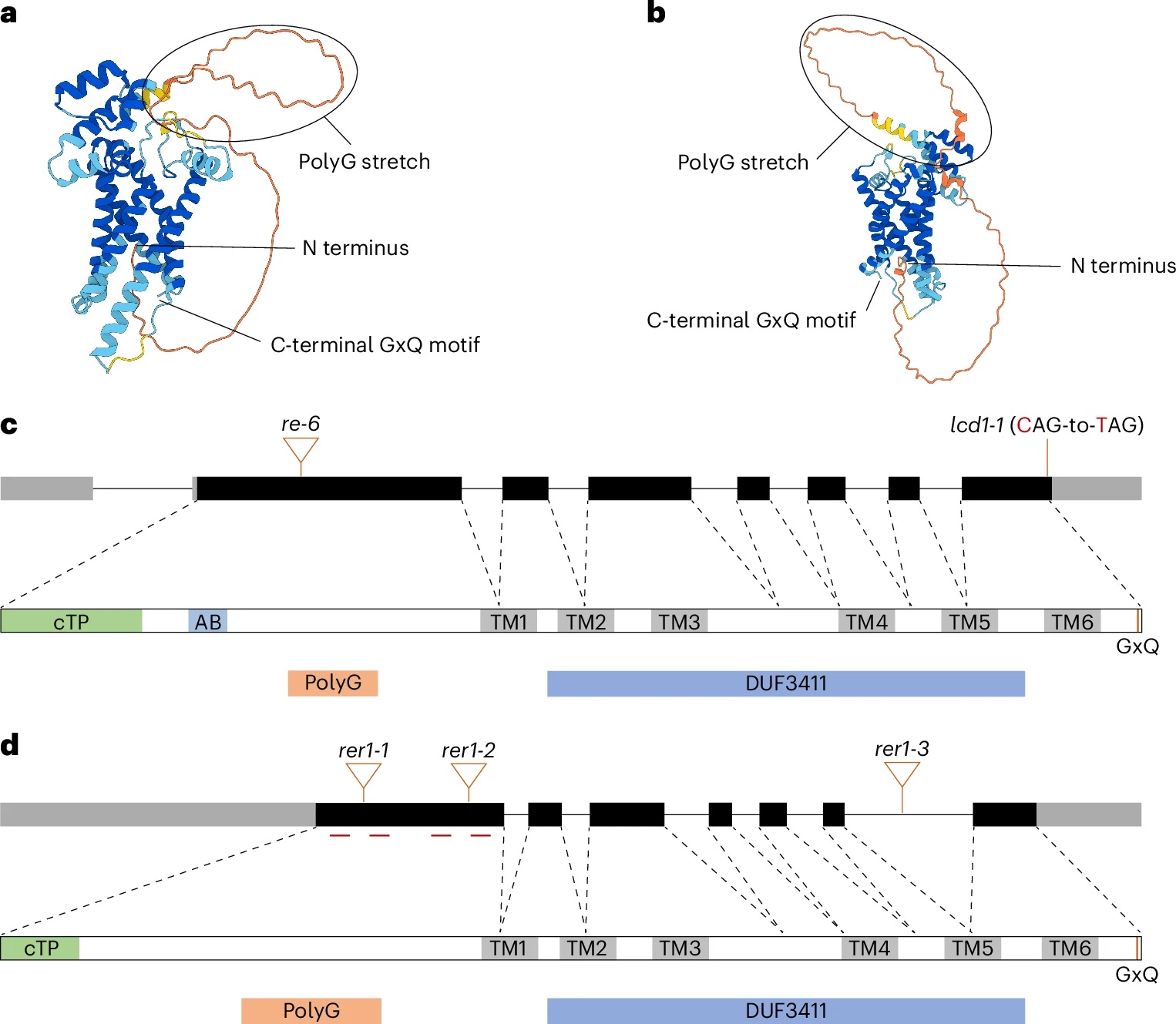 Plastids are more than photosynthetic compartments, they also are responsible for the biosynthesis of nine proteinogenic amino acids (which explains why animals, lacking plastids, must obtain these amino acids through their diet). In a new paper, Kuhnert et al. have identified a critical amino-acid transporter on the plastid inner envelope membrane that is necessary for their export to the cytosol. The authors set out on a targeted search for this transporter by searching for genes encoding transmembrane domain proteins and plastidial target sequences that are co-expressed with amino acid biosynthetic genes. One of the candidates had previously been characterized as an Arabidopsis gene, RETICULATA1, identified as a loss-of-function mutant. The name, which means “network”, refers to the fact that the mutant has small pale-green mesophyll cells adjacent to the leaf vasculature, making the network of the green veins more prominent. Previously, this phenotype had been postulated to be due to a deficiency of essential metabolites. In the new paper, the authors noted lower levels of key amino acids in the mutants. When expressed in yeast, the RE1 protein was shown to transport basic amino acids. As the authors conclude, “These results establish RE1 as the first identified plastidial basic amino acid carrier in Arabidopsis.” (Summary by Mary Williams @PlantTeaching.bsky.social) Nature Plants 10.1038/s41477-025-02080-z