

Review: Plant receptor-like kinases sense extrinsic and host-derived signals and shape the microbiome
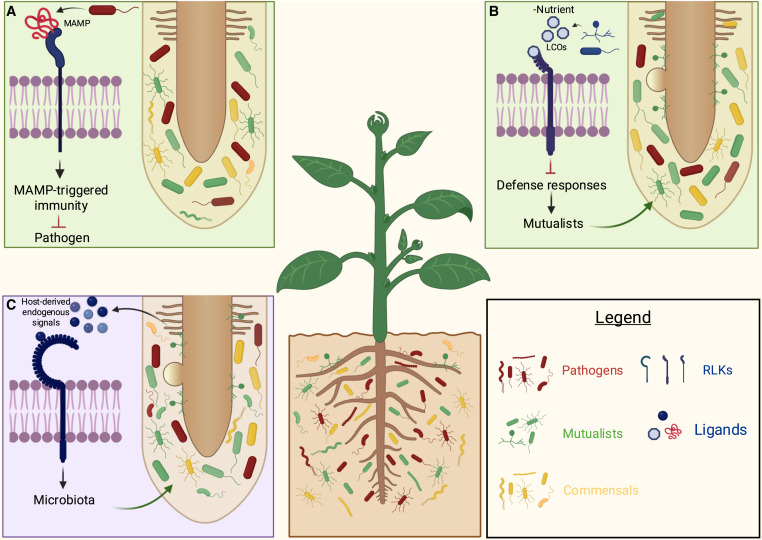 Plant genomes contain hundreds of genes encoding receptor-like kinases (RLKs), which are membrane-spanning proteins with an extracellular perception domain and an intracellular signaling domain. Many RLKs have roles in identifying surface proteins of pathogens, some recognize specific signals from mutualists such as rhizobia, and others recognize small molecules of various endogenous and exogenous origins. In this new review by Bhat and Haney, the authors explore how RLKs shape the microbiome through perception and signaling. Several RLKs have very narrow species-specific recognition functions, and its unlikely that these have much role in shaping the microbiome. Rather, RLKs that perceive plant cellular responses or physiological signals might have more important roles. As an example, in response to low-nutrient stress plants secrete C-terminally-encoded peptides (CEPs) that are perceived by RLKs and initiate recruitment of beneficial microbes. Similarly, stressed plants might produce signals perceived by differnt RLKs leading to a restructuring of the microbiota; this model is supported by mutants of the FERONIA (FER) RLK that show altered microbiota composition. Activated RLKs can lead to altered calcium fluxes and ROS production as well as transcriptomic changes, any and all of which can contribute to altered microbiota. (Summary by Mary Williams @PlantTeaching.bsky.social) Cell Host Microbe 10.1016/j.chom.2025.07.012
