

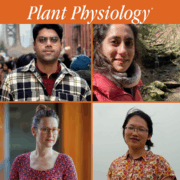
Plant Physiology Spotlights November and December 2024 First Authors
Blog, Community, Plant Physiology: Author ProfilesBehind the Plant Physiology manuscripts are researchers, professors, professionals and students dedicated to advancing the field of plant science. You’ve seen our First Authors on Bluesky, Facebook, and Twitter — now, read more about why they chose to pursue plant sciences and click on the links…

Review: Harnessing the power of gene regulatory networks for crop improvement
Plant Science Research WeeklyThe number of large molecular plant datasets seems to be growing exponentially. With this growth comes an urgent need for researchers to understand how these datasets should be analyzed and integrated to get accurate understandings of what they represent. This fine article by Leong et al. is a good place…
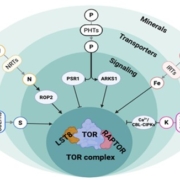
Review. Root growth under phosphorus deficiency: Revisiting the role of TOR signaling
Plant Science Research WeeklyWhile phosphorus (P) ranks the second most essential mineral nutrient for plant growth, its availability in natural soils is often very low. To cope with this limitation, plant roots have evolved sophisticated molecular mechanisms and phenotypic plasticity to maximize root surface area and enhance P…
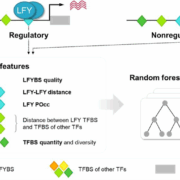
When binding isn’t enough: Predicting TF activity through genomic neighborhoods
Plant Science Research WeeklyTranscriptional regulation is fundamental for coordinating cellular activities in response to developmental programs and environmental cues. Certain transcription factors (TFs) control the expression of hundreds of genes and are thus considered especially important — these are referred to as master…
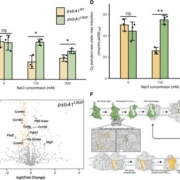
Directed evolution reveals pD1 mutations that boost photosynthesis under salt stress
Plant Science Research WeeklyImproving photosynthesis under abiotic stress is essential for enhancing crop productivity. Here, Jiang et al. used short-term accelerated evolution in the cyanobacterium Synechococcus elongatus to uncover genetic mutations that enhance photosynthesis under salt and light stress without compromising…

Put your best root forward: How hydrotropism cannibalizes gravitropism to orient root growth towards moisture
Plant Science Research WeeklyWhile root gravitropism (growth towards gravity) has an extended history of in-depth research, less is known about root hydrotropism (growth towards water) and about how these two potentially conflicting processes interact with each other. Since soil water distribution is often heterogeneous, plant roots…
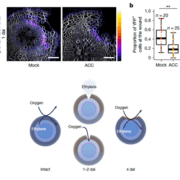
Gas as a messenger: How plants monitor their barriers
Plant Science Research WeeklyThe periderm is a protective outer tissue formed during secondary growth in many seed plants, serving as a barrier against water loss and pathogen invasion. When damaged, it can regenerate to restore its protective function. However, the molecular and cellular mechanisms underlying periderm regeneration…
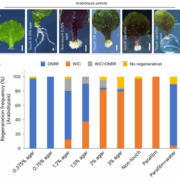
The hidden power of water in plant regeneration
Plant Science Research WeeklyPlants are renowned for their remarkable ability to regenerate tissues and organs. Two typical regeneration pathways—de novo root regeneration (DNRR) and wound-induced callus (WIC) formation—enable recovery from injury but involve entirely different cell fate outcomes. These processes also form the…

Unusual cell death pathway in maize endosperm
Plant Science Research WeeklyAn interesting new study by Doll et al. addresses one of the most complex and important plant developmental processes, that of seed formation, with a focus on maize. Like other seeds, the maize seed (kernel) includes the next generation embryo, surrounded by various maternal tissues as well as the triploid…