
More than a trade-off: how growth inhibition protects plant genome integrity
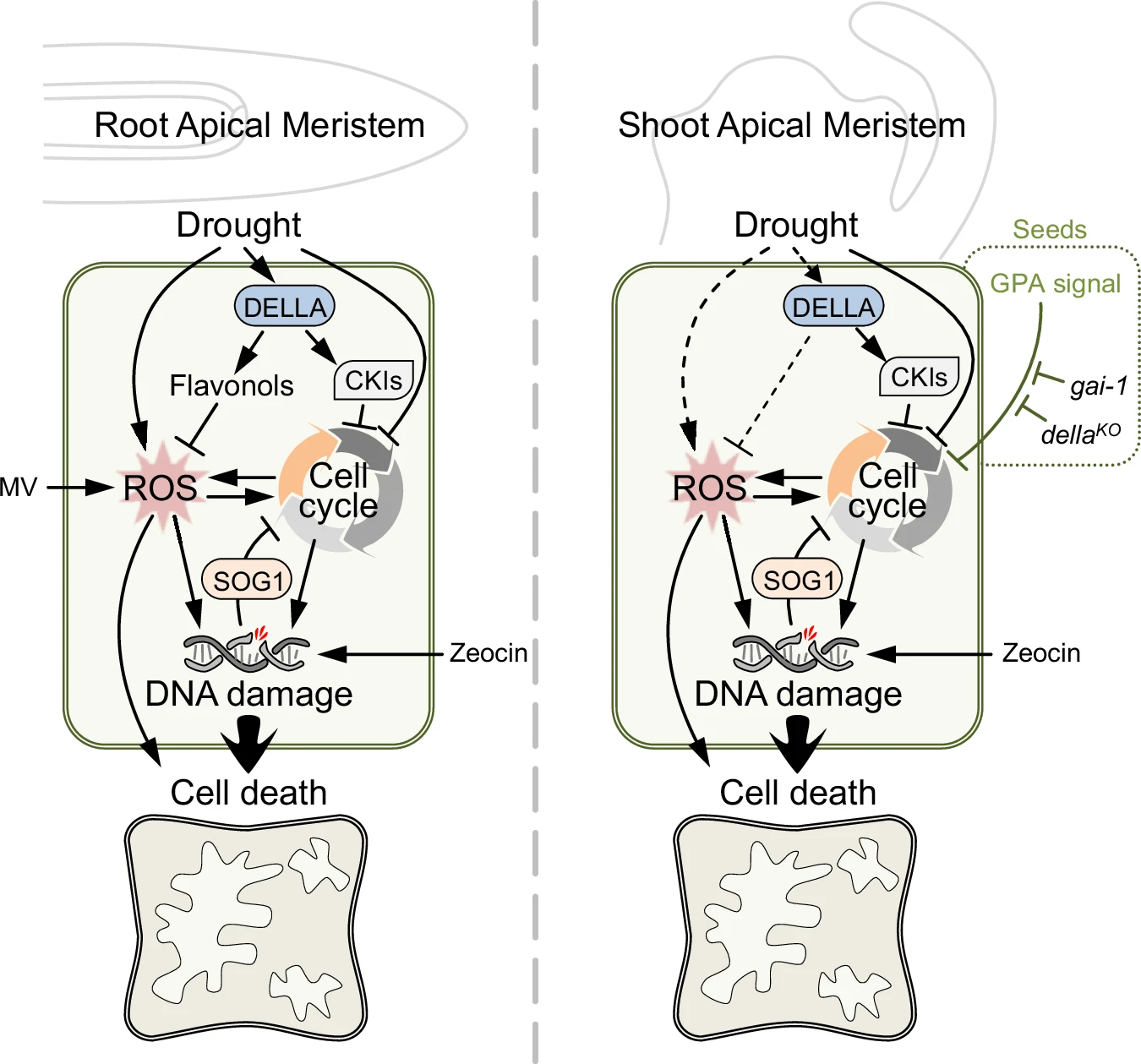 When plants face tough times, like an invading pathogen or a sudden drought, they often make a difficult choice: pause growth to focus on survival. This phenomenon, called the growth–defense trade-off, has long been thought to result from limited resources – plants simply can’t do everything at once. But recent discoveries suggest the story is more complex. Sometimes, plants can maintain resilience without giving up growth, depending on how key signaling pathways are tuned. This raises a deeper question: is slowing growth just about saving resources, or does it serve another hidden purpose? To explore this, Serrano-Mislata and colleagues studied the role of DELLA proteins, well-known growth repressors, during dehydration stress. They found that disabling DELLA’s targets – the CDK inhibitors (CKIs) in shoots or roots – allowed plants to keep growing. Yet, this came at a price: the plants lost more water and needed to boost antioxidant levels and accumulate flavonols to survive. Therefore, the authors proposed that growth cessation itself might provide protection. By assessing the level of DNA damage as a result of cell cycle arrest, della mutants exhibited elevated ROS, DNA damage, and cell death in the apical meristems. The study reveals growth arrest not as a cost of stress or weakness, but as a built-in safeguard for genome integrity and survival. (Summary by Ching Chan @ntnuchanlab) Nature Communications 10.1038/s41467-025-60733-1