
Running on empty: How does the absence of mtDNA shape mitochondrial movement and connectivity?
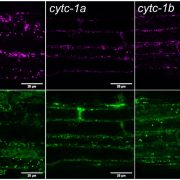
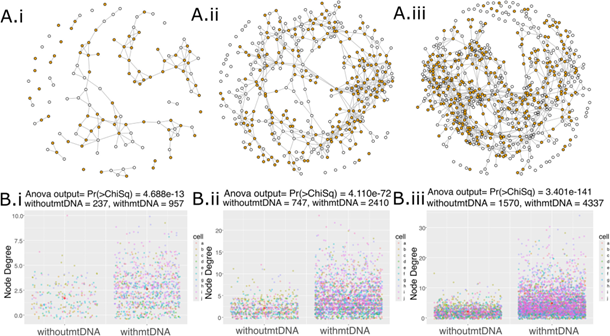 Mitochondria move within cells to support bioenergetic function and enable sharing of content, including mitochondrial DNA (mtDNA). Since not all plant mitochondria carry a full set of, or any mtDNA, sharing may allow genetic material to spread across the population. This creates a connected network of mitochondria that interact and homogenize their contents. However, the link between physical movement and genetic interactions remains unclear. To address this, Chustecki et al. used two approaches to examine mitochondria with and without mtDNA. With a SYBR system, they analyzed whole single cells in Arabidopsis hypocotyl and epidermal cells, and found a variable proportion of mitochondria lacking mtDNA, both within and between cell types. Tracking movement in hypocotyl cells showed that although average speed did not differ, mitochondria without mtDNA covered smaller areas, stayed farther from those with mtDNA, and had lower connectivity, encountering fewer individuals during movement compared to their counterpart. To validate these findings, the authors developed mt-HI-NESS lines for live imaging, tracking, and differential motility analysis. This approach provided a more specific marker and showed reduced speed in mitochondria without mtDNA, while confirming the same patterns of motility and connectivity as observed with the SYBR system. (Summary by Irene I. Ikiriko @ireneikiriko). Physiologia Plantarum 10.1111/ppl.70404.