
Metagenomic insights into the ancestor of eukaryotes
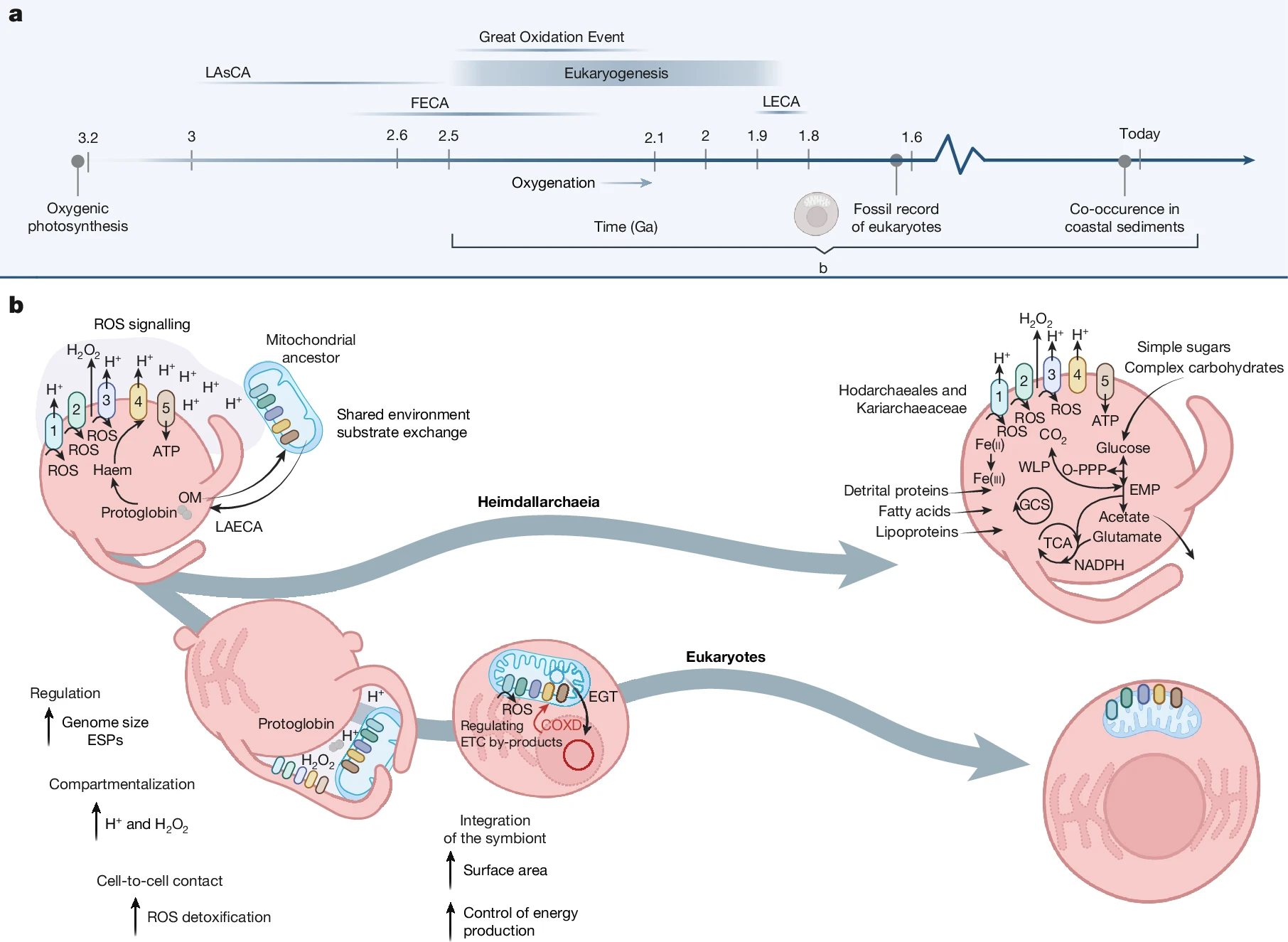 The awesome power of metagenomics is providing fascinating insights into the origins of life. Tracing backwards from today’s life forms we can identify features that were likely present in the last universal common ancestor (LUCA), as well as the last eukaryotic common ancestor (LECA), which arose after the evolution of oxygenic photosynthesis. This exciting paper by Appler et al. provides new insights into the origin of eukaryotes (eukaryogenesis), which is thought to have involved an endosymbiotic event between an alphaproteobacteria (pre-mitochondria) and an Asgard archaea, which have many eukaryotic-like proteins (Asgard was the home of Norse gods, based on the naming conventions of the archaea). The researchers carried out a massive sequencing effort, resulting in over 400 new metagenome-assembled genomes (MAGs) that they identified as Asgardarchaeota, and took a deep dive into their metabolic capabilities. The authors conclude, “that the archaeal ancestor of eukaryotes was not just oxygen tolerant, through an arsenal of ROS-detoxifying enzymes, but potentially benefited from oxygen through aerobic respiration.” Interestingly, this raises the possibility that the selective advantage of acquiring mitochondria wasn’t solely conferred by aerobic respiration, but perhaps by the compartmentalization of it. (Summary by Mary Williams @PlantTeaching.bsky.social) Nature 10.1038/s41586-026-10128-z