

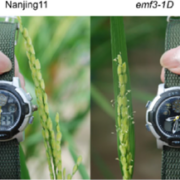
Altering a nucleotide base to escape from heat
Plant Science Research Weekly
Crops such as rice usually flower in the late morning when the ambient temperature rises. Rice plants briefly open their flowers so the mature anthers hang out. However, heat stress can trigger abnormal anther dehiscence, flower infertility, and subsequent yield reduction. Early-morning flowering…
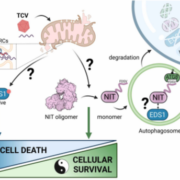
How selective autophagy protects plants from self-damage upon infection
Plant Science Research WeeklyAutophagy is a conserved cellular recycling process that clears unwanted components and helps maintain balance under stress. In plants, immunity protects against invading pathogens, but how autophagy regulates this defense system has remained unclear. To address this question, Clavel and colleagues challenged…
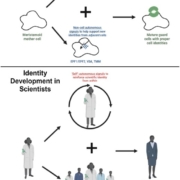
Letter: Extrinsic and intrinsic contributors to identity in cells and people
Plant Science Research WeeklyIn this interesting Letter to the Editor, Drew and Nagel explore the concept of how identities are established, and draw a comparison between the scientific identity of a person and the cellular identity of a developing guard cell. The article starts by briefly describing the cell autonomous and non-cell…
Plant Science Research Weekly: June 5, 2026
WWR Full PostSpecial issue on methods to assess crop stress resilience
Our food crops are threatened by ever-increasing environmental challenges as a consequence of climate change. It’s critical that we develop strategies to monitor and mitigate these stresses, but it’s also a huge undertaking. A new focus…
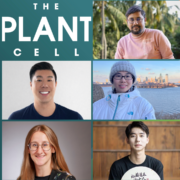
The Plant Cell Features January, February and March 2026 First Authors
Blog, Community, The Plant Cell: Author ProfilesBehind the manuscripts are researchers, professors, professionals, and students dedicated to advancing the field of plant science. You’ve seen our First Authors on Bluesky, X and Facebook— now, read more about why they chose to pursue plant sciences and click on the links to read their articles.
Vinod…
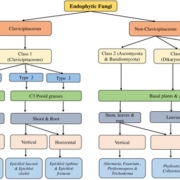
Review: Revisiting endophyte-mediated plant protection across diverse host systems
Plant Science Research WeeklyEndophytic bacteria and fungi, the invisible allies within plant tissues, are emerging as powerful contributors to sustainable agriculture. They can enhance plant defense through multiple mechanisms, including antibiosis, niche competition, and the induction of systemic resistance, thereby reducing reliance…
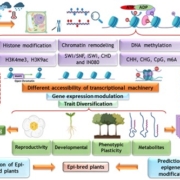
Opinion: Non-model plants as windows into complex epigenetic adaptation
Plant Science Research WeeklyPlants thrive in constantly changing environments through remarkable trait plasticity, enabling rapid physiological and developmental adaptation to stress. Beyond immediate responses, chromatin regulation provides a mechanism for long-term stress memory via epigenetic changes, allowing plants to “remember”…
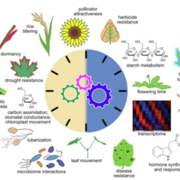
Perspective: Twenty-five years of discovery and innovation on the plant circadian clock
Plant Science Research WeeklyIn this Perspective article, Stacey Harmer reflects on plant gene regulation driven by the circadian cycle, using a thoughtful approachable tone to describe technological milestones that advanced our understanding of this complex mechanism of gene expression, as well as the work carried out by various…
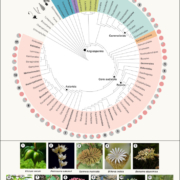
Perspective: PLANeT, an exciting plan to fill the knowledge gaps in plant phylogenomics
Plant Science Research WeeklyWe are living at a time where insights into plant diversity, function, and evolution are being revealed at an unprecedented rate, thanks largely to the ability to readily sequence and assemble genomes. A new Perspective by Want, along with a large, international group of co-authors, sets out an exciting…