
Compartmentalizing nitrogen metabolism enhances use efficiency
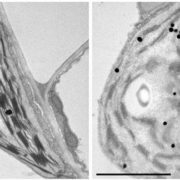
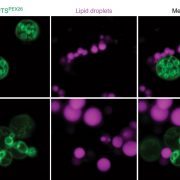
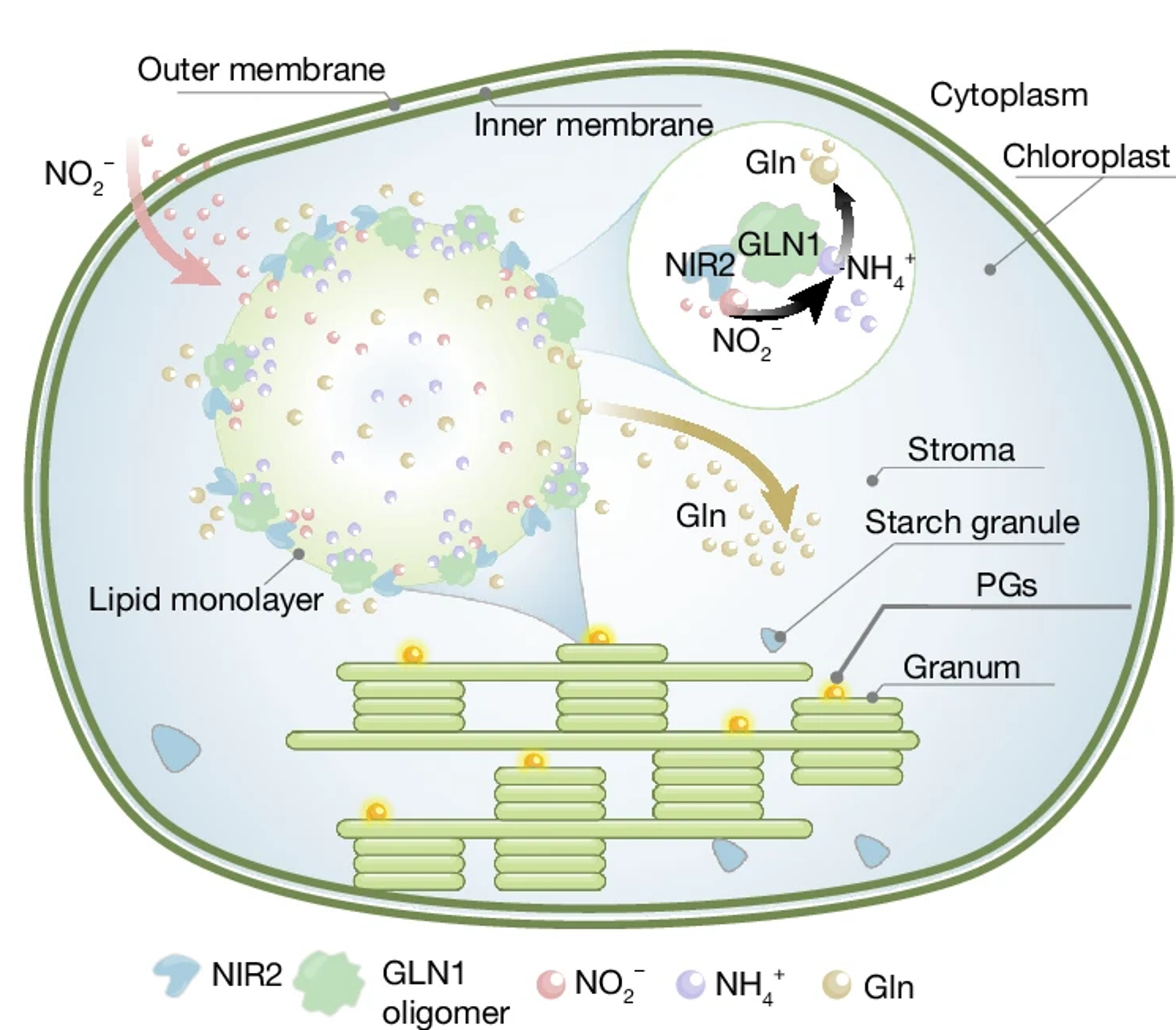 Many metabolic reactions take place in specialized compartments (e.g., plastids, peroxisomes), enhancing their efficiency by concentrating enzymes and substrates. Plastoglobules (PGs) are dynamic lipoprotein compartments that are found inside plastids anchored to the thylakoid membranes. A recent study by Chen et al. investigated the role of plastoglobules in nitrogen metabolism in maize. The authors observed that in mesophyll cells the number of PGs increased with increasing amounts of nitrogen provided to the plant. Proteomic analysis showed two enzymes involved in nitrogen metabolism were abundant in PGs, nitrite reductase and glutamine synthase, in addition to the structural proteins and proteins associated with lipid metabolism previously associated with these compartments. The products of two genes, ZmNIR2 and ZmGLN1, were particularly enriched. Concentrating these enzymes into a shared compartment (forming a metabolon) is likely to improve their efficiency. They further identified one spicing variant ZmNIR2T1 but not another as plastoglobule-localized. When overexpressed in plants, only the PG-localized splicing variant showed enhanced nitrogen use efficiency and growth rate, including in field trials. These studies provide an exciting new avenue to enhance the efficiency with which plants use nitrogen fertilizers, potentially allowing for more yield and less run off. (Summary by Mary Williams @PlantTeaching.bsky.social) Nature https://doi.org/10.1038/s41586-026-10610-8