

Plant Science Research Weekly: June 26 2026
Special Issue of Current Biology on plant evolution
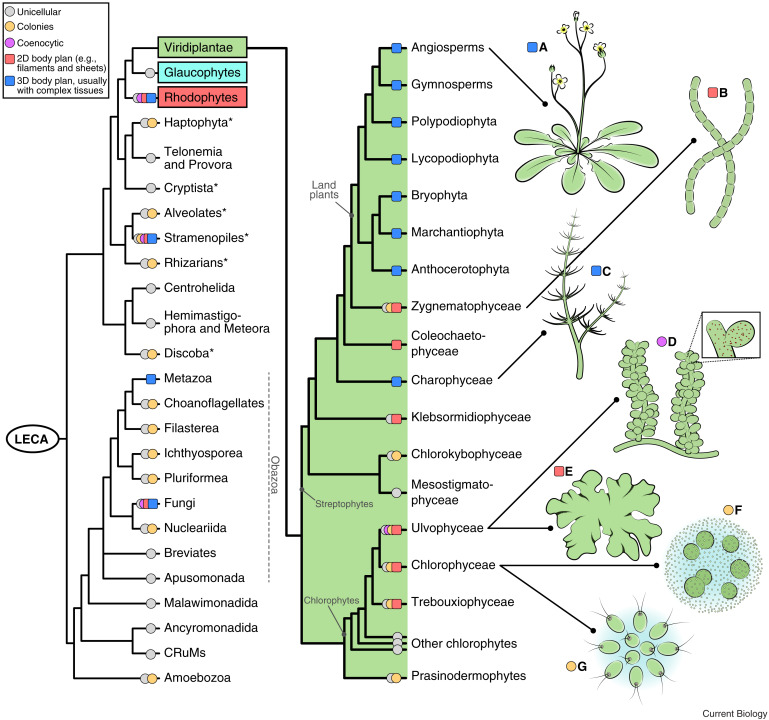 Current Biology has an excellent special issue on plant evolution full of fascinating articles. As an example, a Primer by Zhuo Feng looks at how plants were catastrophically impacted by the end-Permian mass extinction event approximately 250 million years ago. The fossil record from the Cathaysian Flora, found mostly in China and surrounding regions, hints at how plants slowly recovered from this catastrophic event, and concludes with a compelling paragraph reminding us that unlike previous mass extinction events, the current one is caused by human actions. There are also Primers on various plant groups, including aquatic plants, ferns, and gnetophytes (including the iconic Welwitschia). The issue includes several excellent review articles, covering topics including the evolution of auxin, polyploidy, root systems, cell-surface receptors, sex determination and more. As technology advances, from imaging to single-cell omics tools, our understanding of how plants evolved has exploded, and this special issue is a great way to catch up on these insights. (Summary by Mary Williams @PlantTeaching.bsky.social) Curr. Biol. https://www.sciencedirect.com/journal/current-biology/vol/36/issue/11
Review: How temperature regulates stomatal development and dynamics
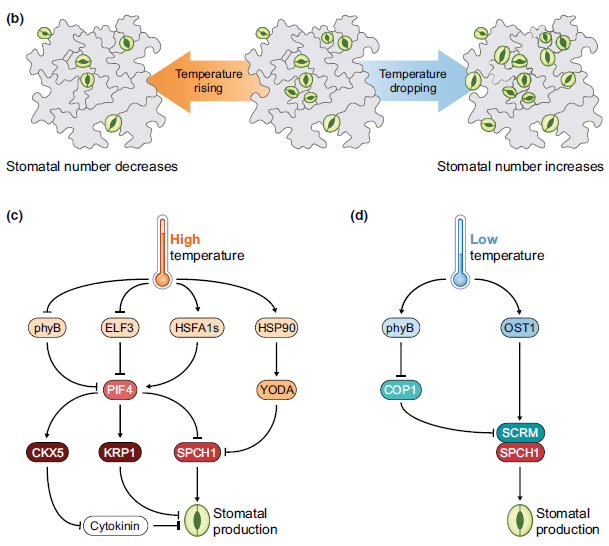 The temperature a plant grows in is increasingly unpredictable under changing climate. To maintain photosynthesis and ensure growth, the leaf must respond to both gradual and rapid temperature changes. In this review, Yang et al. highlight stomatal development and dynamics as the adaptive responses to long-term and short-term temperature stresses respectively. Prolonged exposure to heat reduces stomatal density, but a sudden temperature rise under well-watered conditions enhances stomatal opening to facilitate cooling through transpiration. In contrast, prolonged exposure to low temperatures disfavours water flow and transpiration but promotes stomatal density. The authors highlight PIF4 and SCRM/ICE1 as the major transcription factors shaping stomatal development at high and low temperature respectively, while emphasizing the unknowns of stomatal dynamics regulations. They conclude the review with examples of stomatal development and dynamics manipulations in crops, stating the importance of translating this knowledge toward climate-resilient crop production under combined stresses in the natural environment. (Summary by Yee-Shan Ku @Yee-Shan Ku) New Phytol. 10.1111/nph.71326
Review: How plants repurposed cytokinin signaling for life on land
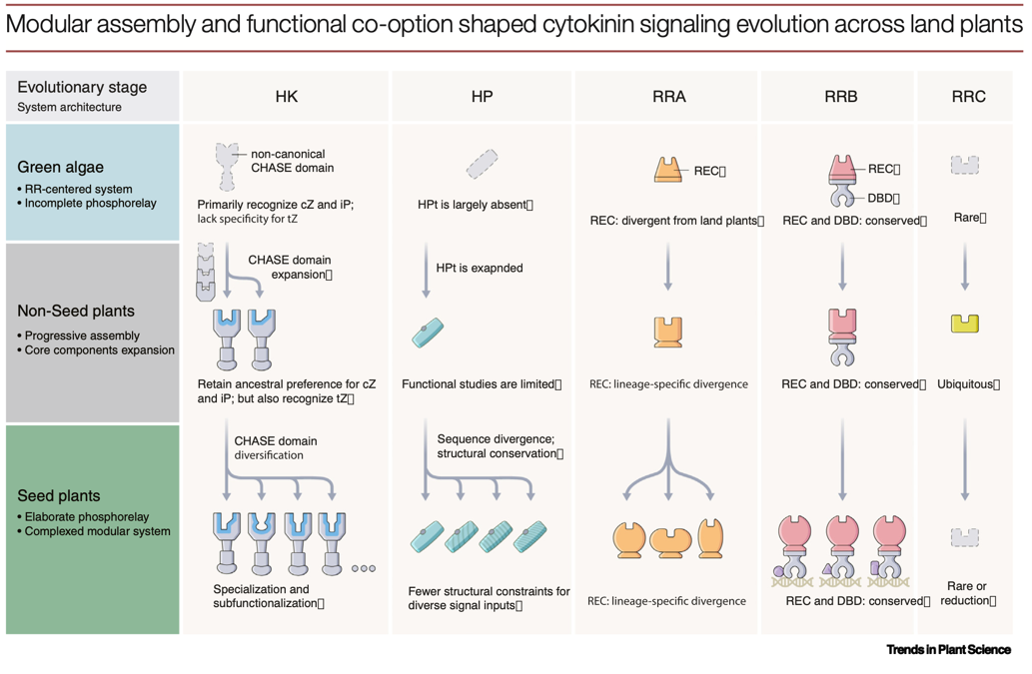 When plants first moved onto land, they encountered challenges that aquatic ancestors never faced, including heat, dehydration, and rapidly changing environmental conditions. A new review by Wang et al. explores how cytokinin signaling, a pathway best known for regulating plant growth and development, may have helped plants adapt to these new stresses over hundreds of millions of years. By comparing signaling components across algae, bryophytes, and vascular plants, the authors show that different parts of the pathway followed distinct evolutionary trajectories. Receptors and signaling intermediates diversified, while the core transcriptional machinery remained remarkably stable. The authors also examined heat-stress responses across plant lineages and found evidence for a shared strategy of reducing growth while activating protective processes. At the same time, the mechanisms underlying stress tolerance appear to have shifted during evolution, from reliance on osmoprotective pathways in bryophytes and transport-based responses in vascular plants. Rather than evolving an entirely new stress-response system, plants appear to have repeatedly modified an existing cytokinin network to meet the challenges of life on land. (Summary by Deborah Ighalo)Trends Plant Sci.10.1016/j.tplants.2026.05.007
Insights into pyrenoid structure
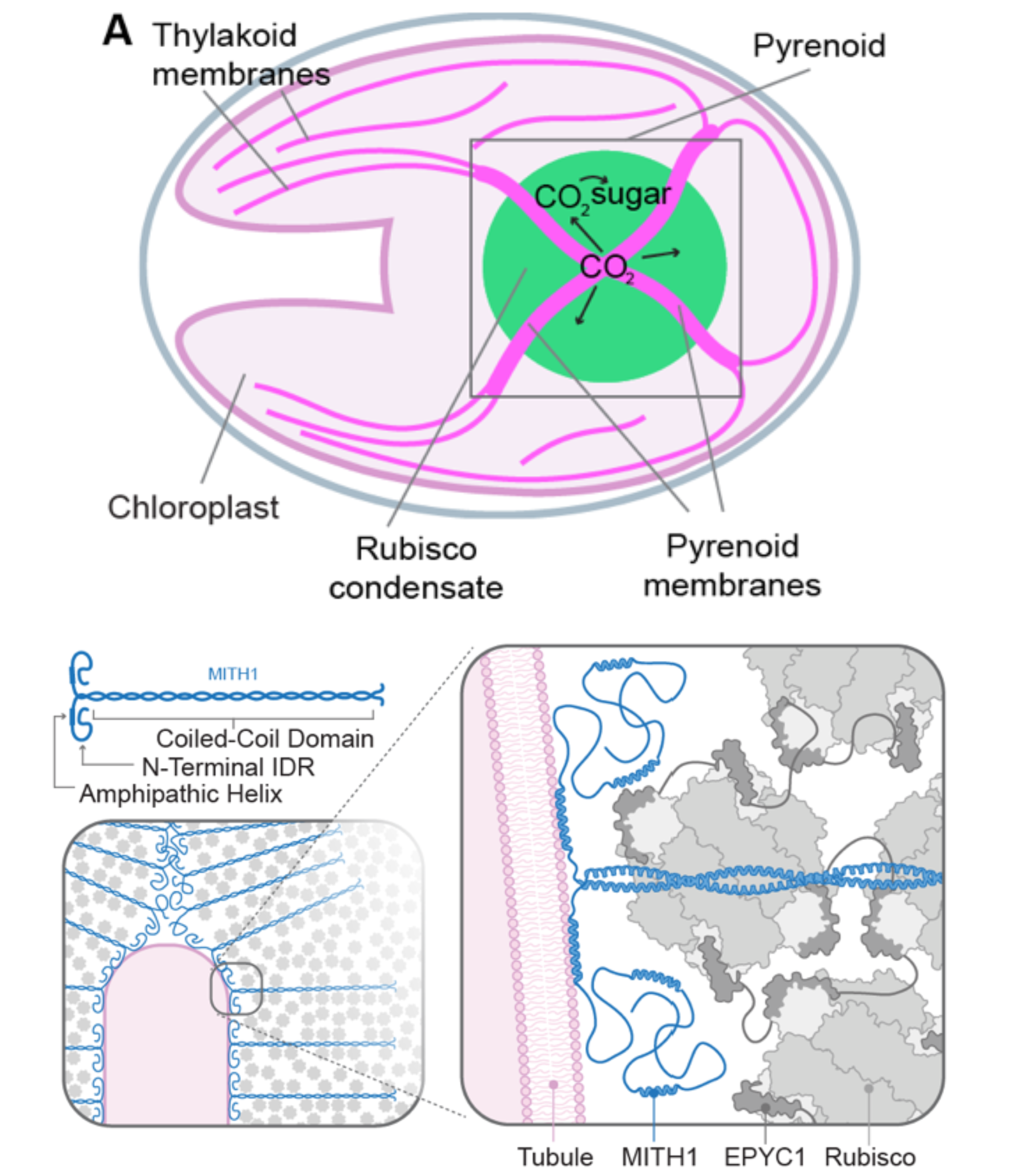 As close relatives of land plants, green algae provide insights into variations on photosynthesis. Many algae including Chlamydomonas reinhardtii have carbon-concentrating structures called pyrenoids that enrich CO2 around Rubisco, minimizing the competing oxygenation reaction. In a recent preprint, Ergun et al. investigated the structure of the pyrenoid, particularly how the tubules containing CO2 are integrated into the molecular condensate composed of Rubisco. Previously, they had identified a mutant in MITH1 that is devoid of the condensate-penetrating tubules, suggesting that this protein is necessary for their formation. In their new work, they used cryo-EM and fluorescent labelling to analyze pyrenoids in various deletion mutants of MITH1. The protein has an intrinsically disordered domain at the N-terminus, followed by a domain that forms an amphipathic helix, and then a domain that dimerizes as a long coiled-coiled region. The data reveal that the MITH1 protein binds to the tubules with the amphipathic helix region, and that the coiled-coiled domain extends outward from the tubules and binds to Rubisco in the condensate. These insights reveal how MITH1 promotes tubule entry and organization within the condensate of the pyrenoid, enhancing photosynthetic efficiency. (Summary by Mary Williams @PlantTeaching.bsky.social) bioRxiv https://www.biorxiv.org/content/10.64898/2026.06.09.731149v1
A new technology holds promise for Lunar nitrogen fertilizers
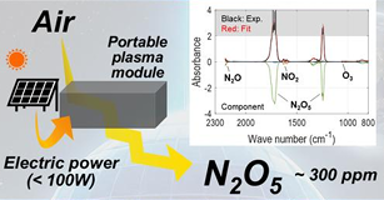 Plasma technology utilizes high-energy electrons to make nitrogen and oxygen gases from the atmosphere react with each other in order to produce various nitrogen oxide species. This technology can recreate the essential reactions underlying nitrogen fixation, through which nitrogen found in inert N2 atmospheric gas is converted into readily accessible forms such as nitrogen oxides for plants to assimilate. One such nitrogen oxide produced by this technology is dinitrogen pentoxide (N2O5), which Kaneko and colleagues applied as a gas or dissolved in water to rice seedlings grown in simulated Lunar crushed rock called regolith. They subsequently quantified gene expression levels, fresh weight, and fresh weight per unit length. The addition of N2O5-dissolved water reduced the alkaline pH of the regolith and significantly increased the elution of metal ions in the regolith coming from potassium, magnesium, and calcium oxides, providing the appropriate minerals for the plants to grow. The researchers observed that applying N2O5 gas to leaves triggers jasmonic acid and ethylene phytohormone pathways as well as increases systemic resistance and the production of secondary metabolites involved with lignin and flavonoid synthesis. Overall, this sustainable plasma technology has the capability to help improve the impact of nitrogen fertilizer on plant success, even in harsh Lunar conditions. (Summary by Ruth Nichols). npj Microgravity. 10.1038/s41526-026-00602-3
Compartmentalizing nitrogen metabolism enhances use efficiency
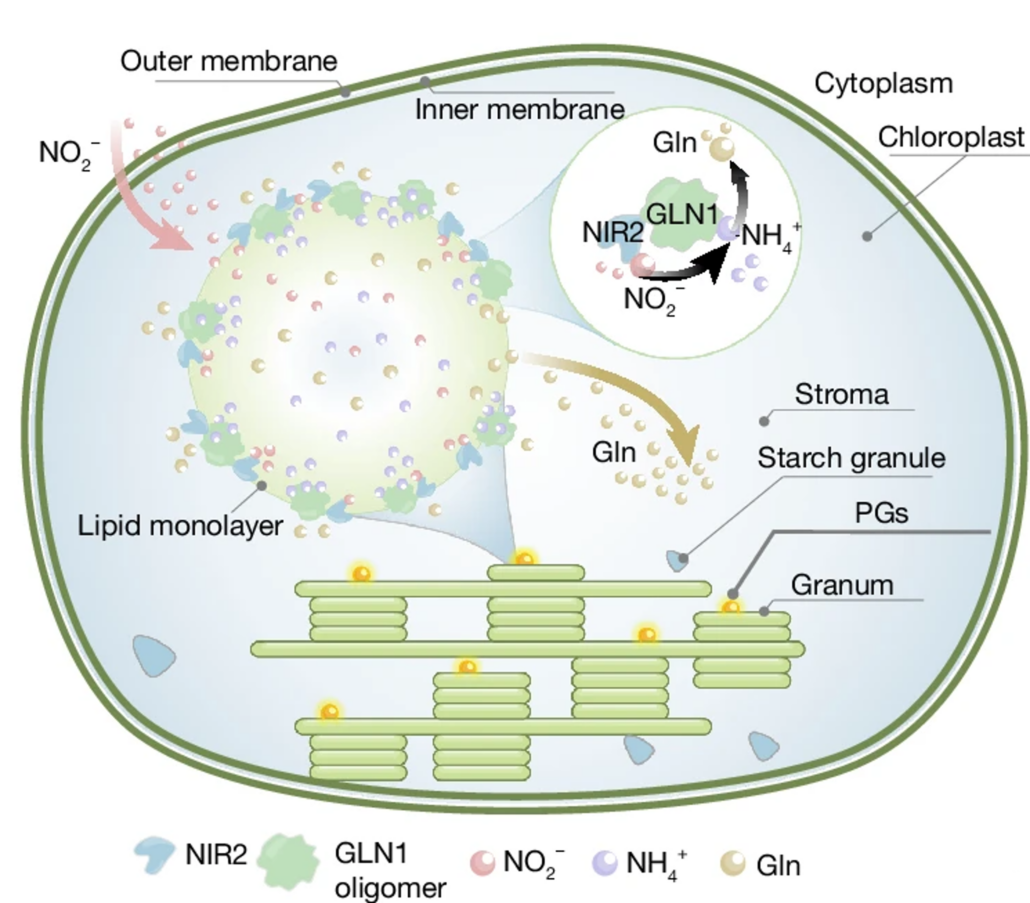
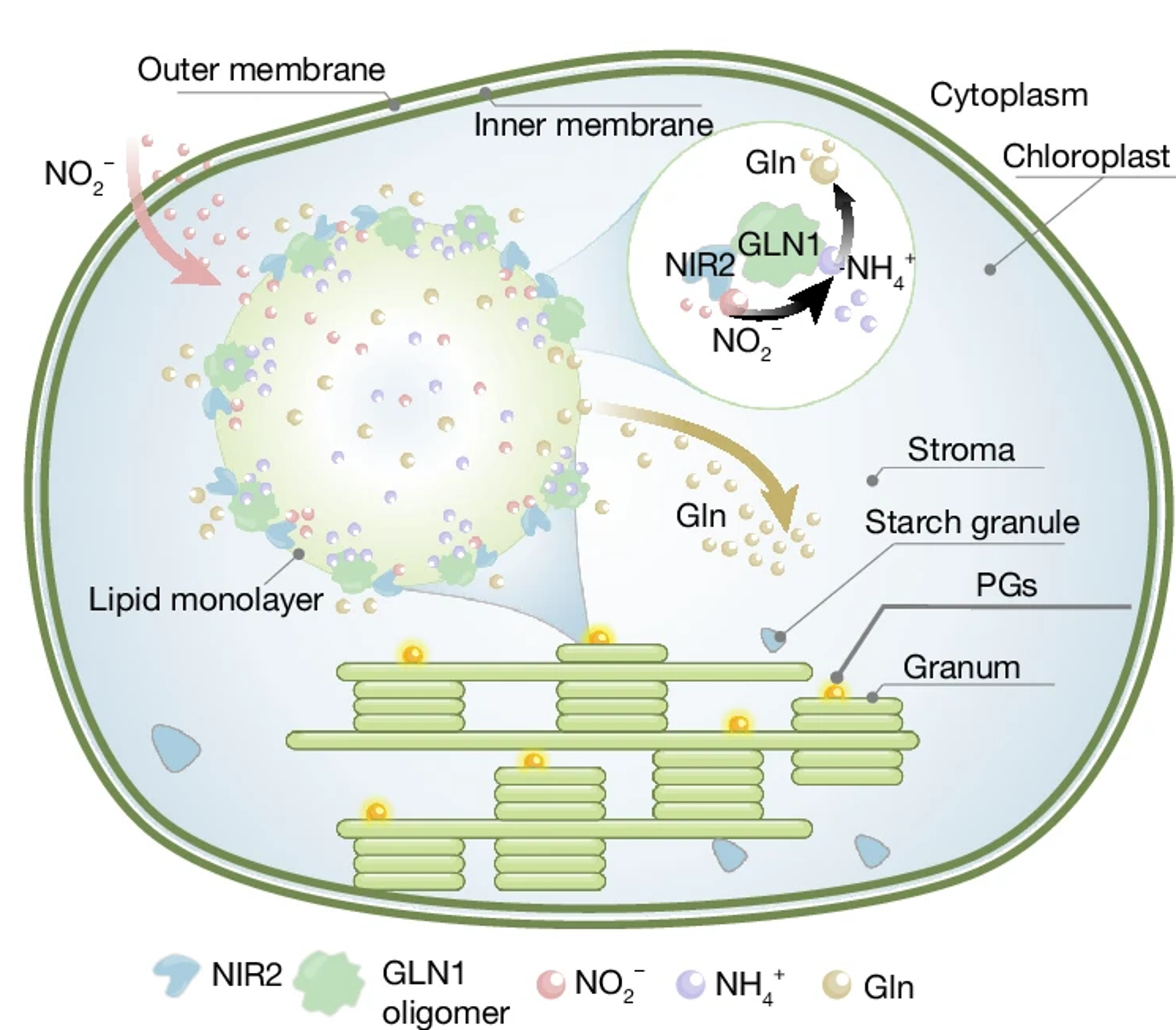 Many metabolic reactions take place in specialized compartments (e.g., plastids, peroxisomes), enhancing their efficiency by concentrating enzymes and substrates. Plastoglobules (PGs) are dynamic lipoprotein compartments that are found inside plastids anchored to the thylakoid membranes. A recent study by Chen et al. investigated the role of plastoglobules in nitrogen metabolism in maize. The authors observed that in mesophyll cells the number of PGs increased with increasing amounts of nitrogen provided to the plant. Proteomic analysis showed two enzymes involved in nitrogen metabolism were abundant in PGs, nitrite reductase and glutamine synthase, in addition to the structural proteins and proteins associated with lipid metabolism previously associated with these compartments. The products of two genes, ZmNIR2 and ZmGLN1, were particularly enriched. Concentrating these enzymes into a shared compartment (forming a metabolon) is likely to improve their efficiency. They further identified one spicing variant ZmNIR2T1 but not another as plastoglobule-localized. When overexpressed in plants, only the PG-localized splicing variant showed enhanced nitrogen use efficiency and growth rate, including in field trials. These studies provide an exciting new avenue to enhance the efficiency with which plants use nitrogen fertilizers, potentially allowing for more yield and less run off. (Summary by Mary Williams @PlantTeaching.bsky.social) Nature https://doi.org/10.1038/s41586-026-10610-8
CP26 has a structural role in non-photochemical quenching
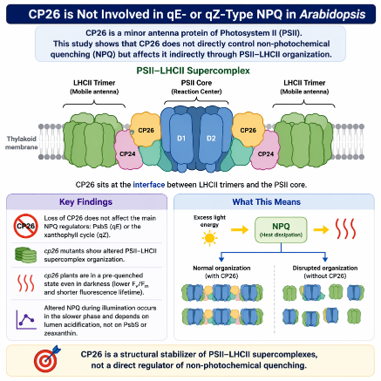 Plants protect themselves from excess light by safely dissipating extra energy as heat through a process called non-photochemical quenching (NPQ). Several proteins are known to control this process, but the role of the antenna protein CP26 has remained unclear. In this study, Walter et al. used Arabidopsis mutants lacking CP26, alone and in combination with other key NPQ regulators, to investigate its function. Walter and colleagues found that plants without CP26 behave differently from normal plants. Even in darkness, these plants were already in a “pre-quenched” state, meaning their photosystems were less efficient before light exposure. Under high light, they also showed altered NPQ responses, particularly during the slower phase of energy dissipation. However, these changes were not driven by the main NPQ components, including the PsbS protein and the xanthophyll cycle, which are typically responsible for fast and slow NPQ, respectively. Instead, the results suggest that CP26 does not directly control NPQ. Rather, its absence disrupts the organization of protein complexes in the chloroplast, which indirectly affects how energy is dissipated. Overall, this study clarifies that CP26 is not a core regulator of NPQ but plays an important structural role in maintaining efficient photosynthesis. Understanding these structural effects helps refine our knowledge of how plants balance light capture and protection. (Summary by Fatai Ayomide Akande) Plant Physiology 10.1093/plphys/kiag207
Evidence for C4 photosynthetic fluxes in transgenic rice plants
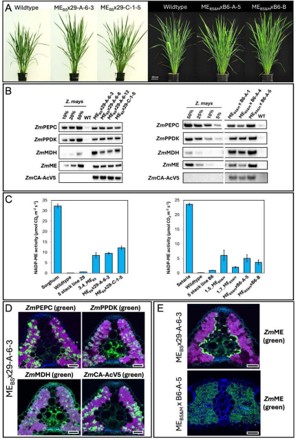 Improving photosynthetic efficiency is an important strategy to boost yields in staple crops such as rice, which relies on the relatively inefficient C3 pathway. In contrast, C4 photosynthesis minimizes photorespiration through a carbon-concentrating mechanism, making it more productive under high-light and high-temperature conditions. Engineering C4 traits into rice has long been a major goal, but progress has been limited by the complexity of coordinating biochemical reactions with the leaf structures specific to C4 pathways, such as bundle sheath cells. In this study, Baccolini et al. developed improved transgenic rice lines expressing key C4 enzymes and used pulse-chase experiments to detect metabolic flux within the pathway. The authors provide clear evidence that multiple core C4 reactions are operational in these engineered plants, including the three central steps of the C4 cycle and CO₂ refixation, indicating coordinated metabolic activity within a C3 background. Importantly, this work moves beyond proof-of-expression toward proof-of-function, demonstrating that C4-like biochemical flux can occur in rice despite the absence of specialized C4 anatomy. This study represents a significant step toward developing high-yielding, climate-resilient crops that can sustain global food production under increasingly challenging environmental conditions. (Summary by Fatai Ayomide Akande) bioRxiv 10.64898/2026.05.28.728371
The protein that feels thirst: SAM8 as a molecular water sensor
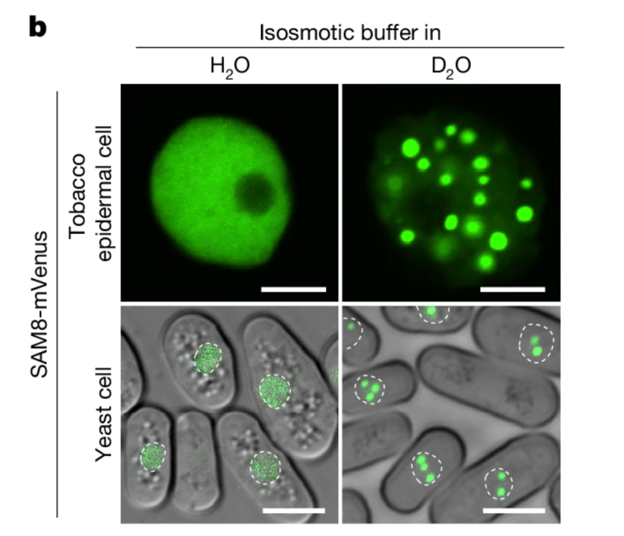 How a cell detects a drop in water potential, the physical signal of drought or salinity, has been a long-standing puzzle. Wang et al. identified SAM8, an Arabidopsis protein that reversibly condenses into nuclear droplets when cellular water becomes scarce. When water is freely available, a negatively charged disordered region surrounds SAM8 with a thick hydration shell that keeps it dispersed in the solution; when water potential drops from osmotic stress or seed desiccation, the hydration layer thins and the protein reversibly phase-separates within minutes. The authors confirmed this behavior by using purified protein in vitro, showing that crowders like PEG, which sequesters water, triggers this condensation while a same-sized crowder that does not lower water potential leaves the SAM8 dispersed. The condensed SAM8 droplets selectively trap mRNA export factors from the ALY family, holding messenger RNAs in the nucleus and reprogramming translation toward stress-response transcripts rather than growth genes. Plants that lack SAM8 are hypersensitive to osmotic stress and germinate poorly, and the sensitivity threshold tracks with a species drought tolerance, pointing to a conserved, tunable mechanism for balancing growth against water stress. (Summary by Trevor Melusen) Nature 10.1038/s41586-026-10591-8.
The architecture of the cell-to-cell message channel
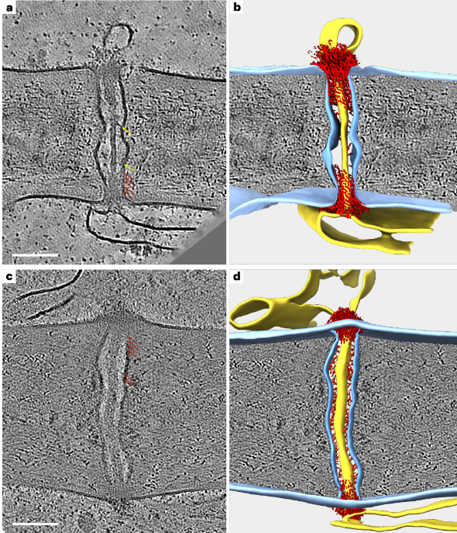 Cells communicate with one another to coordinate signaling across tissues. Adjacent cells are connected by plasmodesmata that create a cellular continuum throughout the plant. Although many plasmodesmata-associated proteins have been identified, details of structure remain unclear. Techniques often used, such as fluorescence microscopy, electron microscopy, and electron tomography, have helped to determine how these structures form and what they look like. However, these approaches are limited in the structures that can be resolved. By contrast, new advances in cryo-electron tomography (cryo-ET) allow sample processing in their native cellular context. In this study, the authors investigated the structure of plasmodesmata and their regulation in the moss Physcomitrium patens. This species shows a typical plasmodesmata architecture, with a cell cavity lined by the plasma membrane and containing a tubular extension of the endoplasmic reticulum. As part of the ABA response, plants accumulate callose on both sides of these channels to regulate their opening. In this paper, the authors show that local remodeling of the cell wall forms an apoplasmic gate can of fully close plasmodesmata. (Summary by Montserrat López-Coria). Nature Plants 10.1038/s41477-026-02294-9
Closing the gates: Plasmodesmal closure triggers stress responses
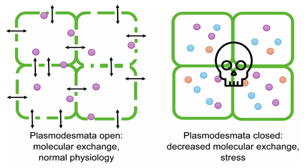 Plasmodesmata are membrane-lined bridges between adjacent plant cells that control the exchange of signaling molecules and nutrients between neighbouring cells. Biotic stress is known to cause the rapid closure of plasmodesmata via callose deposition; however, its precise role in immune responses remains unclear. In a recent study, Tee et al. demonstrated that plasmodesmal closure is sufficient to activate stress-signaling using inducible Arabidopsis lines that promote plasmodesmata closure independent of stress elicitors. Transcriptomic analyses revealed that prolonged closure upregulates defense-related genes. Increased salicylic acid biosynthesis and signaling in transgenic lines suggested that closure alone can activate stress signaling in the absence of external elicitors. The authors further showed accumulation of sugars in transgenic lines, indicating a metabolic imbalance accompanied by growth defects and signs of senescence. Surprisingly, photosynthetic efficiency remained unchanged, suggesting that sugar accumulation results from impaired symplastic transport. To further establish functional significance, the authors performed pathogen assays that showed plasmodesmal closure enhanced resistance to the biotroph Pseudomonas syringae DC3000 but increased susceptibility to the necrotroph Botrytis cinerea. The authors proposed that accumulated sugars may provide a nutrient source for necrotrophs, while SA signaling enhances resistance against biotrophic pathogens. Taken together, this study establishes that cell connectivity is crucial for optimum plant function, and plasmodesmal closure itself acts as an activator of stress signaling. (Summary by Priyanka Babuta) EMBO Reports 10.1038/s44319-026-00789-2
A MAPK signaling hub for abiotic stress tolerance in potato
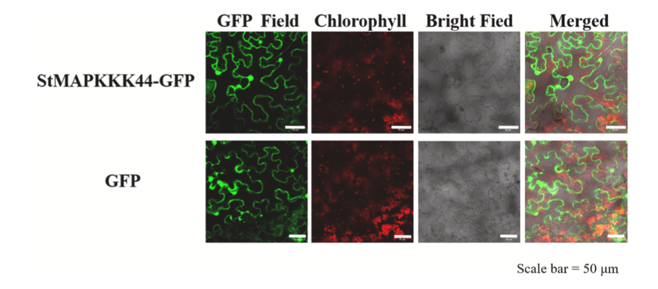 Potato productivity is highly vulnerable to drought and salinity, yet the signaling mechanisms underlying stress adaptation remain incompletely understood. A recent study by Zhu et al. used a genome-wide analysis of the mitogen-activated protein kinase kinase kinase (MAPKKK) family in potato and identified 85 StMAPKKK genes distributed across the genome. Expression profiling revealed that several family members respond to abiotic stress, with StMAPKKK44 showing strong induction under both drought and salt treatments. Functional analyses demonstrated that StMAPKKK44 localizes to the plasma membrane, cytoplasm, and nucleus and interacts with the downstream kinases StMAPKK1 and StMAPKK5. Transgenic potato plants overexpressing StMAPKKK44 exhibited improved growth and biomass accumulation under drought and salinity stress, whereas RNAi lines displayed increased stress sensitivity. Enhanced stress tolerance was associated with lower accumulation of oxidative damage markers, increased activities of antioxidant enzymes, greater accumulation of proline and soluble sugars, and improved maintenance of chlorophyll content. These results place StMAPKKK44 among the key regulators of drought and salt stress adaptation in potato and provide a framework for understanding MAPK-mediated stress signaling in this crop. (Summary by Deborah Ighalo) J. Plant Physiol. 10.1016/j.jplph.2026.154799
Fast cell wall softening powers Venus flytrap closure
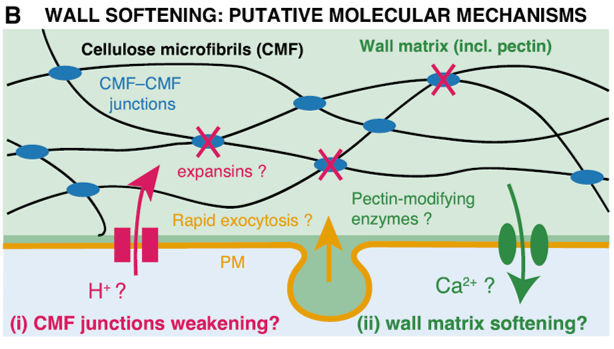 We are used to thinking of plants as slow-moving organisms, so the few exceptions that exist are not only fascinating curiosities but also scientific mysteries waiting to be resolved. The Venus flytrap is one of the most studied fast-moving plants. Until now, the rapid closure of its trap was thought to be driven primarily by water movement. In their new paper, Ryu et al. challenge this idea by analyzing the hydraulic and mechanical properties of the trap. They show that the key mechanism behind the release of the stored elastic energy is a rapid softening of the epidermal cell wall. This change in stiffness is the fastest ever recorded in plant cell walls. What molecular mechanisms could produce such a rapid response? The authors propose several possibilities, including calcium-mediated modifications of the pectin matrix, changes in the mechanical connectivity of the cellulose microfibril network, and the action of wall-loosening proteins such as expansins. The authors note that transgenic lines and mutants are already available, and we look forward to the insights they will provide into the molecular basis of this extraordinary feat of plant biomechanics. By demonstrating that ultrafast cell wall softening, not hydraulic flow, triggers trap closure, this study reshapes the mechanistic framework for rapid plant movements and highlights the dynamic potential of plant cell walls. (Summary by Ale Lombardi @alepanda.bsky.social) Science, 10.1126/science.aed5051
