A MAPK signaling hub for abiotic stress tolerance in potato
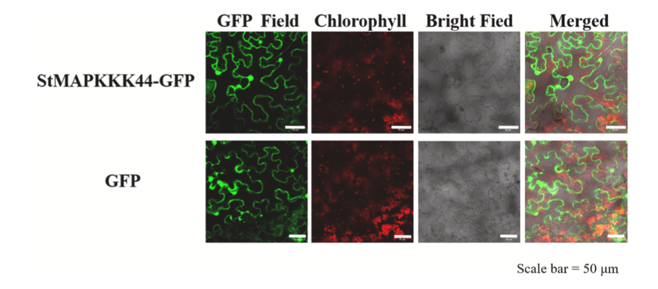 Potato productivity is highly vulnerable to drought and salinity, yet the signaling mechanisms underlying stress adaptation remain incompletely understood. A recent study by Zhu et al. used a genome-wide analysis of the mitogen-activated protein kinase kinase kinase (MAPKKK) family in potato and identified 85 StMAPKKK genes distributed across the genome. Expression profiling revealed that several family members respond to abiotic stress, with StMAPKKK44 showing strong induction under both drought and salt treatments. Functional analyses demonstrated that StMAPKKK44 localizes to the plasma membrane, cytoplasm, and nucleus and interacts with the downstream kinases StMAPKK1 and StMAPKK5. Transgenic potato plants overexpressing StMAPKKK44 exhibited improved growth and biomass accumulation under drought and salinity stress, whereas RNAi lines displayed increased stress sensitivity. Enhanced stress tolerance was associated with lower accumulation of oxidative damage markers, increased activities of antioxidant enzymes, greater accumulation of proline and soluble sugars, and improved maintenance of chlorophyll content. These results place StMAPKKK44 among the key regulators of drought and salt stress adaptation in potato and provide a framework for understanding MAPK-mediated stress signaling in this crop. (Summary by Deborah Ighalo) J. Plant Physiol. 10.1016/j.jplph.2026.154799