

A MAPK signaling hub for abiotic stress tolerance in potato
Plant Science Research WeeklyPotato productivity is highly vulnerable to drought and salinity, yet the signaling mechanisms underlying stress adaptation remain incompletely understood. A recent study by Zhu et al. used a genome-wide analysis of the mitogen-activated protein kinase kinase kinase (MAPKKK) family in potato and identified…
Fast cell wall softening powers Venus flytrap closure
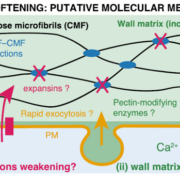
Plant Science Research WeeklyWe are used to thinking of plants as slow-moving organisms, so the few exceptions that exist are not only fascinating curiosities but also scientific mysteries waiting to be resolved. The Venus flytrap is one of the most studied fast-moving plants. Until now, the rapid closure of its trap was thought…
Plant Science Research Weekly: June 26 2026
WWR Full PostSpecial Issue of Current Biology on plant evolution
Current Biology has an excellent special issue on plant evolution full of fascinating articles. As an example, a Primer by Zhuo Feng looks at how plants were catastrophically impacted by the end-Permian mass extinction event approximately 250 million…
Special issue on methods to assess crop stress resilience
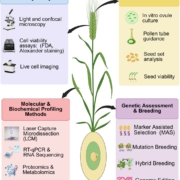
Plant Science Research WeeklyOur food crops are threatened by ever-increasing environmental challenges as a consequence of climate change. It’s critical that we develop strategies to monitor and mitigate these stresses, but it’s also a huge undertaking. A new focus issue in Physiologia Plantarum provides a set of articles that…
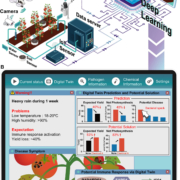
Focus issue on AI for plant sciences
Plant Science Research WeeklyThere are numerous ways that AI can support research productivity through its ability to evaluate large datasets. Plant Communications has assembled a collection of articles that describe some of these new tools and approaches. As an example, Jang et al. describe the use of digital twins as tools to…
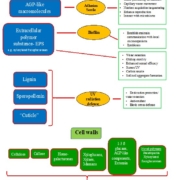
Review: How the extracellular matrix of streptophyte algae contributed to plant terrestrialization
Plant Science Research WeeklyCompared to their aquatic relatives, early land plants faced many challenges, such as a lack of buoyancy, harmful UV light, the challenge of nutrient uptake, and the need to avoid desiccation. In a fascinating review (part of the Plant Physiology focus collection on early land plant evolution), Domozych…
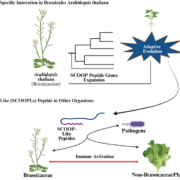
Review. Decoding SCOOP signaling: evolution, recognition, and functions of a plant peptide family
Plant Science Research WeeklyPlants continuously monitor their environment through sophisticated defense systems that recognize microbe-associated molecular patterns and activate immune responses. Among the diverse signaling molecules involved, peptides have emerged as an important molecular language that coordinates communication…
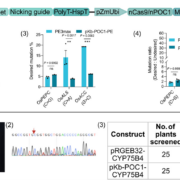
Letter. OpenCRISPR-1 in rice: when AI meets plant genome editing
Plant Science Research WeeklyGenome editing has rapidly transformed biology, and Cas9 remains the most widely used tool for making targeted changes in DNA. Recently, a new AI-designed editor called OpenCRISPR-1 (OC1) which differs from prototypical SpCas by more than 400 amino acids has shown promise in human cells. Das and colleagues…
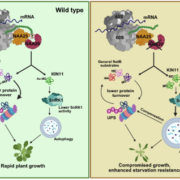
Coordinating plant growth and stress resistance via N-terminal protein acetylation
Plant Science Research WeeklyThe mechanisms by which plants switch between growth and stress survival remain somewhat enigmatic. Following on from previous studies, Gong et al. revealed that the conserved N-terminal acetyltransferase B (NatB) helps regulate this balance. Arabidopsis mutants lacking the catalytic subunit of NatB,…