
Review: How plants repurposed cytokinin signaling for life on land
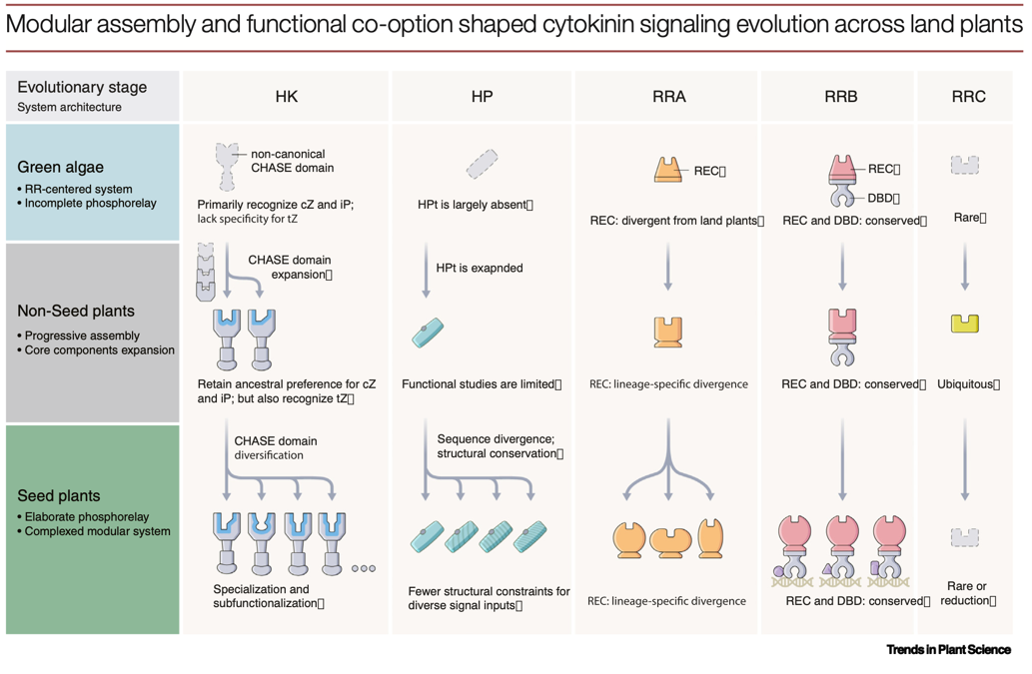 When plants first moved onto land, they encountered challenges that aquatic ancestors never faced, including heat, dehydration, and rapidly changing environmental conditions. This review by Wang et al., explores how cytokinin signaling, a pathway best known for regulating plant growth and development, may have helped plants adapt to these new stresses over hundreds of millions of years. By comparing signaling components across algae, bryophytes, and vascular plants, the authors show that different parts of the pathway followed distinct evolutionary trajectories. Receptors and signaling intermediates diversified, while the core transcriptional machinery remained remarkably stable. The authors also examined heat-stress responses across plant lineages and found evidence for a shared strategy of reducing growth while activating protective processes. At the same time, the mechanisms underlying stress tolerance appear to have shifted during evolution, from reliance on osmoprotective pathways in -bryophytes and transport-based responses in vascular plants. Rather than evolving an entirely new stress-response system, plants appear to have repeatedly modified an existing cytokinin network to meet the challenges of life on land. (Summary by Deborah Ighalo) Trends Plant Sci. 10.1016/j.tplants.2026.05.007