

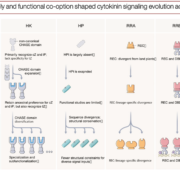
Review: How plants repurposed cytokinin signaling for life on land
Plant Science Research WeeklyWhen plants first moved onto land, they encountered challenges that aquatic ancestors never faced, including heat, dehydration, and rapidly changing environmental conditions. This review by Wang et al., explores how cytokinin signaling, a pathway best known for regulating plant growth and development,…
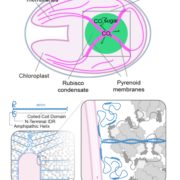
Insights into pyrenoid structure
Plant Science Research WeeklyAs close relatives of land plants, green algae provide insights into variations on photosynthesis. Many algae including Chlamydomonas reinhardtii have carbon-concentrating structures called pyrenoids that enrich CO2 around Rubisco, minimizing the competing oxygenation reaction. In a recent preprint,…
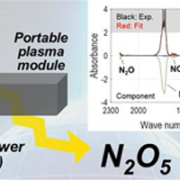
A new technology holds promise for Lunar nitrogen fertilizers
Plant Science Research Weekly, UncategorizedPlasma technology utilizes high-energy electrons to make nitrogen and oxygen gases from the atmosphere react with each other in order to produce various nitrogen oxide species. This technology can recreate the essential reactions underlying nitrogen fixation, through which nitrogen found in inert N2…
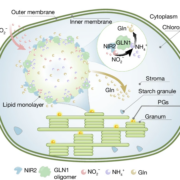
Compartmentalizing nitrogen metabolism enhances use efficiency
Plant Science Research WeeklyMany metabolic reactions take place in specialized compartments (e.g., plastids, peroxisomes), enhancing their efficiency by concentrating enzymes and substrates. Plastoglobules (PGs) are dynamic lipoprotein compartments that are found inside plastids anchored to the thylakoid membranes. A recent study…
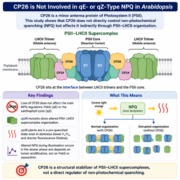
CP26 has a structural role in non-photochemical quenching
Plant Science Research WeeklyPlants protect themselves from excess light by safely dissipating extra energy as heat through a process called non-photochemical quenching (NPQ). Several proteins are known to control this process, but the role of the antenna protein CP26 has remained unclear. In this study, Walter et al. used Arabidopsis…
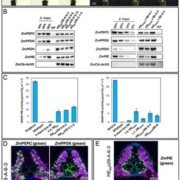
Evidence for C4 photosynthetic fluxes in transgenic rice plants
Plant Science Research WeeklyImproving photosynthetic efficiency is an important strategy to boost yields in staple crops such as rice, which relies on the relatively inefficient C3 pathway. In contrast, C4 photosynthesis minimizes photorespiration through a carbon-concentrating mechanism, making it more productive under high-light…
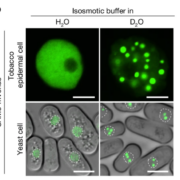
The protein that feels thirst: SAM8 as a molecular water sensor
Plant Science Research WeeklyHow a cell detects a drop in water potential, the physical signal of drought or salinity, has been a long-standing puzzle. Wang et al. identified SAM8, an Arabidopsis protein that reversibly condenses into nuclear droplets when cellular water becomes scarce. When water is freely available, a negatively…
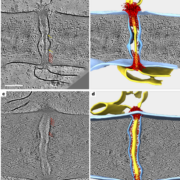
The architecture of the cell-to-cell message channel
Plant Science Research WeeklyCells communicate with one another to coordinate signaling across tissues. Adjacent cells are connected by plasmodesmata that create a cellular continuum throughout the plant. Although many plasmodesmata-associated proteins have been identified, details of structure remain unclear. Techniques often used,…
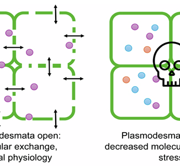
Closing the gates: Plasmodesmal closure triggers stress responses
Plant Science Research WeeklyPlasmodesmata are membrane-lined bridges between adjacent plant cells that control the exchange of signaling molecules and nutrients between neighbouring cells. Biotic stress is known to cause the rapid closure of plasmodesmata via callose deposition; however, its precise role in immune responses remains…