
Phospholipid Metabolism Interplays with Auxin Signaling to Regulate Plant Regeneration
 In vitro regeneration is a common process for clonal propagation and genetic engineering in plants. However, the regulation of the process has remained underexplored. Understanding the regulatory mechanisms can help design strategies to improve efficiency. In our recent study published in The Plant Cell (Chang et al., 2026), we report the involvement of phospholipid metabolism and its interplay with auxin to regulate in vitro regeneration in the model plant Arabidopsis.
Background: The well-established plant in vitro regeneration generally starts with induction of pluripotent callus with the property of root stem cells, which is essential for subsequent de novo shoot or root regeneration. Auxin signaling components IAA–ARF and their downstream transcription factors governing lateral root formation, such as LBDs and WRKY23, have been defined to be responsible for directing callus formation by activation of the cell cycle regulators and root stem cell factors. Interestingly, recent studies in Arabidopsis also reveal that the genes involved in reactive oxygen species (ROS), lignin and lipid metabolism are rapidly activated or suppressed during auxin-induced pluripotent callus formation, suggesting that remodeling of some metabolic pathways including lipid metabolism or metabolites might be important for cellular reprogramming during plant regeneration.
Question: whether or how lipid metabolism is involved in pluripotent callus formation and thus plant regeneration?
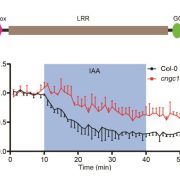
Findings: We show that phospholipid remodeling occurs during auxin-induced callus formation in Arabidopsis, and our genetic and biochemical evidence show that interference with the phospholipid metabolic pathway leads to enhanced or dampened callus formation induced by auxin. We further demonstrate that the phospholipid metabolite PA inhibits callus formation by binding to and stabilizing the auxin signaling repressor IAA proteins, and thus dampening auxin signaling and callus-forming program. These findings define the PA as a critical regulator of cellular reprogramming and disclose the molecular interplay of phospholipid metabolism and auxin signaling during plant in vitro regeneration and developmental programs. in vitro regeneration and developmental programs.
Next steps: It will be worthwhile to investigate whether spatiotemporal manipulation of phospholipid metabolic pathways, such as reduction of PA level, could improve the regeneration efficiency of other plant species and crops, which would benefit the regeneration-based biotechnologies in agronomic crops.
Original paper: Chang P, Yang X, Liu X, Guo S, Zhou J, He M, Li Z, Xu E, Xin W, Hu Y, et al (2026) Phospholipid remodeling interplays with auxin signaling to modulate cellular reprogramming in Arabidopsis regeneration. Plant Cell koag169
Written by: Chen Kang (@chenkang-oxford.bsky.social), Laboratory of Fruit Quality Biology, Zhejiang University, China.
Edited by: Yee-Shan Ku (LinkedIn: @Yee-Shan Ku), 2026 Plantae Editor