

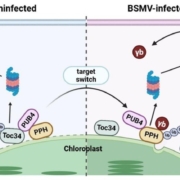
Antagonistic interactions between host and viral proteins regulate chloroplast stability
Plant Science Research WeeklyThe role of the chloroplast extends far beyond hosting photosynthesis; these organelles also serve as a regulatory hub for plant immunity. As a result, many plant pathogens, such as the barley stripe mosaic virus (BSMV) have evolved strategies to circumvent this immunity and exploit the chloroplast as…
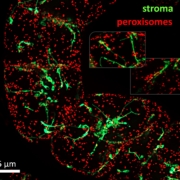
What’s up with stromules?
Plant Science Research WeeklyStromules are stroma-filled tubules that extend from plant and algal plastids. Their formation is dynamic, and their abundance increases following many different stresses and hormone treatments, yet questions remain about their function. In a recent article, Rahpeyma et al. set about to understand the…
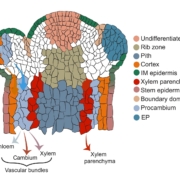
Single-cell dynamics of the Arabidopsis inflorescence stem cells
Plant Science Research WeeklyThe inflorescence meristem is the tiny structure that is foundational to most of our food supply. A new work by Moreno-Ramírez et al. reveals insights into these little marvels through the use of single-nucleus transcriptomics. Their analysis identified 18 cell-type clusters that they assigned to…
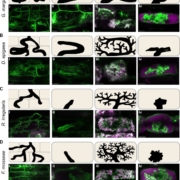
Not all arbuscules pull the same weight
Plant Science Research WeeklyArbuscular mycorrhizal (AM) fungi trade soil phosphate for plant carbon at arbuscules, the short-lived, branched hyphal structures they build inside root cortical cells, but how phosphate uptake is coordinated across this constantly changing interface has been hard to observe. McGaley et al. used non-invasive,…
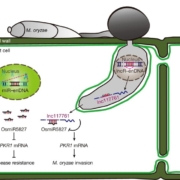
Long non-coding RNA: A secret weapon in the plant-pathogen war
Plant Science Research WeeklyOver millions of years, plants and pathogens have been engaged in an evolutionary war. As plants adopt new defense systems to protect themselves, pathogens evolve strategies to fight back. A well-characterized pathogen strategy is to secrete effectors that target plant defenses. Although protein effectors…
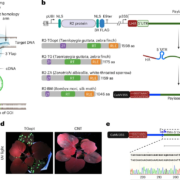
R2 retrotransposons enable efficient site-specific genome editing in plants
Plant Science Research WeeklyA major challenge in plant genome engineering is the precise insertion of large DNA sequences into a defined genomic location, preferably without involving a double-strand break. Addressing this longstanding technical hurdle, Ali and colleagues introduce a versatile gene-targeting platform based on the…
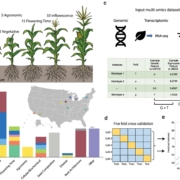
Plant Science Research Weekly: July 10, 2026
WWR Full PostA lichen super-pangenome spotlights its genetic architecture and interaction secrets
A lichen is a unique composite organism formed through close interactions between a filamentous fungus (mycobiont) and its photosynthetic partners [algae and/ or cyanobacteria, referred together as photobiont(s)].…
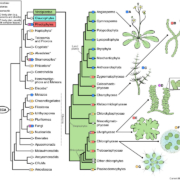
Special Issue of Current Biology on plant evolution
Plant Science Research WeeklyCurrent Biology has an excellent special issue on plant evolution full of fascinating articles. As an example, a Primer by Zhuo Feng looks at how plants were catastrophically impacted by the end-Permian mass extinction event approximately 250 million years ago. The fossil record from the Cathaysian…
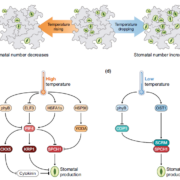
Review: How temperature regulates stomatal development and dynamics
Plant Science Research WeeklyThe ambient temperature for plant growth is increasingly unpredictable under the changing climate. To ensure growth, the leaf is the immediate organ responding to maintain photosynthesis. In this review, Yang et al. point out stomatal development and dynamics as the adaptive responses to long-term…