

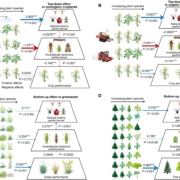
Why plant diversity is the future of sustainable agriculture
Plant Science Research WeeklyThe interactions between different types of plants, pests, and the predators that hunt them shape the health of entire landscapes, but it has been hard to predict what happens when you mix more plant species into different environments. Here, Wan et al. analyzed massive amounts of data from field studies…
Plant Science Research Weekly: August 28, 2025
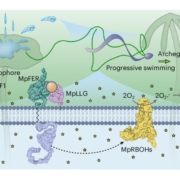
WWR Full PostReview: Tracing the evolution of plant cell types
Plants. When we read this word, what comes to mind might be a rose, a tomato plant, or an oak tree. But plants belong to a green lineage that is far more diverse than what we encounter in daily life. This lineage also includes unicellular green algae.…

How Can Ancient Trees Remain Chemically Defended Over Centuries to Millennia?
Blog, ResearchAncient trees exhibit remarkable longevity amid changing environments over centuries to millennia. To achieve defense against biotic stresses, extensive secondary metabolism reprogramming is needed. However, the regulatory mechanisms remain unclear. In this study, using Ginkgo biloba individuals ranging…
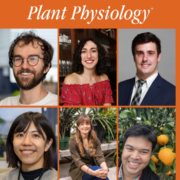
Plant Physiology Spotlights First Authors January, February, and March 2026
Blog, Community, Plant Physiology: Author ProfilesYou’ve seen our First Authors on X, BlueSky, and Facebook. Behind the manuscripts are researchers, professors, professionals, and students dedicated to advancing the field of plant science. Read more about these dedicated scientists here.
Siddique I. Aboobucker
Siddique I. Aboobucker is the First…
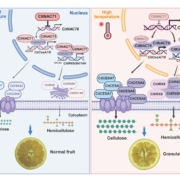
High-Temperature-Induced Juice Sac Cell Wall Remodelling in Citrus Fruit
Blog, ResearchWe are putting our spotlight in this section on how high temperature rewires cell wall biosynthesis in citrus juice sacs, ultimately driving a physiological disorder known as juice sac granulation. Specifically, we wanted to uncover how heat regulates the production of cellulose and hemicellulose, the…
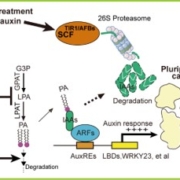
Phospholipid Metabolism Interplays with Auxin Signaling to Regulate Plant Regeneration
Blog, ResearchIn vitro regeneration is a common process for clonal propagation and genetic engineering in plants. However, the regulation of the process has remained underexplored. Understanding the regulatory mechanisms can help design strategies to improve efficiency. In our recent study published in The Plant Cell…
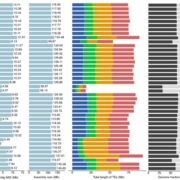
A lichen super-pangenome spotlights its genetic architecture and interaction secrets
Plant Science Research WeeklyA lichen is a unique composite organism formed through close interactions between a filamentous fungus (mycobiont) and its photosynthetic partners [algae and/ or cyanobacteria, referred together as photobiont(s)]. In an effort to better understand these mutualistic interactions, Joisten-Rosenthal et…
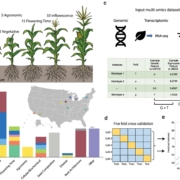
Predicting complex phenotypes using multi-omics data in maize
Plant Science Research WeeklyPlant breeders have long relied on genetic markers to predict how crops will perform, but many important traits such as yield, flowering time, and stress responses are shaped by complex interactions between genes and the environment. In this study, Creach et al. investigated whether combining multiple…

Trehalose-6-phosphate integrates metabolism and root development
Plant Science Research WeeklyHow do plants decide where to invest their resources when nutrients and energy are limited? A new study highlights trehalose-6-phosphate (Tre6P), a key sugar-status signal, as a critical coordinator. Previous work demonstrated that transgenic plants expressing modified versions of TPS1, the enzyme responsible…