
Untangling cell-specific root responses to stress
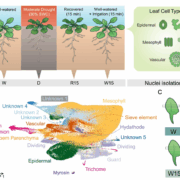
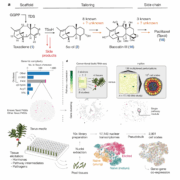
 Single-cell technologies have brought our understanding of complex tissues to whole new levels. Previous methods showed how gene expression in tissues changes over time or after challenges, whereas now these patterns can be assigned to specific cell types, revealing intricate, elegant processes. Here, Zhu and Hsu et al. examined rice root responses to heterogenous soil or a homogeneous gel matrix. The authors found that while inner cell layers did not differ much between growth conditions, the outer cell layers of soil-grown plants showed elevated expression of defence, nutrient and cell wall-related genes as compared to the gel-grown samples. The authors also examined roots grown in more compact soils (1.6 g cm−3 compared to 1.2 g cm−3). Interestingly, the endodermis and exodermis cells showed the greatest impact of the higher density soils. Some of the more highly expressed genes are those involved in cell wall expansion (e.g., expansins). Genes involved in water stress responses were also elevated, including ABA synthesis and response genes, suggesting that the higher soil density leads to water stress. Interestingly, ABA synthesis genes were elevated in inner cell layers, while ABA response genes were elevated the outer cell layers, suggesting that ABA moves outward. Finally, the authors found that in the compacted soils, there was an increase in expression of biosynthetic genes for lignin and suberin in the endodermis and exodermis, potentially mediated by ABA, helping to prevent water movement out of the root. (Summary by Mary Williams @PlantTeaching.bsky.social) Nature 10.1038/s41586-025-08941-z