
When CLV walked in fields of gold
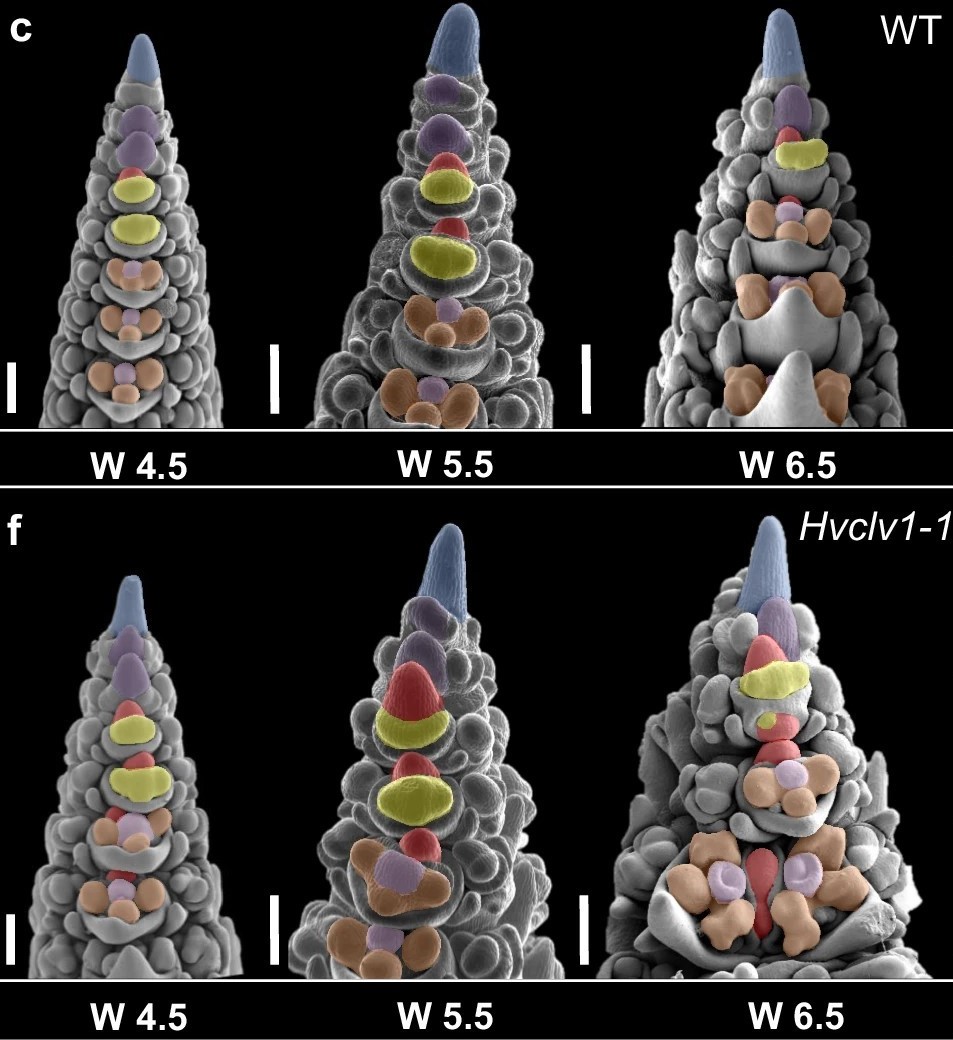 A recent study by Vardanega et al. focuses on the development of the unique barley inflorescence architecture and unveils key molecular controls underlying meristematic determinacy. The CLAVATA3/EMBRYO SURROUNDING REGION-related (CLE) – CLAVATA1 (CLV1) interaction has been tied to meristem size and maintenance throughout the grasses. Using a variety of techniques such as phylogenetics, smRNA-FISH, RNA sequencing and CRISPR-Cas9, Vardenega et al. show the role of the CLE/CLV1 pathway in barley to coordinate meristem activities and direct the development of distinct inflorescence architecture. Initially, a candidate CLE peptide, HvFCP1, and ortholog for AtCLV1, HvCLV1, were identified. These were found to localise to similar positions within the inflorescence and their mutants had multi-floret spikelets, as well as indeterminate rachilla with enhanced proliferation. From transcriptomic analysis, these phenotypes were attributed to auxin signalling and trehalose-6-phosphate metabolism, indicating that this CLV pathway regulates meristems through sugar allocation and developmental timing. This research described how different meristems are likely controlled by interactions of CLV1 with different CLE peptides (with distinct expression patterns) to regulate inflorescence architecture development. Vardanega et al. highlight the opportunity to uncover and exploit these diverse mechanisms regulating different meristems to allow for precise engineering of inflorescence architecture in barley. (Summary by Kes Maio @kesmaio.bsky.social) Nature Comms 10.1038/s41467-025-59330-z