
Not just reversal: The hidden power of drought recovery
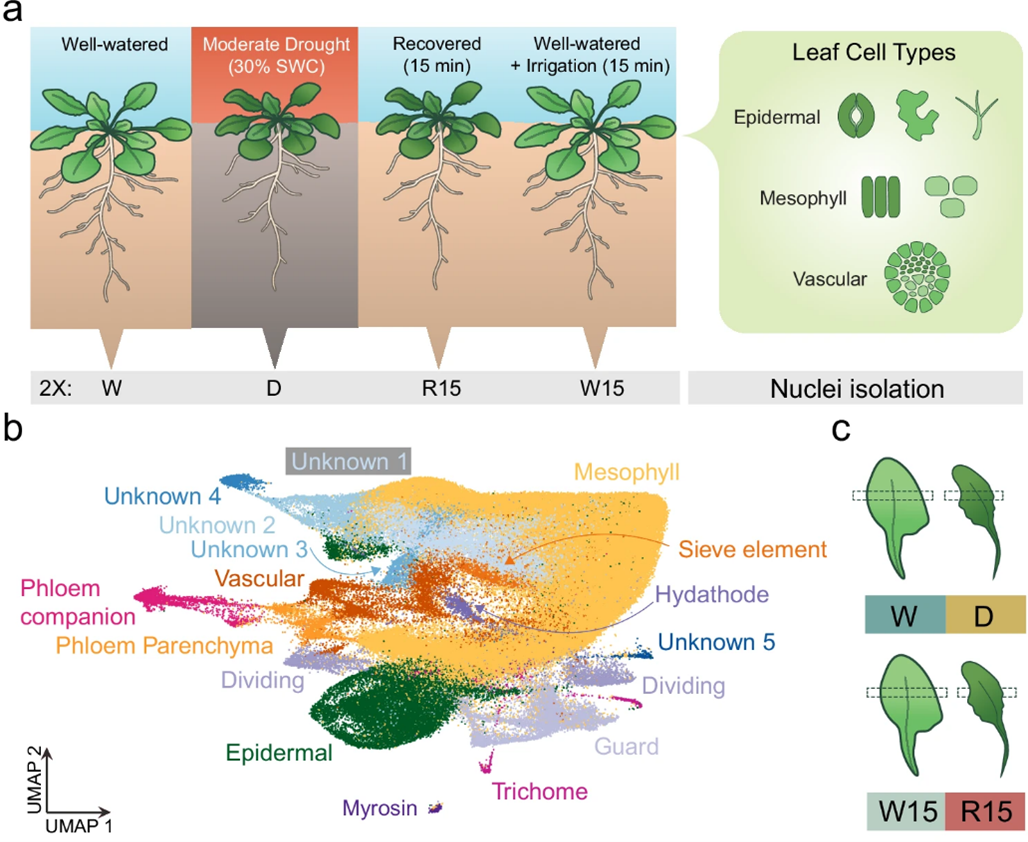 When drought strikes, plants struggle to survive. Growth slows, flowers appear too early, fruits drop prematurely, and harvests shrink. Scientists have long tried to engineer drought tolerance plants, but boosting this often comes with a hidden cost: stunted growth even when water is plentiful. This paradox raises a new question – what if the real key lies not in enduring drought, but in how plants recover once the rain returns? Illouz-Eliaz and colleagues explored this recovery phase using bulk and single-nucleus RNA sequencing in Arabidopsis. Tracking a fine-scale time series, they discovered that recovery is not simply the undoing of drought damage. Instead, it activates a unique genetic program, with over 3,000 genes expressed specifically during recovery – far exceeding the 1,248 genes responsive to drought itself. Single-cell resolution revealed 22 annotated cell clusters and 10-fold more differentially expressed genes than bulk RNA-seq, supported by spatial transcriptomics that mapped recovery-induced cell states across leaf tissues. Unexpectedly, some unannotated clusters were enriched in immune and stress-related functions, pointing to hidden layers of resilience. Motif analysis highlighted CAMTA1, a transcription factor linking recovery to defense. Remarkably, plants recovering from drought displayed increased resistance to bacterial pathogens, both in Arabidopsis and tomato. Thus, recovery doesn’t just restore plants – it redefines their strength. (Summary by Ching Chan @ntnuchanlab) Nature Comms. 10.1038/s41467-025-63467-2