


Toward Designing Tulips for a Warmer World
Blog, Plant Physiology, Plant Physiology: On The Inside, Research0 Comments
/
Most cultivated tulips (Tulipa gesneriana) are produced in The Netherlands, which has a temperate climate resembling the Central Asian climate in which they originated. The growth cycle of cultivated tulips starts in autumn, when the bulbs are planted in the field. At that time, all organs, including…
Early evolution of the land plant circadian clock
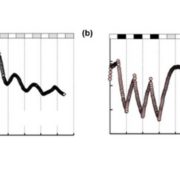
Plant Science Research Weekly, ResearchClocks in green algae have been described as simple two-gene loops, while clocks in angiosperms have evolved to complex interlocked loops. This striking jump in complexity led Linde et al. to investigate the clocks in bryophytes and charophytes to shed light on this transition. First, through the sequence…
High levels of antioxidants correlate with leaf growth in drought tolerant maize
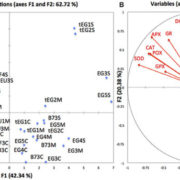
Plant Science Research Weekly, ResearchDrought tolerance is a complex trait, and Avramova et al. show that there is more than one way to be drought tolerant. Specifically, they investigate the role of antioxidants in supporting leaf growth in several varieties of drought tolerant maize. As compared to the tolerant lines, drought sensitive…
Photosynthetic trichomes contain a specific Rubisco with a modified pH-dependent activity
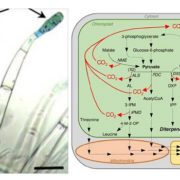
Plant Science Research Weekly, ResearchRubisco (Ribulose-1,5-biphosphate carboxylase/oxygenase) is the key enzyme in photosynthetic carbon fixation. In C3 plants, the enzyme is usually found in mesophyll cells and guard cells, but it also can be found in photosynthetic glandular trichomes such as those found in tobacco. Laterre et al. used…
OsFTIP1 is required for transport of rice flowering signal (florigen)
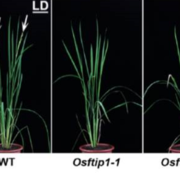
Plant Science Research Weekly, ResearchFlowering at the right time of year is crucial for plant reproductive success, so in many plants the transition to reproductive growth is sensitive to daylength. In recent years, the daylength-responsive signal that moves from leaves to the shoot apical meristem, florigen (encoded by FLOWERING LOCUS…
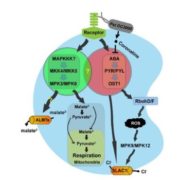
Stomatal immunity: Roles of MAP kinases and cytokinin
Plant Science Research Weekly, ResearchWhen a pathogen is perceived, plants have the ability to induce stomatal closure to prohibit the pathogens from passing into the inner tissues; this response is known as stomatal immunity. Two new papers in The Plant Cell investigate mechanisms by which pathogen perception is transduced into stomatal…
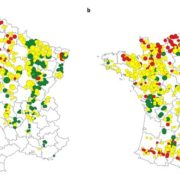
Reducing pesticide use while preserving crop productivity and profitability ($)
Plant Science Research Weekly, ResearchTo safeguard human health and the environment, the French government has called for a nation-wide reduction in the use of pesticides (herbicides, fungicides and insecticides). Towards this end, they have been collecting pesticide usage and yield data from French farmers. Lechenet et al. explored these…

What We’re Reading: March 10
Research, Research Blog
Review: The increasing impact of activity-based protein profiling in plant science
Activity-based protein profiling is a proteomics approach that involves covalently labeling reporter tags to subsets of proteins based on their active sites. Morimoto and van der Hoorn define different types of…
NSCU National Needs Fellowship Program open for applications
Funding Opportunities, ResearchNorth Carolina State University’s Colleges of Agriculture and Life Sciences, Engineering, and Sciences are recruiting outstanding students to pursue interdisciplinary PhDs as USDA-funded National Needs Fellows. We are targeting students from groups traditionally underrepresented in agricultural sciences…