
Predicting complex phenotypes using multi-omics data in maize
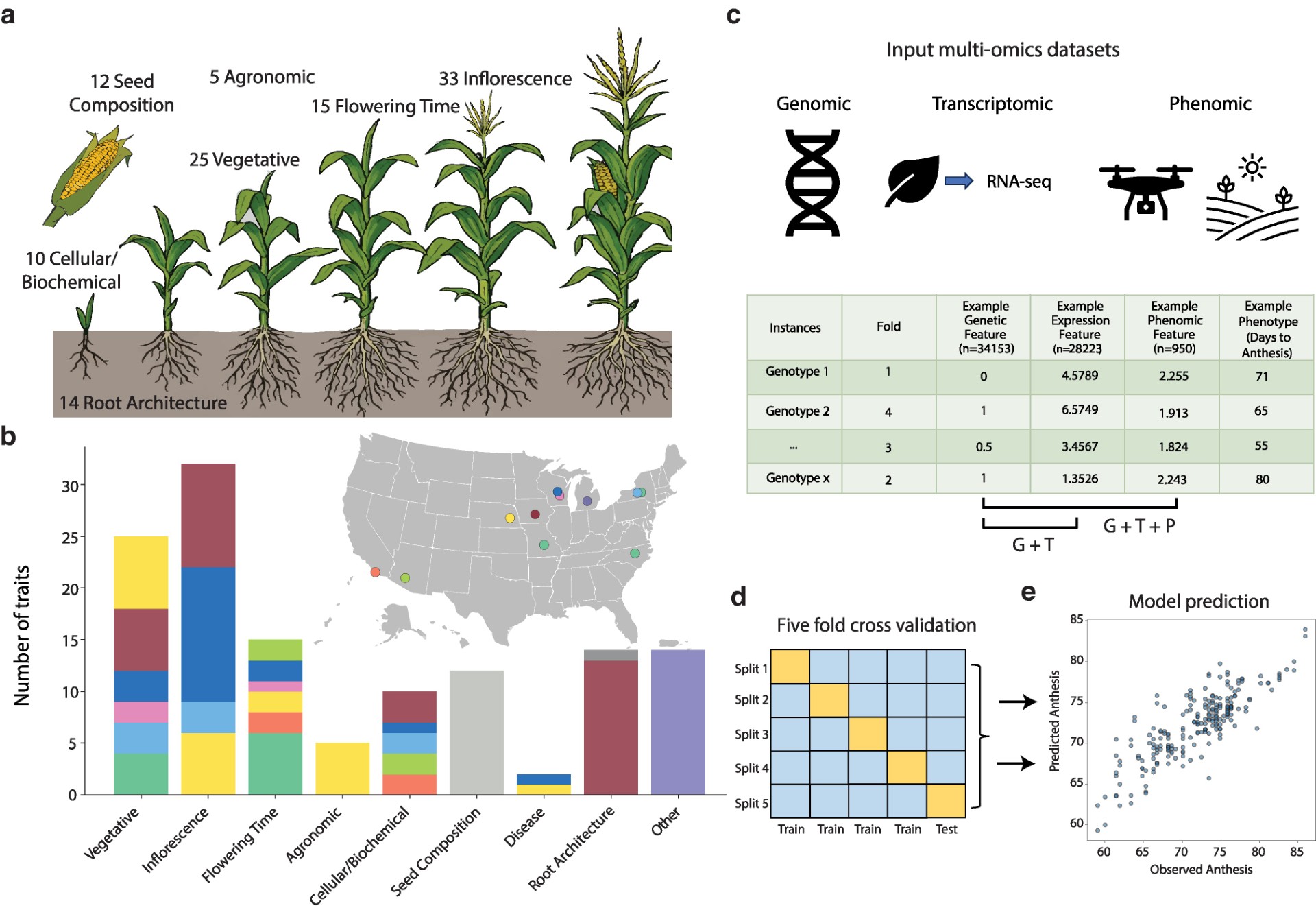 Plant breeders have long relied on genetic markers to predict how crops will perform, but many important traits such as yield, flowering time, and stress responses are shaped by complex interactions between genes and the environment. In this study, Creach et al. investigated whether combining multiple layers of biological information could improve the prediction of complex traits in maize. The researchers analyzed 129 phenotypes across nine environments using genomic markers, field-derived gene expression data (transcriptomics), and drone-collected phenomic measurements. They then compared the performance of predictive models built from individual datasets with that of models integrating multiple data types. The authors found that models combining multiple data types consistently predicted plant traits more accurately than models based on a single dataset. While genomic information provided a strong foundation, transcriptomic data captured important biological processes and improved predictions across environments. Surprisingly, gene expression measurements collected at one field location could successfully predict traits measured elsewhere, highlighting their ability to capture genotype-by-environment interactions. Drone-derived phenomic data alone were generally less predictive but contributed valuable information for specific traits, including root architecture. The study showed that complex traits are influenced by many genes acting together rather than a few major-effect genes. By integrating genomic, transcriptomic, and phenomic information, researchers gained deeper insight into the biological networks underlying trait variation. These findings demonstrate the potential of multi-omics approaches to accelerate crop improvement by enabling more accurate prediction of agriculturally important traits in maize. (Summary by Fatai Ayomide Akande) The Plant Cell 10.1093/plcell/koag185