
A lichen super-pangenome spotlights its genetic architecture and interaction secrets
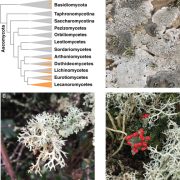
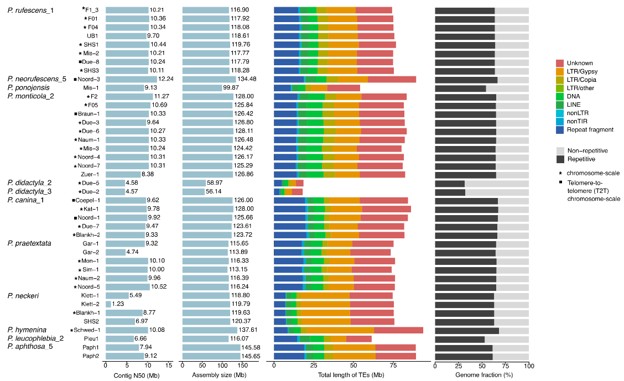 A lichen is a unique composite organism formed through close interactions between a filamentous fungus (mycobiont) and its photosynthetic partners [algae and/ or cyanobacteria, referred together as photobiont(s)]. In an effort to better understand these mutualistic interactions, Joisten-Rosenthal et al. created a high-quality super-pangenome from long-read genome assemblies of 41 isolates representing 11 species of the Peltigera fungal genus, with a particular interest in resolving the repeat-rich regions that were found to harbor host-interaction specific genes in plant pathogenic fungi. The super-pangenome revealed a direct correlation between genome sizes and transposable element (TE) content in these fungi. Among the different genes facilitating the fungal interactions, secreted-protein encoding genes play crucial roles as effectors and anti-microbial proteins. The localization of these genes in TE-rich regions established the concurrent existence of conserved and rapidly evolving genomic regions in the Peltigera fungi akin to filamentous plant fungal pathogens. Moreover, the researchers identified a high number of G-protein coupled receptors (GPCRs) in these fungi as well as a specific enrichment of biosynthetic gene clusters (BGCs) in fungi that exist in tripartite interactions with two photobionts. These interesting findings point towards a more intricate role of the GPCRs in environment sensing and BGCs in interaction-based repertoire expansion, respectively. Lastly, the authors also investigated the differential expression of secreted protein, GPCR and a few other key genes in this interaction milieu across different layers of the lichen architecture. They observed defined transcriptomic cues across the layers, adding a transcriptomic twist to this super-pangenome study. This study sheds light on the genomic repertoire of Peltigera fungi involved in lichen formation, and draws exciting parallels and similarities between notorious fungal pathogens and peace-loving mutualistic fungi. (Summary by Shakunthala Natarajan @shakunthalan.bsky.social) bioRxiv (https://doi.org/10.64898/2026.06.16.732702)