
The sweet connection between plants, fungi, and soil life
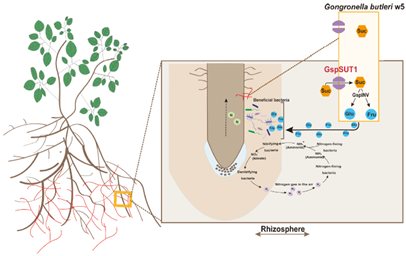 Through their roots, plants live in close association with many soil microorganisms, including fungi and bacteria that help them grow. Beneficial fungi help plants cope with stress, and in return, the plants provide them with nutrients. A key part of this exchange is the movement of sucrose, a sugar produced by photosynthesis that fuels both plants and microbes. In this study, Fang and colleagues identified a new sucrose transporter called GspSUT1 in the fungus Gongronella butleri w5, a fungus that promotes plant growth and increases plant nutrient content such as nitrogen. This protein allows the fungus to take sucrose directly from plant roots and convert it into simple sugars such as glucose and fructose. When scientists silenced the GspSUT1 gene, they found more sucrose in the roots because the fungus was no longer absorbing it. Moreover, the growth-promoting effect of the fungus and the nitrogen content in the plant were reduced, disrupting the symbiotic interaction between the plant and the microorganism. The researchers also discovered that the glucose and fructose released into the soil feed nitrogen-fixing bacteria, microbes that convert atmospheric nitrogen into forms plants can use. As a result, plants have more nitrogen content, grow faster and healthier. Overall, GspSUT1 reveals a sophisticated cooperation between plants, fungi, and bacteria, showing how carbon and nitrogen cycles are tightly linked in healthy soils. Summary by Carlos González Sanz (@carlosgonzsanz). Current Biology (10.1016/j.cub.2025.08.043)