
Late ROS burst as a signature of exotoxin-triggered immunity in plants
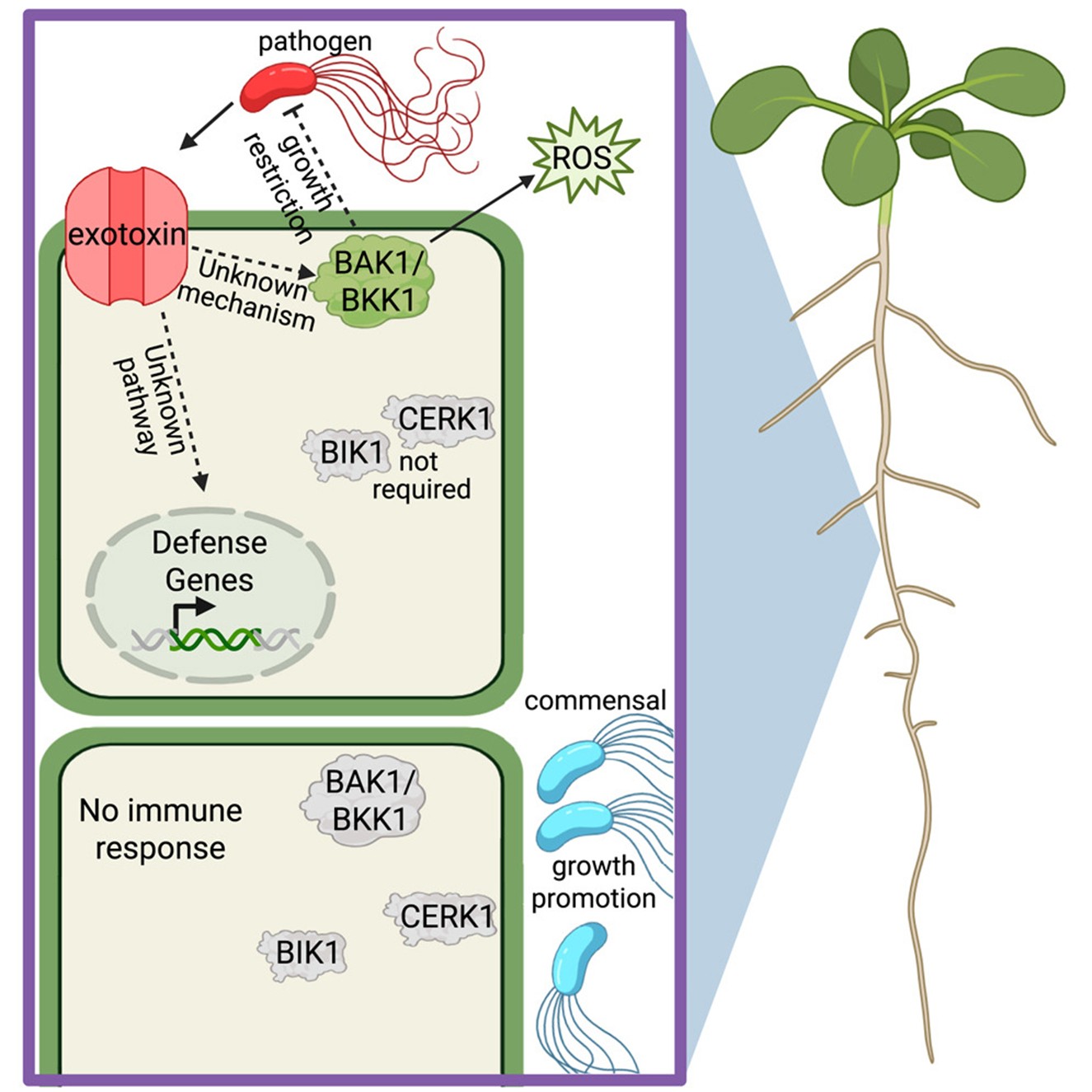 Plants depend on innate immune systems to recognize microbial invaders or damages that signal danger. This discrimination must be extremely precise: they must welcome beneficial microbes that support nutrient uptake and growth while defending against pathogens that threaten survival. A long-standing question in plant-microbe interactions is how plants distinguish between closely related beneficial and pathogenic bacteria that share similar molecular signatures. Thoms and colleagues tackled this challenge using two phylogenetically related Pseudomonas fluorescens strains associated with plant roots. The beneficial strain WCS365 promotes plant growth, whereas the pathogenic strain N2C3 causes disease. Furthermore, the pathogenic strain but not the beneficial strain produces small secreted lipopeptide exotoxins. Through the use of fluorescent reporter lines and exotoxin-deficient bacterial mutants, the researchers identified the N2C3-produced exotoxin as the key determinant of immune activation and pathogen suppression. Surprisingly, the immune response triggered by this exotoxin operates independently of conventional hormone signaling pathways. Instead, it induces a delayed oxidative burst, distinct from the rapid ROS production elicited by the canonical flg22-triggered pattern-triggered immunity. The coreceptors BAK1 and BKK1 are critical for this toxin-induced ROS production as for flg22. This study reveals that plants can distinguish between nearly identical microbial relatives by detecting the presence of specific exotoxins, highlighting a sophisticated immune surveillance system. (Summary by Ching Chan @ntnuchanlab) Cell Reports 10.1016/j.celrep.2025.116457