
R2 retrotransposons enable efficient site-specific genome editing in plants
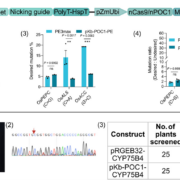
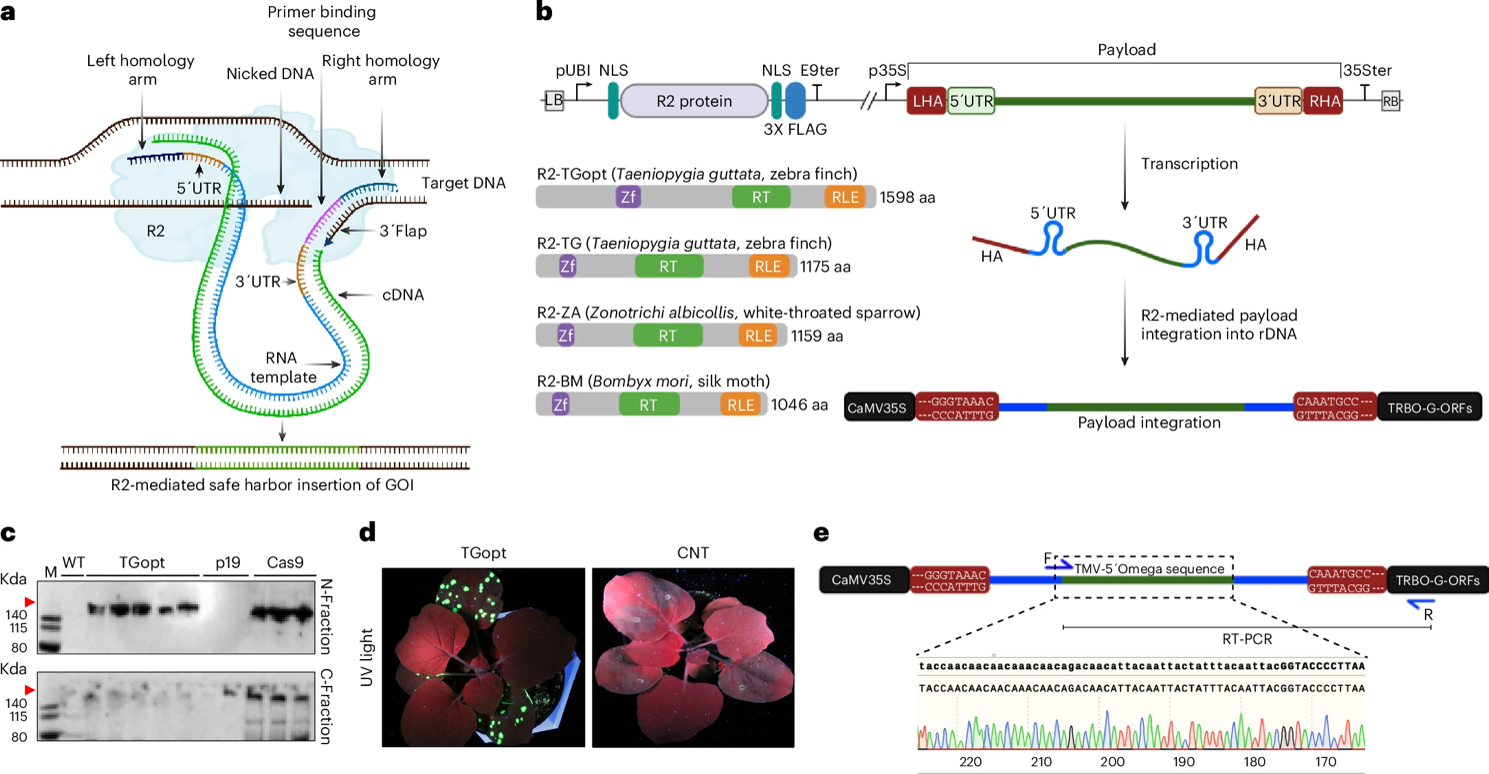 A major challenge in plant genome engineering is the precise insertion of large DNA sequences into a defined genomic location, preferably without involving a double-strand break. Addressing this longstanding technical hurdle, Ali and colleagues introduce a versatile gene-targeting platform based on the R2 retrotransposon, targeting a highly conserved 28S rDNA locus. Using Nicotiana benthamiana and a TMV-based reporter system, the authors demonstrated remarkably efficient insertion of a 2.2 kb GFP cassette, with site-specific insertion up to 75%. To overcome barriers that often limit transgene delivery, such as the cell wall, inefficient RNA uptake, and RNA instability; the team developed a two-component strategy combining effector expression with RNA virus-mediated delivery of donor templates. This design increased donor RNA abundance while reducing reliance on DNA intermediates and minimizing off-target activity. Notably, the system was also effective in rice calli, enabling targeted integration of herbicide- and antibiotic-resistance cassettes into rDNA loci at an efficiency up to 17%. By enabling efficient, site-specific addition of multi-kilobase sequences, this R2-based platform could accelerate trait stacking and synthetic biology applications, paving the way for more precise, scalable, and adaptable crop engineering strategies. (Summary by Ching Chan @ntnuchanlab @ntnuchanlab.bsky.social) Nature Biotechnol. 10.1038/s41587-026-03181-6