

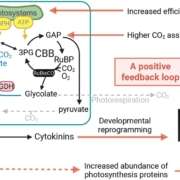
Photosynthesis reinvented: Introducing the McG Cycle for boosting plant growth and yield (copy)
Plant Science Research WeeklyPhotosynthesis is nature’s most powerful carbon capture system, fueling life on Earth and inspiring new strategies for sustainable agriculture. In plants, The Calvin–Benson–Bassham cycle generates C3 carbohydrates but is inefficient at producing the two-carbon acetyl–coenzyme A (CoA), which is…
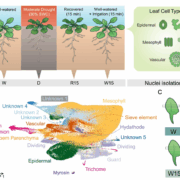
Not just reversal: The hidden power of drought recovery
Plant Science Research WeeklyWhen drought strikes, plants struggle to survive. Growth slows, flowers appear too early, fruits drop prematurely, and harvests shrink. Scientists have long tried to engineer drought tolerance plants, but boosting this often comes with a hidden cost: stunted growth even when water is plentiful. This…
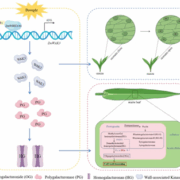
ZmWAK3 acts as a negative regulator of drought tolerance in maize
Plant Science Research WeeklyDrought is a major constraint on maize production, and understanding the underlying molecular regulators is key to breeding resilient varieties. Yang et al. investigated the role of the wall-associated kinase ZmWAK3 in maize seedlings and found it to be a negative regulator of drought tolerance. Loss-of-function…

Non-coding RNA and RNA modification empower immunity in grapevine
Plant Science Research WeeklyGrapevine is an important crop in the food industry. Like other crops, cultivated grapevine benefits from wild relatives that can be used for genetic resource mining and cultivar improvement. Useful genetic resources include novel alleles and gene expression regulators for better growth and stress resilience.…

Plant Science Research Weekly: October 3, 2025
WWR Full PostReview: How to evaluate the climate-mitigation potential of plant agricultural interventions
Agriculture contributes substantially to climate change. Many agricultural interventions have been suggested as opportunities to lower this impact, through CO2 sequestration or through reducing emissions of…
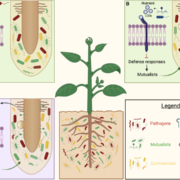
Review: Plant receptor-like kinases sense extrinsic and host-derived signals and shape the microbiome
Plant Science Research WeeklyPlant genomes contain hundreds of genes encoding receptor-like kinases (RLKs), which are membrane-spanning proteins with an extracellular perception domain and an intracellular signaling domain. Many RLKs have roles in identifying surface proteins of pathogens, some recognize specific signals from mutualists…
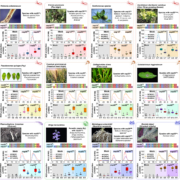
Discovery and engineering of synthetic RLKs
Plant Science Research WeeklyReceptor-like kinases (RLKs) are abundant genes that have diversified and expanded throughout plant evolution, with most plants having hundreds or more RLKs. In this exciting new paper, Ngou et al. decided to deconstruct the recognition sites of these proteins in order to be able to make predictions…
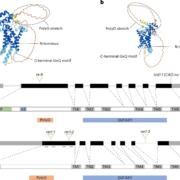
Identification of a plastid-localized amino acid transporter
Plant Science Research WeeklyPlastids are more than photosynthetic compartments, they also are responsible for the biosynthesis of nine proteinogenic amino acids (which explains why animals, lacking plastids, must obtain these amino acids through their diet). In a new paper, Kuhnert et al. have identified a critical amino-acid…
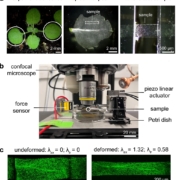
Under pressure: Interdisciplinary research into the mechanics of the cell wall
Plant Science Research WeeklyThe architecture of the plant cell wall is very intricate: strings of cellulose microfibrils provide structure while allowing the cell to expand and grow. This growth is primarily driven by turgor pressure, which applies pressure and allows for expansion in all directions. While the general mechanism…