Plant Direct Spotlights 2025 First Authors (First Edition)
Behind manuscripts are researchers, professors, professionals and students dedicated to advancing the field of plant science. You’ve seen our First Authors on Bluesky, Twitter, and Facebook— now, read more about why they chose to pursue plant sciences and click on the links below the pictures to read their articles.

Deniz Ece Ozcan
Deniz Ece OZCAN is the First Author of Modification of Gene Expression Involved in Alkaloid Production in Opium Poppy by VIGS Combined With Pretreatment of Macerozyme Enzyme published 07 January 2025. Ozcan is a PhD student at Yildiz Technical University. Education background includes 2023-Ph.D Yildiz Technical University 2020-MSc Yildiz Technical University 2016- BSc, Yildiz Technical University. Research interests include medicinal plants, gene silencing, secondary metabolism – alkaloids, post-transcriptional regulation. Personal interests include Swimming, knitting.
Mohammad Bahman Sadeqi
Mohammad Bahman Sadeqi is the First Author of The significant effects of threshold selection for advancing nitrogen use efficiency in whole genome of bread wheat published 21 January 2025. Sadeqi is a Researcher at INRES-Plant Breeding, University of Bonn.
Education background includes 2024 Ph.D Plant Breeding University of Bonn, 2011 MSc Plant Breeding, University of Tehran. Research interests include Plant Genomics, Statistical Genetics. Personal interests include Painting.
“I love plant science because it allows me to explore the intricate mechanisms of nature that sustain life on Earth. Plants are not only the foundation of our food systems but also play a critical role in addressing global challenges like climate change, food security, and sustainable agriculture.”
Rijan Dhakal
Rijan Dhakal is the First Author of Chromosome Numbers and Reproductive Life Cycles in Green Plants: A phylo-transcriptomic perspective, published 24 January 2025. Dhakal is currently a Bioinformatics Lab Assistant, Donald Danforth Plant Sciences center.
Education background includes 2021 BSc Biochemistry, UAHuntsville 2022 MSc Life Sciences, UAHuntsville. Research interests include Phylogenetics. Personal interests include Hiking, Russian Literature, political history and High Fantasy (hoping to finish Stormlight Archives book 5 sometime soon).
“’During school, my friends and I would compete to see who could solve physics, chemistry, math, and biology problems the fastest. This was my earliest attachment to the hard sciences. In college, grad school, and at work, I enjoy the fun side of tackling new problems—the frustration of being stuck on them and the euphoria of solving them. On a more somber note, I appreciate that, in whatever small way, the work I do can eventually be useful.”
Yi Yang
Yi Yang is the First Author of Delivery of marker-free DNA to plant genome by the transgenic selection-associated fragment elimination (T-SAFE) system published 05 February 2025. Yang is a Student at Shanghai Normal University. Education background includes 2021-2025 (expected to graduate with BSc Biology) Shanghai Normal University. Research interests include Plant immunity. Personal interests include reading novels, making handicrafts.
“’Zhai Zhonghe, a Chinese scientist, said: “I am convinced that even the simplest cell is more exquisite than any intelligent computer designed so far!” I thought it was amazing and marveled at the amazing work of nature. In college, I was fortunate to have the opportunity to contact plant science and learn about plant growth, development, immunity and other related knowledge. The life activities of plants are also highly regulated. And there’s still so much to discover. Solving the mystery is a very interesting process for me, and I also look forward to using the “machine” of “plant cells” in the future to better serve mankind.”
Vikas Garhwal
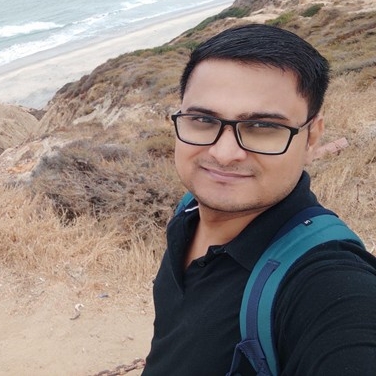
Vikas Garhwal (He/His) is the First Author of Unequal genetic redundancies among MYC bHLH transcription factors underlie seedling photomorphogenesis in Arabidopsis published 13 February 2025. He is a Research Assistant at IISER Kolkata. Education background includes 2024 Ph.D Plant Molecular Biology at Indian Instititue of Science Education and Research(IISER) Kolkata, India. 2015 MSc Biotechnology at CSJM University Kanpur, India. 2013 BSc Biotechnology and Botany at CSJM University Kanpur, India. Research interests include Light Signaling, Temperature Signaling, Hormone Signaling, Root Development. Personal interests include Social Work, Teaching, and Sports Events Participation.
“’I had a deep personal interest in plants since childhood as I have a curiosity for home gardening that makes me a powerful motivator. As I belong to Bihar, India, the major sources of principal food crops are rice and wheat. I have been wondering about the agronomical traits and yield capacity of rice and its impact on large-scale progressive global warming. This excites me to understand plants and crops, aiming to contribute to advancements that benefit farmers and society as a whole. After finishing my master’s, I joined Plant specific lab at the Indian Institute of Science Education and Research (IISER) Kolkata, India as a PhD student. I am inspired by the Late Joanne Chory and her remarkable contributions to the field of Arabidopsis research, which established the foundation for groundbreaking discoveries that shaped modern plant science. My supervisor consistently guided and supported me in my research endeavors. My passion for understanding the dynamic responses in plant growth and development sparked a deep appreciation for their role in our world because it connects biology, ecology, and sustainability, offering solutions to global challenges like food security and climate change.”
Kiran-Kumar Shivaiah
Kiran-Kumar Shivaiah (He/his) is the First Author of Solution structure and NMR chemical shift perturbations of the Arabidopsis BCCP1 identify inter-subunit interactions potentially involved in the assembly of the heteromeric acetyl-CoA carboxylase published 21 March 2025. He is a Research Specialist, Michigan State University. Education background includes PhD Biochemistry at Iowa State University. Research interests include Coral lipid biology, Coral resilience, Lipid droplets. Personal interests include Resistance training, Book reading, Listening to music.
“Driven by my passion for biochemistry, I have always aspired to make meaningful contributions to the field of plant sciences. During my Ph.D. at Iowa State University, my research focused on unraveling the structural and functional relationships among the subunits of the plant heteromeric acetyl-CoA carboxylase (htACCase), a key regulator in the de novo biosynthesis of fatty acids (FAs). By modulating htACCase activity, it is possible to enhance lipid content in biological systems, offering a potential solution to meet the increasing global demand for fats and oils.”
Xiaoqing Liu
Xiaoqing Liu (He/him) is the First Author of Establishing an immune system conferring DNA and RNA virus resistance in plants using CRISPR/Cas12a multiplex gene editing published 07 April 2025. Liu is a Professor at BRI of CAAS. Education background includes: 2014 Ph.D Molecular Biology and Biochemistry at CAAS 2011 MSc in Molecular Biology and Biochemistry at CAAS 2004 BSc Biotechnology Hebei Argicultural University. Research interests include Plant Biotechnology. Personal interests include Table Tennis.
“’Academician Yuan Longping’s belief of ‘writing research papers in the fields’ serves as my guiding compass.”
Linge Li
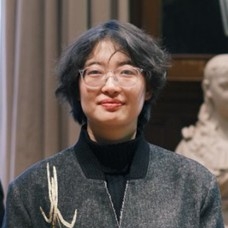
Linge Li (she/her) is the First Author of Effect of low red-to-far-red light on stem elongation and pith cell development in dicots published 15 April 2025. Li is a Researcher+Yuanyi Biotechnology Co.Ltd. Education background includes 2024 Ph.D Plant Environmental Physiology at Utrecht University; 2018 Plant Sciences and Natural Products at Leiden University; 2016 Biotechnology at Northeastern Forestry University. Research interests include Plant physiology, Abiotic stress. Personal interests include Video editing, painting.
“’My interest in plant science started during my undergraduate studies at Northeastern Forestry University. I was truly amazed by the forest environment within our campus. One of the classes I still remember involved walking across campus to identify plants. We were so determined to remember their names that we even put little handmade markers on the trees. What I love about plant science is how it connects everything — economy, ecology, and even aesthetics. It’s a field where research doesn’t just stay in the lab but can directly impact the public good.
I’ve been fortunate to have inspiring mentors. Dr. Kaisa Kajala and Dr. Ronald Pierik have supported my scientific journey in terms of academic growth and encouraged me to bridge the gap between science and real-world application. They’ve shown me that doing good science and having fun can go hand in hand.”
Mohammad Kamruzzaman
Mohammad Kamruzzaman (Him/His) is the First Author of Genome-wide association analyses identify hydrogen peroxide-responsive loci in wheat diversity published April 17 2025.
He is a Senior Scientific Officer, Plant Breeding Division, Bangladesh Institute of Nuclear Agriculture (BINA), Mymensingh-2202, Bangladesh. Education background includes a PhD in Molecular Plant Breeding, University of Bonn, Germany.
Research interests include Abiotic stress, Plant Metabolism, GWAS, molecular plant breeding. Personal interests include Travelling, Exploring New Places.
“’My interest in plant science started during my undergraduate studies in biotechnology and agriculture. I was fascinated by how plants adapt to different environments, their genetic complexity, and the potential to improve crops for better yield and stress tolerance. Seeing how scientific advancements can directly impact food security and sustainable agriculture motivated me to explore this field further.
I love plant science because it allows me to contribute to solving real-world challenges, such as food security, climate change adaptation, and disease resistance in crops. The ability to understand plant genetics, improve varieties, and make a meaningful impact on agriculture keeps me passionate about my work. Every discovery, whether in the lab or the field, brings new possibilities for innovation.
Throughout my career, I have been inspired and mentored by several renowned scientists in the fields of plant breeding, genetics, and biotechnology. During my PhD at the University of Bonn, I had the privilege of working under the guidance of leading experts in crop genetics. Additionally, my colleagues and senior scientists at the Bangladesh Institute of Nuclear Agriculture (BINA) have played a significant role in shaping my research direction and motivation.
My fascination with science began at a young age when I was curious about how living organisms function. As I progressed in my studies, I became particularly interested in plants because of their vital role in human life and the environment. Learning about genetic modifications, mutation breeding, and molecular biology further deepened my passion, leading me to pursue a career in plant science.”

Cédric Dresch
Cédric Dresch (he/him) is the First Author of A periodic 4-hour extension of the dark period did not cause long-term changes in the circadian regulation of photosynthesis and sugar levels in lettuces published 21 April 2025. He is a Ph.D. in Plant Physiology and Agronomy at Futura Gaïa Technologies.Education background includes 2024 Ph.D Energy savings in indoor farming : study of the effects of photoperiod modifications on agronomic parameters and the pre- and postharvest physiology of lettuce (Avignon University and Futura Gaïa Technologies). 2020 Master degree in Agronomy (Avignon University). Research interests include Photoperiod, plant’s circadian rhythm, energy savings in indoor farming.Personal interests include Video games and sport.
“’My parents and grandparents are vinegrowers. Since birth, I have been immersed in plant cultivation and agronomy. Moreover, I have always had a deep curiosity about every subject, driven by a need to understand things thoroughly, from every perspective, at all times. My interest in plant science developed into a passion during high school, and it has stayed with me ever since.
Plants cannot communicate through words or expressions. Science is the only way to attempt to understand them, which makes it fascinating. I also love that, in some ways, they are entirely different from us, yet in others, surprisingly similar. Finally, their diversity makes them even more fascinating. Since birth, I have always loved science, because I have always had the need to understand things.”
Fahad Aldowigh
Fahad Aldowigh is the First Author of MDF regulates a network of auxin-dependent and -independent pathways of adventitious root regeneration in Arabidopsis published 23 April 2025. Aldowigh is a Assistant Professor at Umm Al-Qura University. Education background includes Ph.D at Durham University (2022). Research interests include Plant molecular genetics, Gene and hormone signaling networks. Personal interests include Painting.
“’Honestly, when I was studying for my bachelor’s degree, I started to get interested in botany. for many reasons. Plants are very important for cleaning the air that we breathe and the another reason is that I enjoy teaching people about plants, when I grew beans in the cotton for first time in childhood.”
Patrick Jacob Odongo
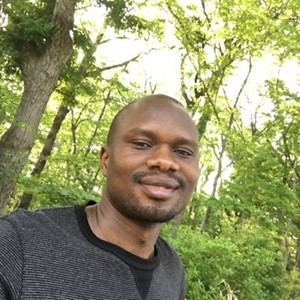
Patrick Jacob Odongo (He/Him) is the First Author of RNA-binding proteome-wide analysis reveals rice RNA-binding proteins enriched after 2 Sobemovirus Rice yellow mottle virus infection published 04 May 2025. He is a Senior Research Officer-Plant Health Management at National Agricultural Research Organzation, Uganda. Education background includes: 2024 PhD Biology at University of Leuven, Belgium. Research interests include Plant-Pathogen interactions. Personal interests includeRunning and travelling.
“’My journey into plant science began with a simple childhood question: “Why do some plants thrive while others struggle?” Surrounded by gardens and forests in rural Uganda, I was captivated early on by the silent resilience of plants and the intricate ways they interact with their environment. That curiosity grew into a deep passion for understanding plant health, disease resistance, and the science behind sustainable crop production. I fell in love with science through hands-on experiences—like growing tomatoes during my primary school days—and was inspired by how such small beginnings could lead to something so vibrant and alive. Over time, I realised that plant science is where curiosity meets purpose. I love how it blends age-old knowledge with cutting-edge research, offering endless opportunities for discovery and real-world impact. Throughout my journey, I’ve been guided by mentors who nurtured my interest, especially Professor Natsuaki Keiko, who introduced me to plant pathology and its vital role in food security and Professor Koen Geuten and Dr. Titus Alicai, who introduced me to the world of plant virus interactions. I also draw constant inspiration from the broader community of plant scientists and farmers who work passionately to build a more resilient and sustainable future. Their dedication continues to remind me why I chose this path.”
Teraishi Masayoshi
Teraishi Masayoshi (her) is the First Author of Identification of novel candidate genes associated with the symbiotic compatibility of soybean with rhizobia under natural conditions published 04 May 2025. She is a Associate Professor at Kyoto University. Education background includes a 2001 Ph.D Agriculture at Kyoto University.
Research interests include Soybean symbiosis with nodule bacteria. Personal interests include Hanshin Tigers (Japanese baseball team).
“’It’s nice to work outdoor fields.”
Samantha Barnwell
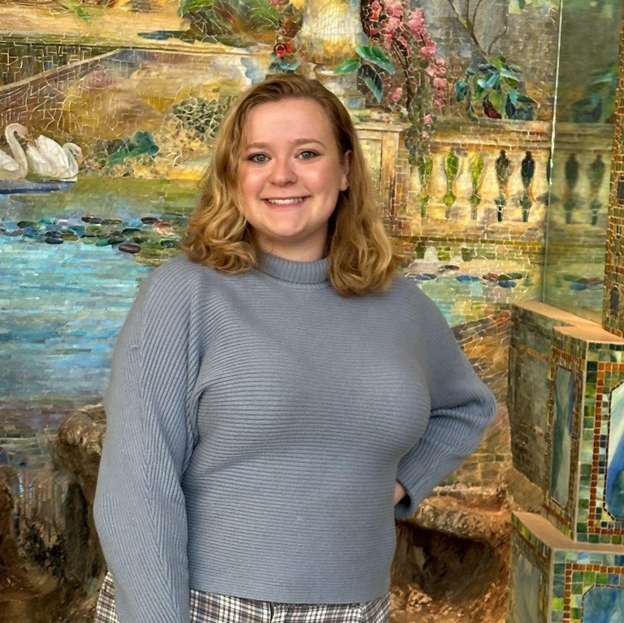
Samantha Barnwell (she/her) is the First Author of Phytochrome E plays a role in the suppression of germination in far red light in tomato published 23 May 2025.
She is a Research Technician at University of Puget Sound. Education background includes 2021 BS Biology at University of Puget Sound. Research interests include phytochromes, photomorphogenesis, plant developmental biology, thermomorphogenesis. Personal interests include Line dancing, tide pooling, and gardening.
“’I first became interested in plant science during my undergraduate studies, when I first took a plant physiology course. I always intended to pursue biology, but every class I took swayed me towards a different discipline. With plant physiology it was different. I was endlessly fascinated by the diversity and variety of mechanisms that plants had to employ in order to stay alive. After graduating, I was awarded an NSF grant designed to support students whose college research opportunities were disrupted by the COVID-19 pandemic. Through that opportunity, I was able to join Dr. Andreas Madlung’s lab where I have been able to conduct phytochrome research and further hone my research skills.”

Gerardo Flores-Iga
Gerardo Flores-Iga (he/him) is the First Author of Cucurbitacin Profile and Metalloid Stress Response in Cucurbita pepo L. Upon Arsenic Exposure published 01 June 2025. He is a Master’s student at West Virginia State University. Education background includes 2023 BSc Biochemical Engineering Universidad Autonoma de Coahuila. Research interests include Systems biology, Genomics, Data mining, Coping mechanisms. Personal interests include Coffee brewing methods, Walking, Writing.
“’I became passionate about growing ornamental plants at a young age, and the idea of contributing to research on how major local crops cope with endemic arsenic stress was fascinating. Seeing how these plants respond from root to fruit inspired me to explore their resilience through high-throughput data.”
Anne Plessis
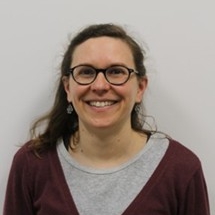
Anne Plessis (she/her) is the First Author of Is my stress out of place? Bread wheat response to saline stress varies in pattern and extent across experimental settings published 02 July 2025.
Plessis is a Lecturer in Plant Biosciences at the University of Plymouth. Education background includes 2008 PhD in Plant Biology. Research interests include: how plants behave when challenged by abiotic stresses like drought, heat or soil salinity in the agricultural fields where those plants are cultivated, as opposed to artificial laboratory conditions. Personal interests include Cats and TV shows.
“’I got into plant science because you can do all sorts of experiments with plants to understand how they respond to their environment, and you get to work in greenhouses. I specialise in crops simply because I love food!”

Kumar Shrestha
Kumar Shrestha (he/him) is the First Author of Employing spectral features to accelerate sorghum phenotyping against sap-feeding aphids published 08 July 2025. He is a Postdoctoral Research Associate at University of Nebraska-Lincoln. Education background includes a 2023 Ph.D. in Plant Science at Oklahoma State University. Research interests include Plant defense mechanism, Genetics and Plant stress. Personal interests include Long drives and Fitness training.
“’When I was a child, I would often accompany my parents to the crop fields. I loved working in the field, walking through the rows of plants and watching them grow. That’s when I first fell in love with plants. During my Bachelor’s, I became interested in how plants deal with stress and defend themselves. Since then, I’ve been working in this field, following that same childhood curiosity.”
Sujeong Jeong
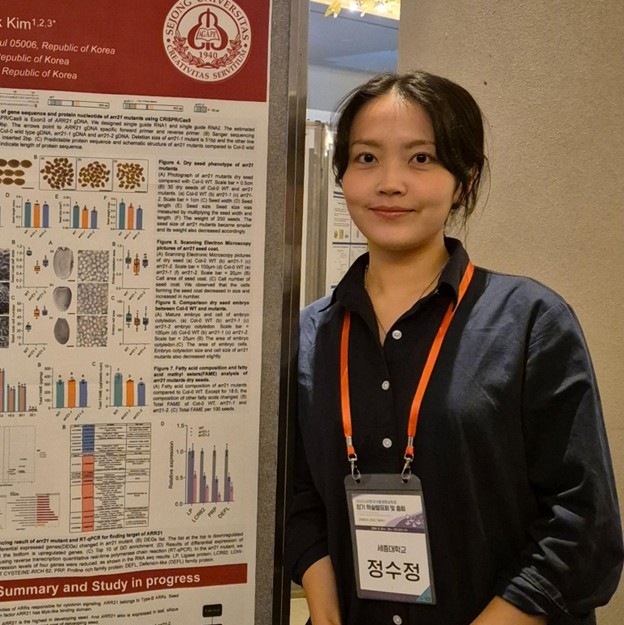
Sujeong Jeong (she/her) is the First Author of Molecular characterization of cytokinin response regulator ARR21 in Arabidopsis seed development published 21 July 2025. Jeong is a Master, Department of Bioindustry and Bioresource Engineering, Sejong University.
Education background includes 2025 MSc Bioindustry and Bioresource Engineering at Sejong University, 2023 BSc Sejong University. Research interests include Plant metabolism, Seed, Transcription factor. Personal interests include Running, Reading a book.
“’When I was a sophomore in college, I first studied plants in depth. At that time, I became interested in the metabolic processes of plants and developed a strong desire to continue studying them. While there were similarities to animals, there were also clear differences. And, I found it fascinating that plants, which look so different from animals, carry out such complex functions. This sparked my curiosity to learn more.
Starting from my junior year and throughout my master’s program, I researched plant transcription factors. Since transcription factors regulate multiple genes, studying them is not easy. However, for this very reason, transcription factors have a wide range of functions, and uncovering these functions is meaningful. During this time, my advisor provided me with invaluable academic guidance, and my senior colleague greatly influenced my research attitude. I owe much of my progress to these two mentors.”
Zha-Long Ye
Zha-Long Ye is the First Author of the Revisiting the Proliferated Seed Cones in Larix kaempferi Reveals a Growth Arrest Plasticity published 21 July 2025. Ye Ph.D student Forest Tree Genetics and Breeding at Chinese Academy of Forestry.Research interests include Plant development, Tree aging.Personal interests include Basketball, Bike riding.
“’I began to study plant development since my undergraduate years. At that time, we observed and got to know plants all over the mountains and fields. Field observation relaxes me and relieves my tension and anxiety. Since 2020, I have joined Wanfeng Lab and conducted research related to tree aging with larch as the subject. We attempt to answer how trees record their age and how age signals integrate into other processes such as development and stress responses. Although some phenomena cannot be fully explained for the time being, they help us understand the world better.”