
Review: How to evaluate the climate-mitigation potential of plant agricultural interventions
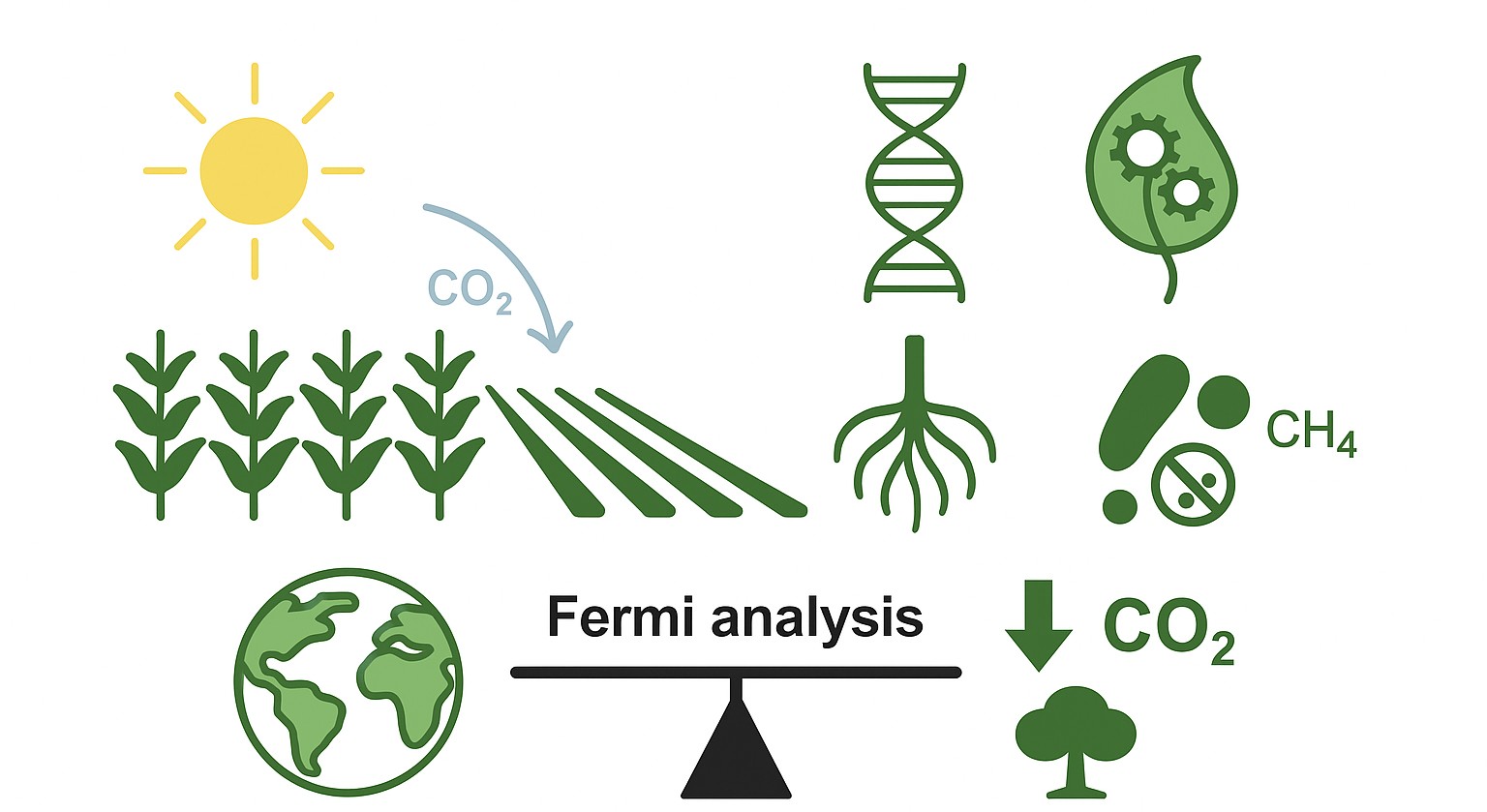 Agriculture contributes substantially to climate change. Many agricultural interventions have been suggested as opportunities to lower this impact, through CO2 sequestration or through reducing emissions of CO2 and CH4. This review by Vickers and Zerbe lays out how to use Fermi calculations to identify which of these interventions might have the biggest impact and the key priorities revealed through this approach. One of their findings is that strategies that impact the largest areas will have the biggest impact, even if they aren’t the biggest impact when calculated per hectare. The authors also note that as land area is limited, some promising avenues such as extensive reforestation must be managed carefully to not impinge upon land needed for crop production. Some approaches such as better management of fertilizer use can be implemented immediately, whereas others that rely on synthetic biology or complex breeding will be slower to implement. The authors recommend identifying a portfolio of near- and long-term strategies and regular re-evaluation to ensure that the selected approaches remain relevant. These conclusions were described in a recent webinar on Numeracy, Realism, and Relevance in Plant Science, and this article is dedicated to the memory of Professor Andrew Hanson, a leading proponent of synthetic biology and rational problem solving. (Summary by @PlantTeaching.bsyk.social) Plant Physiol. 10.1093/plphys/kiaf410