Plant Direct Spotlights 2025 First Authors (Second Edition)
Text: Behind manuscripts are researchers, professors, professionals and students dedicated to advancing the field of plant science. You’ve seen our First Authors on Twitter and Facebook— now, read more about why they chose to pursue plant sciences and click on the links below the pictures to read their articles.
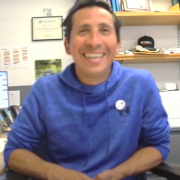
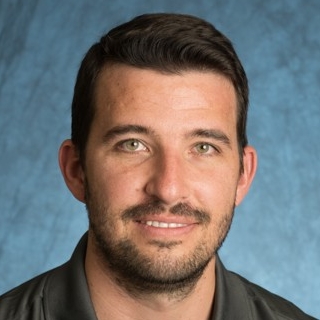 Carlos Rigon
Carlos Rigon (He/Him) is the First Author of Unraveling the Role of P450 Reductase in Herbicide Metabolic Resistance Mechanism published 14 August 2025. He is a Herbicide Biologist at Corteva Agriscience. Education background includes a Ph.D. in Bioagricultural Sciences – Weed Science Specialization. Research interests include herbicide metabolism, herbicide resistance, plant evolution. Personal interests include running, playing soccer.
“I became interested in plant science because of the ongoing challenge of herbicide resistance evolution in weeds. This phenomenon fascinates me, and I am driven to understand both the underlying mechanisms and the broader implications for agriculture. My ultimate goal is to find effective solutions to help growers overcome these challenges, ensuring sustainable and productive crop management.”

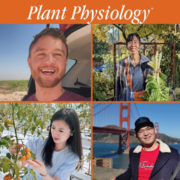
Naga Jyothi Udandarao
Naga Jyothi Udandarao is the First Author of Parasitic-plant parasite rewires flowering pathways to induce stem-derived galls published 20 August 2025. Udandarao is pursuing opportunities to begin PhD studies. Educational background includes Masters in Biotechnology at Jawaharlal Nehru Technological University, India. Research interests include Plant morphology and plant physiology. Personal interests include baking and gardening.
“Naga Jyothi is a researcher with experience in plant physiology, molecular biology, and histopathology. She holds a Master’s degree in Biotechnology from Jawaharlal Nehru Technological University, India, and has worked as a Research Assistant at the Graduate School of Life Sciences, Tohoku University, Sendai, Japan. She is passionate about exploring the molecular basis of plant resilience and its potential applications in agriculture and environmental sustainability. Outside the lab, she enjoys baking and gardening.
Her research journey began at the Department of Botany, Sri Venkateswara University, India, where she developed a deep interest in plant defense mechanisms. She was fascinated by how plants produce bioactive molecules in response to biotic and abiotic stresses, and how the levels of these compounds can significantly increase under certain external factors. This interest evolved into a focused study on the role of galls in altering plant physiology and defense pathways. During her time at Tohoku University, she further expanded her expertise in molecular techniques and histology to investigate plant-insect interactions and plant stress responses.”
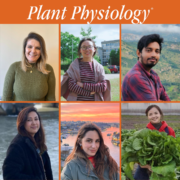
 Cecilia Costigliolo Rojas
Cecilia Costigliolo Rojas (She) is the First Author of Apple DELLA is degraded under warm temperature conditions in Nicotiana benthamiana leaves through a COP1-dependent mechanism published 19 September 2025. She is a Postdoctoral position, Proteostasis and Stress in Plant Laboratory — Institute of Molecular and Cellular Biology, CSIC-UPV Valencia-Spain. Education background includes: 2025 Posdoctoral position. Proteostasis and Stress in Plant Laboratory. Institute of Molecular and Cellular Biology. CSIC-UPV. Valencia-Spain; 2022 Posdoctoral position, Hormonal Signalling and Plasticity Laboratory, Institute of Molecular and Cellular Biology, CSIC-UPV. Valencia-Spain; 2019 Postdoctoral position, Laboratory of Plant Molecular Biology, Leloir Institute Foundation, IBBA-CONICET, Buenos Aires- Argentina; 2019 PhD in Biological Sciences. Faculty of Exact Sciences. University of Buenos Aires; 2013 Bachelor´s degree in Genetics, Faculty of Exact, Chemical and Natural Sciences – National University of Misiones, Misiones-Argentina. Research interests include Abiotic stress, photomorphogenesis, thermomorphogenesis.Personal interests include Painting, Ceramics.
“From an early age, I developed a strong interest in science. Encouraged by several of my high school teachers, I pursued studies in genetics. During my time at university, I worked in the Botany Department, which sparked my current dedication to plant research. I am particularly fascinated by the vast diversity of plant species worldwide and by their ability to rapidly adapt to changing environments through complex molecular mechanisms.”
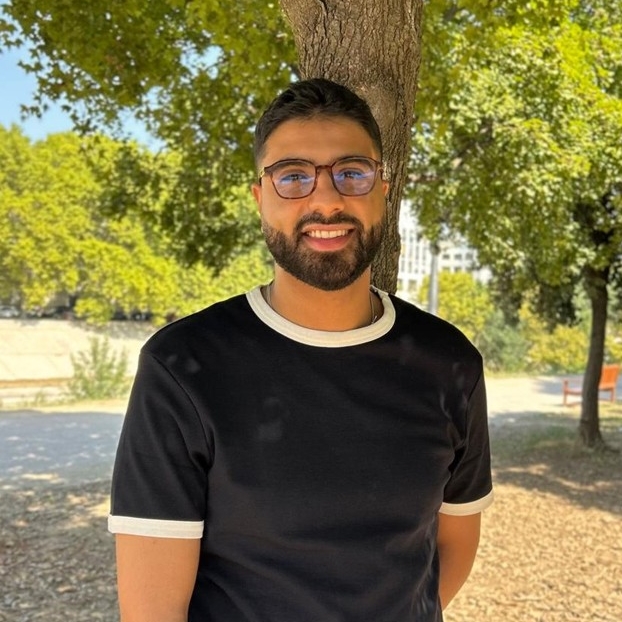 Mohamad Al Bolbol
Mohamad Al Bolbol (he/him) is the First Author of Apple DELLA is degraded under warm temperature conditions in Nicotiana benthamiana leaves through a COP1-dependent mechanism published 19 September 2025. He is a PhD – 2022 – 2025 at University of Montpellier – AGAP Institute.Education background includes: 2022 Masters Plant Environment and Ecological Engineering at the University of Strasbourg. 2021 Masters Plant biology and environment at Lebanese University. 2019 Bachelor’s Degree – Life and Earth Sciences at Lebanese University. Research interests include Plant developmental biology, hormone signaling pathways, and temperature-dependent growth regulation. Personal interests include Running, Swimming, Traveling.
‘My curiosity about how plants respond to environmental factors such as temperature, hormones, and developmental cues inspired me to pursue plant science.”

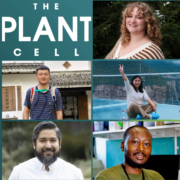
Geoffrey Malcolm Carnie Cobb
Geoffrey Malcolm Carnie Cobb (he/him) is the First Author of EARLY FLOWERING 3 (ELF3) inhibits hypocotyl phototropism in light-grown Arabidopsis seedlings published 23 September 2025. Education background includes 2024 PhD in Biology at the University of Lausanne; 2019 MBiol at Durham University. Research interests include Plant responses to light, circadian rhythms, PIF proteins. Personal interests include Reading, Fishing, Formula 1.
“I have been interested in plants from an early age. There was an excellent local botanical garden, which my family and I visited fairly frequently, and my interest probably originated there. I decided to go into plant research after a series of excellent undergraduate lectures during my time at Durham University. Later, I pursued a PhD in the lab of Christian Fankhauser at the University of Lausanne, studying PIF proteins in Arabidopsis. I feel privileged to have had the opportunity to work with a group of such dedicated and knowledgeable people during my time there!”
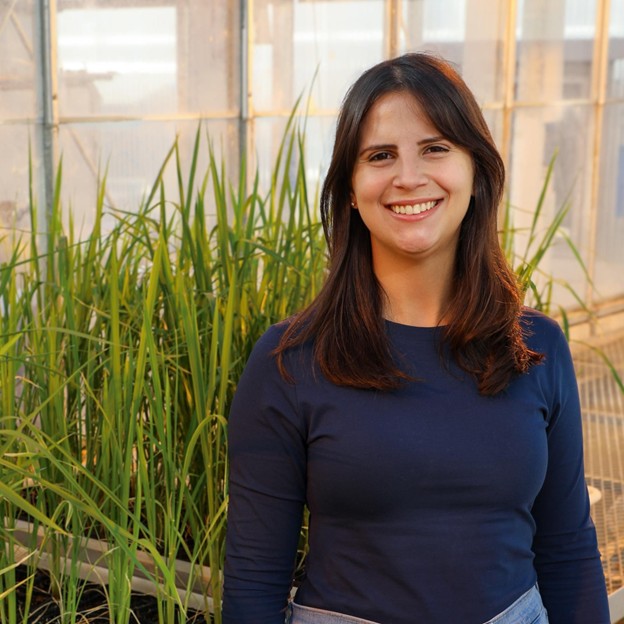 Maria Clara Faria-Bates
Maria Clara Faria-Bates is the First Author of Integrative transcriptomic and phosphoproteomic analysis reveals key components of SnRK1 signaling network in rice published 17 November 2025. Faria-Bates is a PhD candidate at the University of Arkansas.
Education background includes: Present Ph.D in plant biotechnology at the University of Arkansas; 2023 MSc in plant biotechnology at the University of Arkansas; 2019 BSc in Agronomy at the University of Sao Paulo, Brazil. Research interests include Plant signaling, molecular biology, and functional genomics.
Personal interests include Reading, swimming, hiking, and yoga. “My interest in plant science began in my childhood, growing up on a farm in rural Brazil. Surrounded by crops and fruit trees, I developed a natural curiosity for how plants grow and adapt. This inspired me to pursue a degree in agronomy.
I love plant science because it connects research with a real impact on global food security and sustainability. I am inspired by mentors who combine exceptional research with mentorship, especially Dr. Vibha Srivastava, who has encouraged me to think independently, collaborate, and communicate science beyond the lab.”
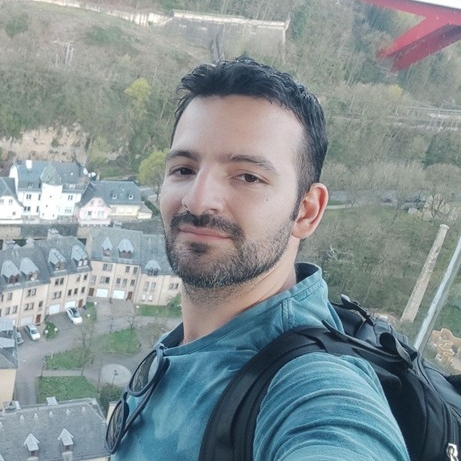 Mauricio Peñuela Aristizába
Mauricio Peñuela Aristizábal (he/his) is the First Author of Unraveling Plant Recombination Patterns: Insights from Genome kmers published 25 November 2025.
He is a Postdoctoral Researcher at Bioinformatics Group of Wageningen University and Research. Education background includes: 2012 BSc Biology, 2015 MSc Science-Biology, 2020 Ph.D Science-Biology. Research interests include Bioinformatics, Quantitative genetics, Population genetics, Evolution. Personal interests include Painting, Biking, Hiking, Traveling.
“I am a very curious person who loves science and nature. During my bachelor’s studies, I remember my late botany professor, Philip Arthur Silverstone, a former zoologist who discovered many frog species in Colombia during the 1960s and 1970s. He used to tell us: “I saw the light. That’s why I started to study plants because they are amazing.” It was his classic joke in every class, and both he and we would laugh about it. He was an American scholar who fell in love with plants and became one of the founding figures of botany in Colombia. His words carried a special weight. Like him, I too “saw the light” during my PhD, when I shifted from animal population genetics to plant breeding. I discovered the fascinating evolutionary history of plants, organisms that sustain life on Earth in countless ways. I became passionate about understanding their mechanisms of adaptation and exploring their genomes to support food production. I invite both young and old to discover the fascinating world of plants and to see the light that shines through them.”

Anastasia Apodiakou
Anastasia Apodiakou (she/her) is the First Author of SNRK3.15 is a crucial component of the sulfur deprivation response in Arabidopsis thaliana published 28 December 2025. She is a Project Leader in quality control in LONZA. Education background includes 2023: PhD in Molecular plant physiology , 2019: MSc in Genetics and Biotechnology, 2016: BSc Biotechnology. Research interests include Biotechnology, Epigenetics, Genetics. Personal interests include Gym, yoga, hiking.
“My interest in plant science began with a fascination for how plants adapt to challenging environments. I love the field because it blends curiosity-driven discovery with meaningful real-world applications in sustainability and agriculture. I am especially inspired by mentors (Sarah Whitcomb, Rainer Hoefgen) who model patience, creativity, and scientific integrity—qualities that continually guide my own research journey.“