

Plant Science Research Weekly: February 13, 2026
Review: More is better, the importance of plasmodesmata in C4 photosynthesis
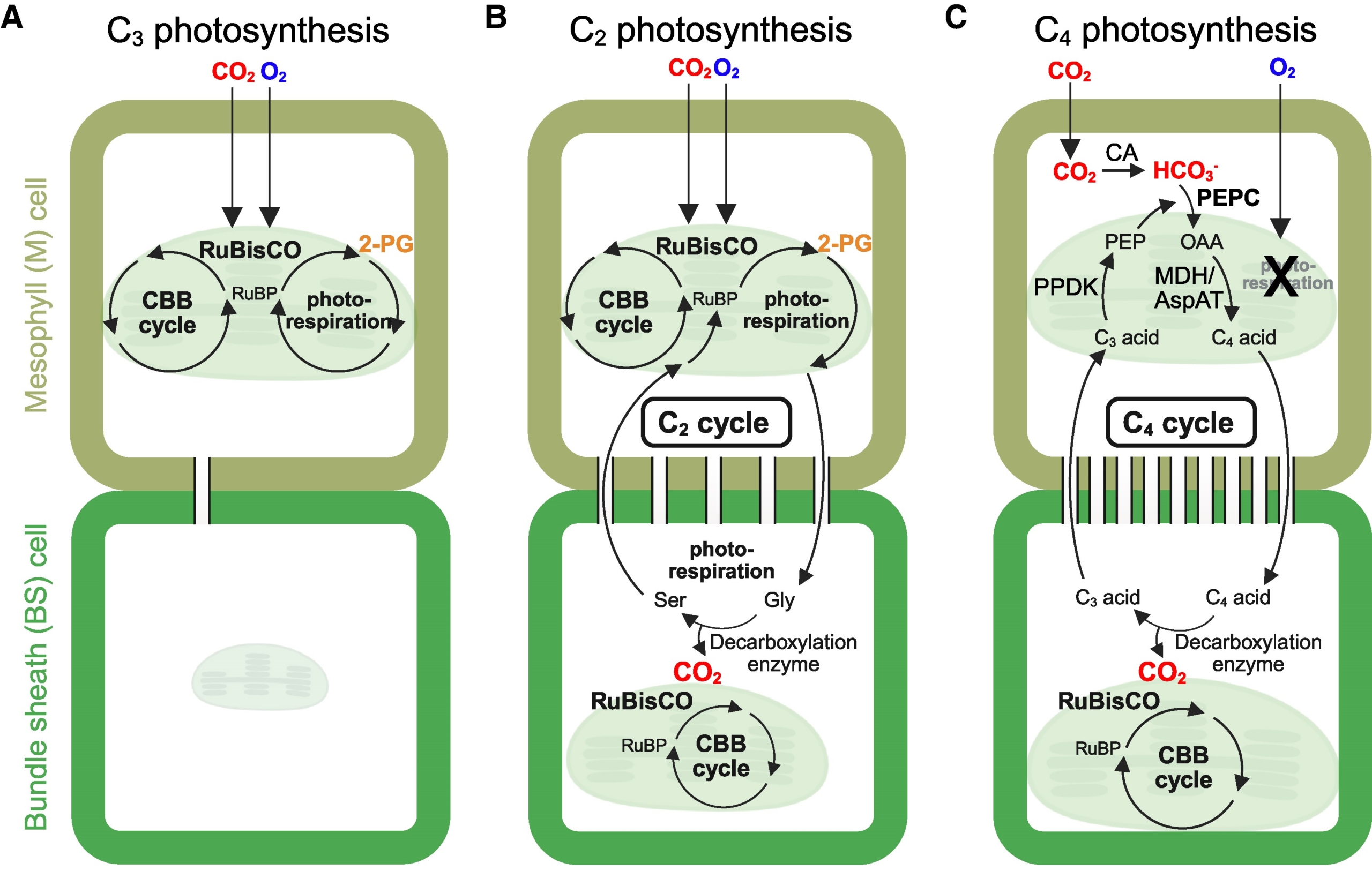 Plant (and many algal) cells facilitate cell-to-cell movement through specialized regulated pores called plasmodesmata that connect neighboring cells, and there is a rich literature in how plasmodesmata regulate intercellular movement for example by sealing closed following pathogen or viral infection. This new review by Schreier et al. focuses on the unique roles of plasmodesmata in mediating two-cell C4 photosynthesis, in which metabolites must move between the mesophyll and bundle-sheath cells. The authors note that the number of plasmodesmata bridging the mesophyll and bundle-sheath cells in C4 plants is roughly 10 fold higher than between other cell types. Plasmodesmatal abundance as well as morphology and function are sensitive to environmental factors as well as signals coming from chloroplasts, with many contributing genes identified and reviewed here. The authors then discuss the promise and challenges of engineering C4 photosynthesis in rice, and discuss a proposed synthetic biology pathway to engineer the enhanced plasmodesmatal abundance required for the two-cell C4 pathway to succeed in rice. (Summary by Mary Williams @PlantTeaching.bsky.social) J. Exp. Bot 10.1093/jxb/eraf497
Review. Overcoming the scale barrier: expansion microscopy for nanoscale imaging in plants
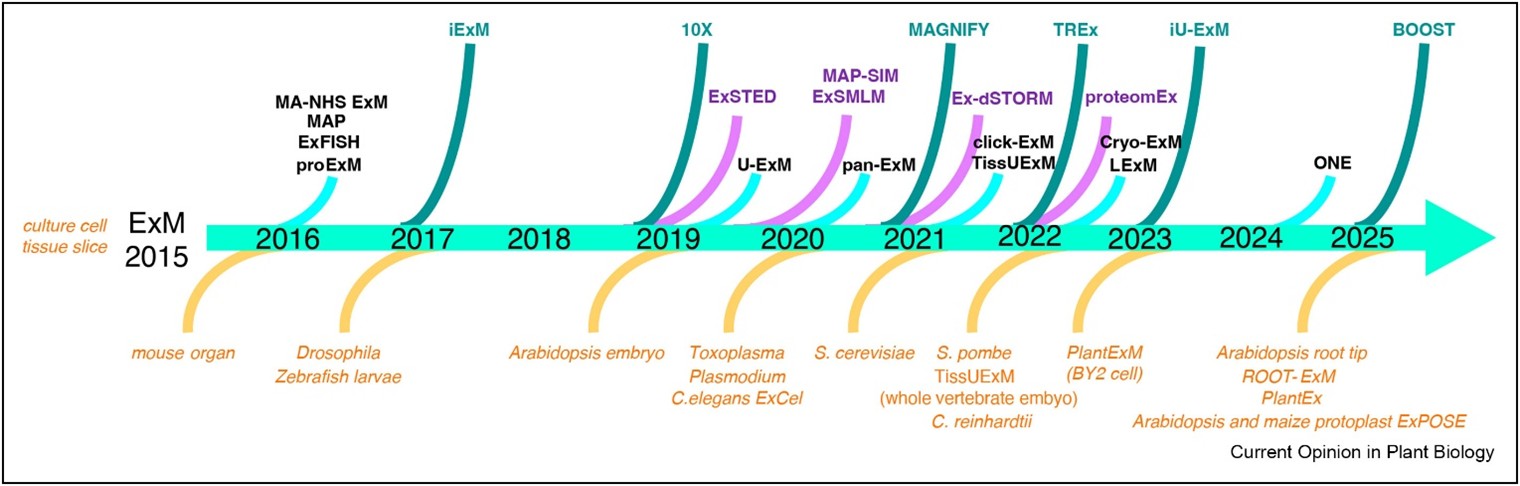 Many biological questions, from tissue-level patterning to subcellular organization, demand 3D imaging with spatial resolution beyond the limits of conventional light microscopy, or even super-resolution microscopy. Expansion microscopy (ExM) offers an elegant solution by physically enlarging biological specimens. By embedding samples in a swellable polymer gel, ExM typically expands biological structures by four- to twenty-fold, enabling nanoscale features to be resolved. In a recent review, Bayer and Grison summarized the development of ExM, outlining its core workflow: chemical crosslinking of biological components to a gel matrix, proteolytic digestion to soften the sample, and isotropic swelling of the gel to preserve structural relationships at an expanded scale. They also critically discuss current limitations and technical hurdles, with particular emphasis on plant science. Rigid cell walls, complex multicellular organization, low expansion factors, and uneven labeling remain major challenges. Consequently, ExM applications in plants have so far been restricted to Arabidopsis root tips, protoplasts, cultured cells, or young tissues lacking secondary wall modifications. Looking ahead, continued methodological innovation will be the key to unlock the full potential of ExM for visualizing plant structures across scales and developmental stages. (Summary by Ching Chan @ntnuchanlab @ntnuchanlab.bsky.social) Curr. Opin. Plant Biol. 10.1016/j.pbi.2025.102848
Macro Plant Projection Imaging (MAPPI): An open, scalable platform for whole-plant fluorescence real-time imaging
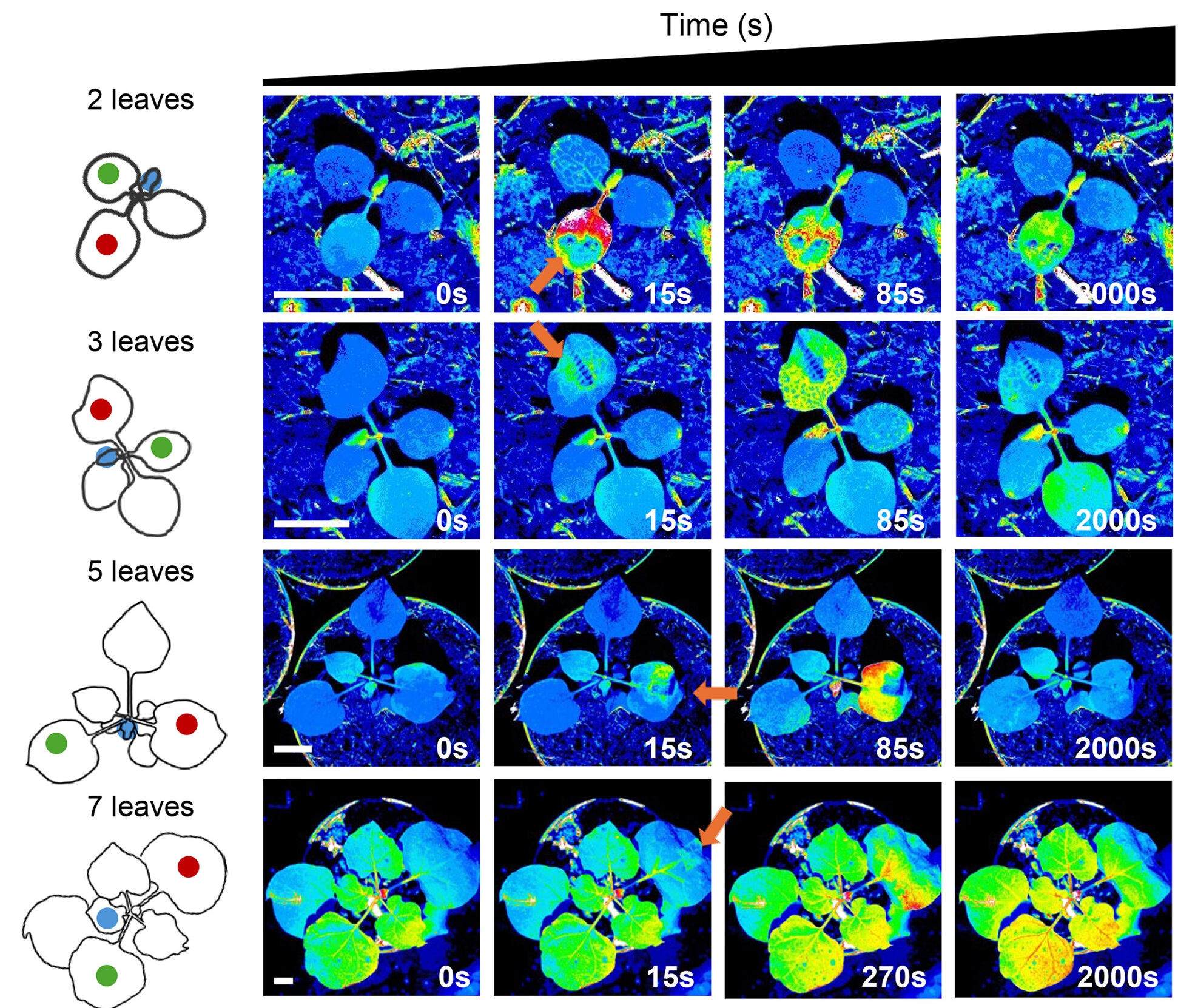 The bid to understand long distance Ca2+ signaling patterns in co-ordinating whole-plant responses to systemic or induced defense have been scarce in soil-grown plants mainly due to limitations of conventional microscopy. Macro Plant Projection Imaging (MAPPI), a real-time, low-cost, dual-view fluorescence imaging platform was developed by Tortora and colleagues for whole plant visualization of mature soil grown plants. The biggest advantage of MAPPI is its large field of view and compatibility with genetically encoded fluorescent indicators. The authors validated the MAPPI system to monitor wound-induced long distance Ca2+ wave dynamics in Nicotiana benthamiana expressing GCaMP3 Ca2+ indicators (a genetically encoded, intensity based calcium indicator). Interestingly, different leaf stages exhibited distinct and varied GCaMP3 fluorescence responses but the platform was capable of detecting systemic Ca2+ waves from leaf to leaf during all stages of development. The same experimental design was also used to visualize apoplastic L-glutamate dynamics. Additionally, the authors monitored Ca2+ dynamics in plants subjected to submergence, and investigated if the long-distance Ca2+ waves also propagated from shoot-to-root, corroborating that long range Ca2+ waves are a conserved feature and not restricted to only model species. (Summary by Indrani Kakati @indranik333 @indranik18.bsky.social) Science Advances 10.1126/sciadv.aea4466
Every leaf has its own timeline: Advances in plant aging
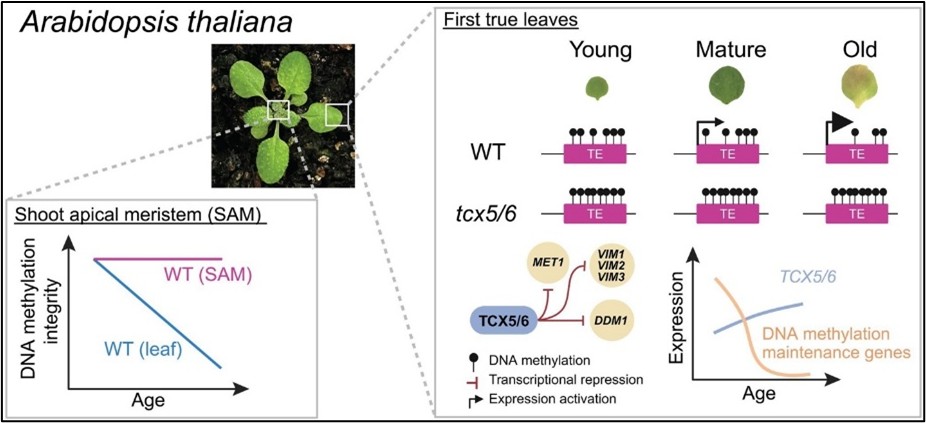 In humans and several mammals, the alterations in DNA methylation are a critical aging biomarker also known as the ‘Epigenetic Clock’. In this study by Dai et al., the authors examined the process of DNA demethylation in Arabidopsis plants to identify if this molecular marker of aging functions similarly as in animals. They observed that as the plants grow old these epigenetic markers slowly disappear. The authors report a delay in DNA demethylation when the plants are grown in short-day conditions. By comparing the methylomes in various plant tissues, the authors report that the SAM does not exhibit any signs of aging and is devoid of epigenetic markers which are otherwise common in older senescent leaves. The authors also studied the transcriptomes of the first true leaves in wild-type plants over an aging time course. They recognized two differentially regulated genes, TCX5 and TCX6, that drive the epigenetic decay in older leaves by repressing DNA methylation maintenance genes. When the authors examined the leaves of the mutant tcx5/6, they found that although the DNA methylation is steadily maintained, it does not stop the leaves from following the usual time course of senescence. As fascinating as it would be to stall or reverse aging, the authors show that epigenetic alterations are a ‘product’ rather than a ‘driver’ of aging in plants. (Summary by Sonal Sachdev, sci3ntyst , sci3ntyst.bsky.social) Science 10.1126/science.adu2392
PLETHORA-autophagy fine tunes ROS to enable de novo root regeneration
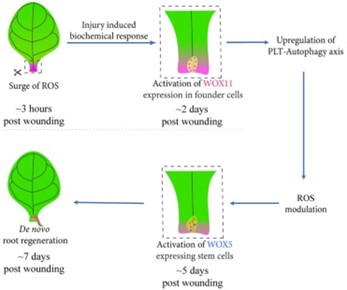 Autophagy (or “self-eating”) is a conserved quality-check pathway that degrades and recycles damaged components of the cell to restore cellular homeostasis. In plants, autophagy has been studied during wound responses, but it is less clear how it particpates in de novo organ regeneration. In a recent study, Ganguly et al. studied the role of autophagy in root regeneration from excised leaves. They found that ATG8 (a core autophagy protein) is upregulated during this process of root regeneration and that it is transcriptionally upregulated by the PLETHORA7 (PLT7) transcription factor. To establish a link between autophagy and reactive oxygen species (ROS), the earliest hallmark of cellular stress, the authors detected ROS levels using the fluorescent probe 2′,7′-dichlorofluorescein diacetate (H2DCFDA) in wild type and mutants of PLT and ATG8. Strikingly, the findings demonstrated that the PLT-ATG8 axis mediates spatiotemporal suppression of ROS, thereby restoring redox balance at the site of the wound. Proper ROS positioning is crucial for promoting expression of stem-cell regulators such as WOX5, which is essential for founder cell specification during root regeneration. Overall, the authors established a central mechanism of the PLETHORA (PLT)–autophagy (ATG8)–ROS axis that activates de novo root regeneration in excised leaves. (Summary by Priyanka Babuta) PNAS 10.1073/pnas. 2513954123
Sensing the neighbors: Phytochrome A fine-tunes plant adaptation to light
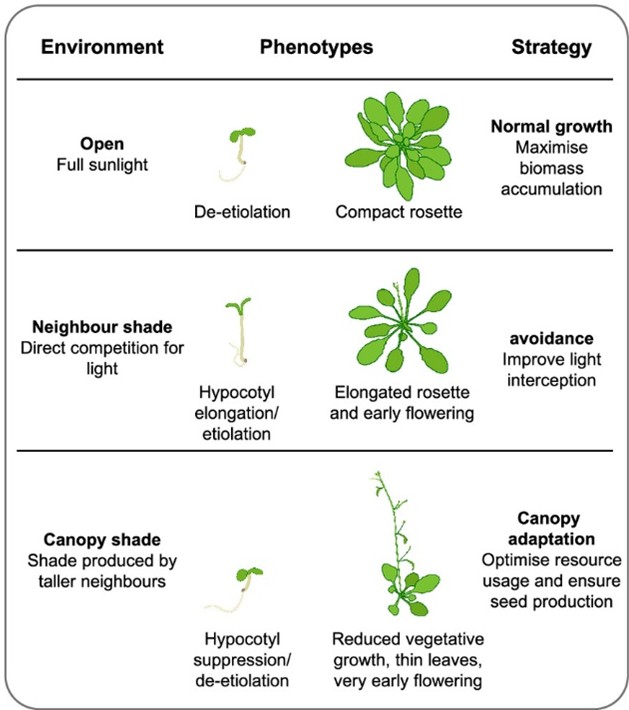 Plants constantly compete for light, and the threat of shading by neighbors has been a powerful driving force for the adaptive plasticity during evolution. Changes in both light quantity and quality, most notably a reduced ratio of red to far-red wavelengths (low R:FR), serve as early warning signals of shading and are perceived by the phytochrome family of photoreceptors. While Phytochrome B (phyB) classically promotes the shade avoidance syndrome (SAS), stimulating upward and outward growth, such responses can become maladaptive under deep or persistent shade. In contrast, Phytochrome A (phyA) counteracts SAS, favoring tolerance and survival. To explore the role of phyA under milder, more realistic canopy conditions, Prizeman-Green and colleagues developed a phyA-nLUC reporter line. This system revealed diel oscillations in phyA abundance, with accumulation at night and rapid degradation upon light exposure. Using hypocotyl elongation as a functional readout across varying R:FR ratios, the authors uncovered a strong correlation between phyA expression and growth responses, establishing phyA as a sensitive detector of canopy shade. Beyond morphology, phyA mutants exhibited reduced shade-induced early flowering, whereas phyB mutants flowered constitutively early, and both mutants accumulated less dry biomass. Together, these findings highlight phytochromes as central integrators of growth, development, and resource allocation, offering new perspectives on how plants fine-tune survival strategies in increasingly crowded and dynamic light environments. (Summary by Ching Chan@ntnuchanlab @ntnuchanlab.bsky.social) PNAS 10.1073/pnas.2512201123
One ARGONAUTE protein governs sexual reproduction in brown algae
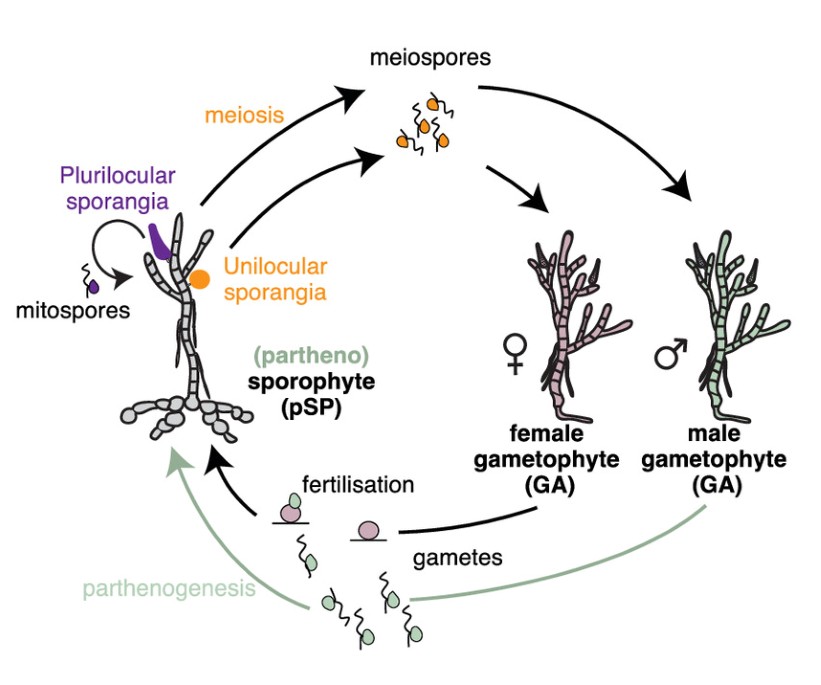 Across multicellular eukaryotes, ARGONAUTE (AGO) proteins are the core of RNA silencing, steering development, defense, and stress responses by biding small RNA guides to seek out genes for repression. In plants and animals, these functions are distributed across multiple AGO homologs that support a wide range of regulatory processes. A notable exception to this pattern is observed in brown algae, a diverse group of multicellular algae, in which several species rely on a single AGO protein to control key aspects of their sexual life cycle. Bukhanets et al. revealed that in Ectocarpus this lone AGO protein is essential for controlling the critical transition from sporophyte to gametophyte. When AGO is disrupted, algae still grow normally as sporophytes and even complete meiosis, however, the resulting meiospores are mostly inviable or, instead of becoming gametophytes, germinate and develop again as sporophytes, shutting down germline establishment and gamete production. Surprisingly, this dramatic developmental breakdown occurs without major transcriptional changes, even though AGO is loaded with small RNAs. The authors point out a mode of AGO control in algae that acts mainly after transcription, fine-tuning gene expression at the post-transcriptional level to determine the germline fate. Brown algae therefore represent a rare case in which a complex multicellular organism uses one AGO protein to control key developmental processes and a compelling reminder that biological complexity does not always require molecular excess. (Summary by Fengoula Avgeri, @AvgeriF) PNAS 10.1073/pnas.2518712123
The secret toolkit of Mother of Thousands
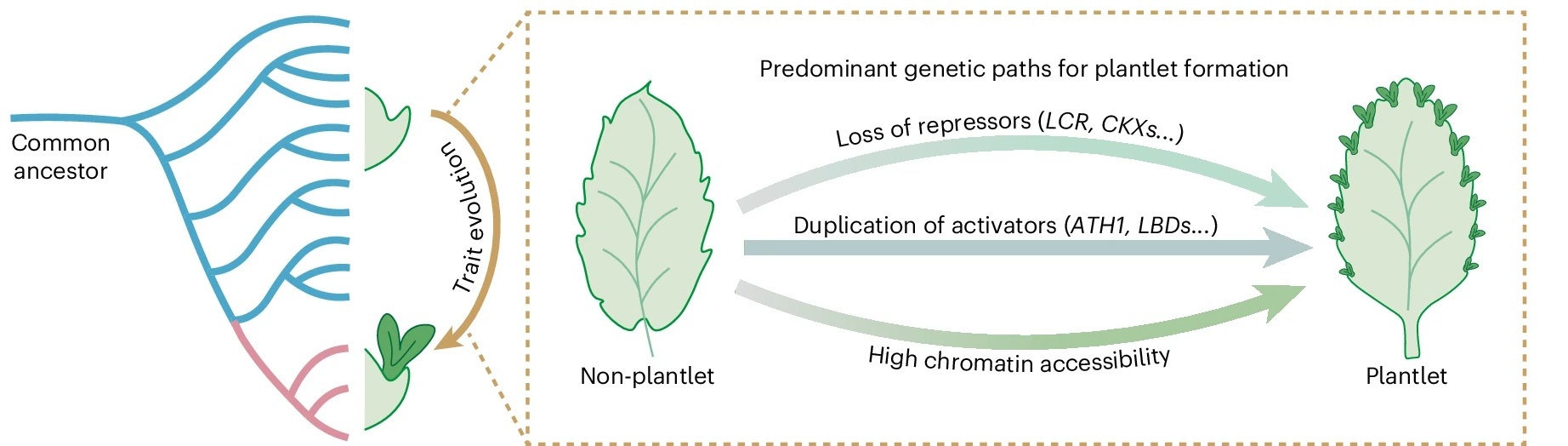 Kalenchoe plants, sometimes called “Mother of Thousands” are instantly recognizable by the abundance of little plantlets that form on their leaf margins. Kalenchoe daigremontiana is probably the most recognizable species, in which plantlet formation is constitutive, but other species in this genus are readily induced to make plantlets. In a new study, Meng et al. investigated the genetic pathways that lead to this ability to clonally propagate. They started by generating high-quality reference genomes for three Kalenchoe species, which revealed that many gene families associated with organogenesis are expanded in this genus. Furthermore, many of these genes such as WUS and WOX3a are in a enhanced chromatin accessibility state as compared to other plants, which likely renders them more susceptible to activation in somatic tissues. The authors additionally looked at genes that were “extremely lost” in the Kalenchoe genomes and identified one in particular, LEAF CURLING RESPONSIVENESS (LCR), that is a strong suppressor of shoot and axillary meristem activity. When the authors expressed the Arabidopsis LCR gene in K. daigremontiana, plantlet formation was drastically decreased. Furthermore, lcr mutants of Arabidopsis showed increased shoot regeneration from explants. Through the investigation of this fascinating group of plants, the authors identified key genes that can be edited to promote regeneration of important crop plants. (Summary by Mary Williams @PlantTeaching.bsky.social) Nature Plants 10.1038/s41477-025-02214-3
A distal SNP downstream to SHOOT APICAL MERISTEM ENLARGER1 regulates its expression to promote branch and silique numbers in rapeseed
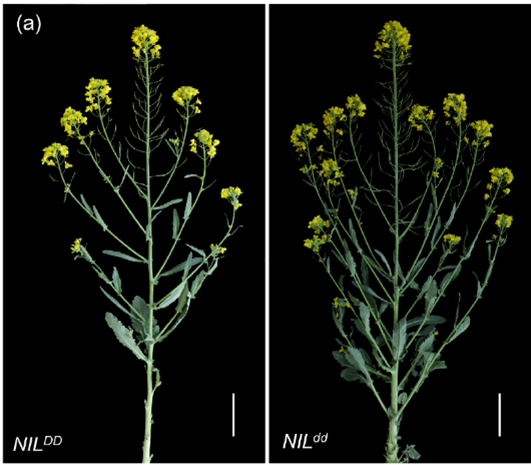
Rapeseed (Brassica napus) is an important crop providing vegetable oil. Yield is positively correlated with increased numbers of seeds, siliques, and branches. In a previous study, a rapeseed germplasm having normal branch and silique numbers was crossed with another germplasm having higher branch and silique numbers to identify the causal quantitative trait locus, NIL. In the current study by Zhang et al., the authors show that the NILDD allele is related to normal branch and silique numbers while the NILdd allele is related to higher branch and silique numbers. Both alleles carry a Brassicaceae-specific gene, SHOOT APICAL MERISTEM ENLARGER1 (SAME1), which encodes a transcription factor. SAME1 is highly expressed in the shoot apical meristem (SAM) of rapeseed plants carrying the NILdd allele but barely expressed in those carrying the NILDD allele. SAME1 transcriptionally represses a negative regulator of SAM growth, thus promoting SAM growth in plants carrying the NILdd allele. Sequence analysis of NILDD and NILdd alleles reveals a single nucleotide polymorphism (SNP) 1.4kb downstream of SAME1. Using a luciferase reporter assay, the authors show that the SNP regulates SAME1 expression, although the mechanism remains unclear. (Summary by Yee-Shan Ku @Yee-Shan Ku) Plant Biotechnol. J. 10.1111/pbi.70500
Regulation of gluten strength by vacuolar processing enzymes targetting a wheat glutenin subunit
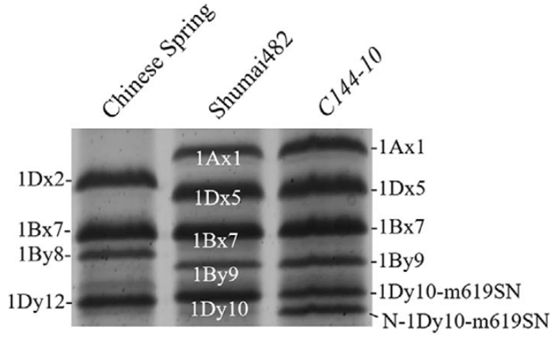 Wheat is rich in gluten proteins which provide texture and structure to many foods such as breads. The abundance of low molecular weight glutenin subunits (LMW-GSs) and high molecular weight glutenin subunits (HMW-GSs) determines gluten strength and dough quality. Wheat cultivars commonly contain three to five types of HMW-GSs. In a previous study, an ethyl methanesulfonate (EMS)-induced mutant containing six types of HMW-GSs was identified. The causal allele was named 1Dy10-m619SN, which carries a serine-to-asparagine amino acid substitution compared to the wild-type allele 1Dy10. The substitution causes posttranslational cleavage of the 1Dy10-m619SN protein and thus the change of gluten strength. However, enzymes mediating this cleavage were unknown. In the current study by Wang et al., using TurboID-based proximity labelling and mass-spectrometry, the authors identify the interaction between 1Dy10-m619SN protein and vacuolar processing enzymes (VPEs). By in vitro protein degradation assays, they further show that the VPEs cleave 1Dy10-m619SN protein but not the wild-type 1Dy10 protein. The cleavage of 1Dy10-m619SN protein by VPEs is also demonstrated by VPE overexpressions in wheat. Furthermore, compared to the wild-type wheat plants carrying the 1Dy10 allele, mutant wheat plants carrying the 1Dy10-m619SN allele have higher VPE expressions, although the induction mechanism is not clear. Previous studies suggested that VPEs target asparagine or aspartic acid for protein degradation. The current study by Wang et al. reveals the application of such a mechanism to regulate gluten strength. (Summary by Yee-Shan Ku @Yee-Shan Ku) Plant J. 10.1111/tpj.70697
Secondary metabolites from plants can affect nematode behavior via microbial volatile signaling cues
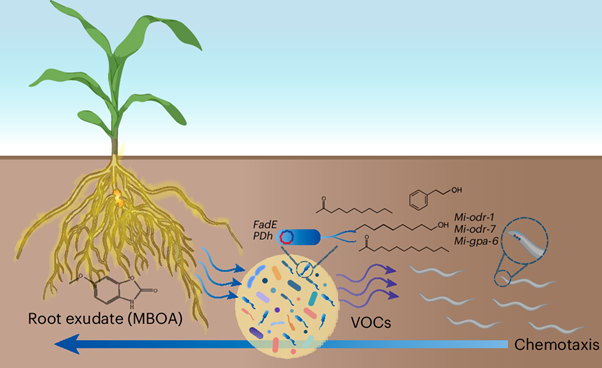 Plant parasitic nematodes such as root-knot nematodes (RKNs) are thought to use chemical cues from the plant to locate their favorable hosts. These chemical cues can code for host specificity and can drive the attraction or repulsion of nematodes. Recently, Wu et al. investigated the role of benzoxazinoids (BXs) in shaping chemoattractant cues for RKNs. BXs have been characterized as defense compounds produced by plants like wheat, rye, barley and have been demonstrated to play a role in root microbiota modulation. The authors observed a reduced RKN attraction in maize mutants of BX genes. Interestingly, this effect required the presence of soil, suggesting a role for the root microbiome. By employing bacterial profiling on BX-producing plants, the authors identified microbes either positively or negatively selected by BXs. Some of the positively selected microbes can produce volatile cues like methyl ketones and 2-phenylethanol that can function as chemoattractants for RKNs. Additionally, the authors used expression profiling and RNAi based approaches in RKNs to identify genes involved in RKN chemosensory behavior. The study provides a framework for studying plant-nematode-microbes tripartite interactions, through the lens of rhizosphere metabolites. These findings advance our knowledge about indirect effects of metabolites on ecological interactions by the plant, and reiterate the importance of context-dependency of rhizosphere interactions. (Summary by Atharv Ambekar @atharvambekar2.bsky.social) Nature Plants. 10.1038/s41477-025-02205-4

