
Review. How plant cells decide their fate: Balancing growth and specialization
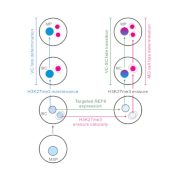
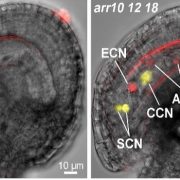
 Every plant begins its life as a single cell, which divides, differentiates, and gradually gives rise to the intricate tissues and organs we see. Initially, plant cells are highly versatile, able to divide and give rise to many other cell types. During development, cells receive signals that control whether they keep dividing or specialize into distinct types that carry out unique functions, such as forming vascular tissues, leaves, or flowers. In a recent review, González-Suárez and Smit explored how plant cells strike this delicate balance between division and differentiation. Classical hormones like auxin and cytokinin play major roles, forming gradients that guide the transition from proliferation to specialization. These hormonal signals are closely tied to gradients of key transcription factors such as PLETHORA and WUSCHEL, which together coordinate the cell cycle with developmental cues. Case studies across tissues, from the shoot tip and vasculature to stomata, trichomes, and anthers, reveal additional players, including brassinosteroids, reactive oxygen species, and receptor-like kinases. Yet, despite decades of research, no single universal signal explains how an individual cell decides its fate. Each plant cell, it seems, follows its own logic, one that continues to fascinate and challenge plant biologists. (Summary by Ching Chan @ntnuchanlab) J. Exp. Bot. 10.1093/jxb/eraf429