
How do plants attain totipotency? Reprogramming somatic cells into embryos
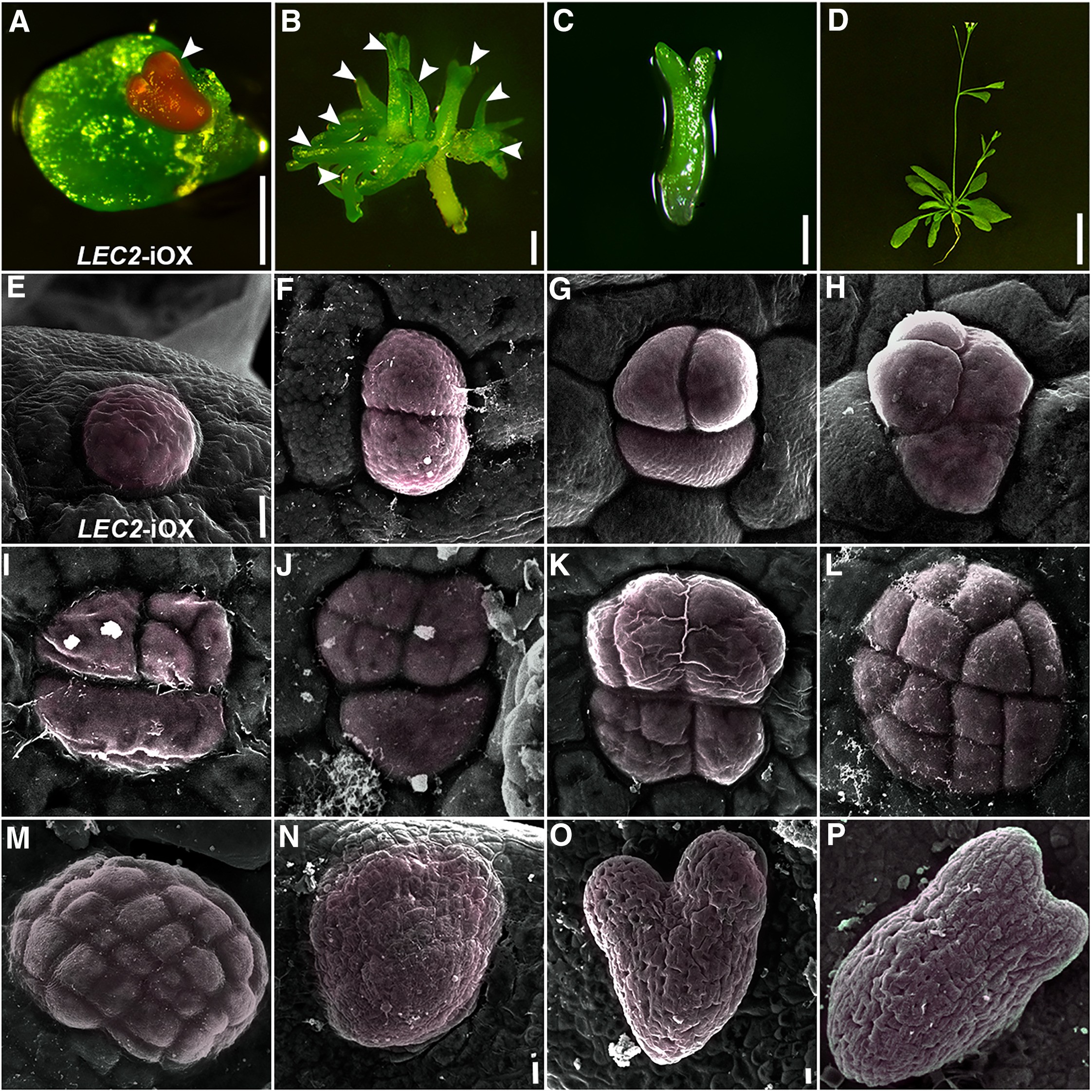 Plants have an extraordinary ability to regenerate entire organs or even embryos from a single somatic cell, a phenomenon known as totipotency. Remarkably, differentiated cells can reacquire totipotency and form embryos through somatic embryogenesis, however molecular mechanisms behind this developmental plasticity remain unclear. To address this, Tang et al. used Arabidopsis thaliana, in which somatic embryogenesis can be triggered by ectopic expression of LEAFY COTYLEDON2 (LEC2), a key regulator of somatic-to-embryonic state conversion. The authors found that LEC2 reprograms cotyledon epidermal cells directly into somatic embryos, bypassing callus stage. Mechanistically, LEC2 interacts physically with the SPEECHLESS (SPCH) transcription factor in the nucleus, reprogramming SPCH-expressing meristemoid mother cells into totipotent somatic embryo founder cells by activating local auxin biosynthesis. SPCH defines the competent lineage and directly upregulates TAA1 and YUC4, two auxin biosynthetic genes, during founder cell specification. Using single-nucleus RNA sequencing on LEC2-overexpressing cotyledons collected at multiple time points, the authors identified nine subclusters of cells representing different developmental states. Among them, subcluster 7, termed guard mother cell–auxin, was particularly enriched for auxin-related genes, marking a critical transition state preceding somatic embryo founder cell specification. This study provides new insight into how somatic cells regain totipotency and offers a foundation for engineering developmental plasticity in crops, though its conservation across species remains to be tested. (Summary by Katarina Kurtović, katarinakurtovic.bsky.social) Cell 10.1016/j.cell.2025.08.031