
The secret toolkit of Mother of Thousands
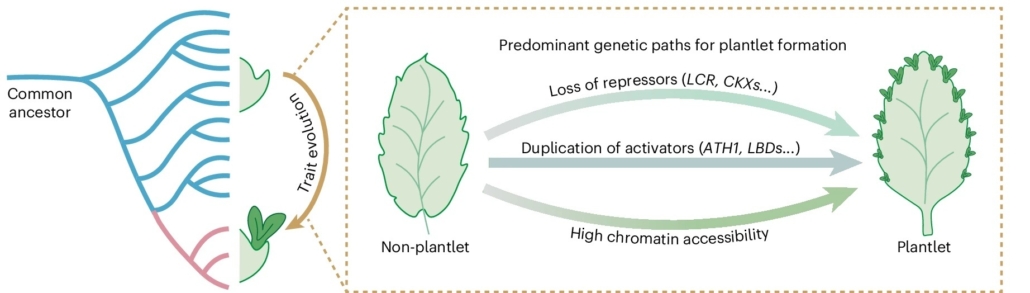
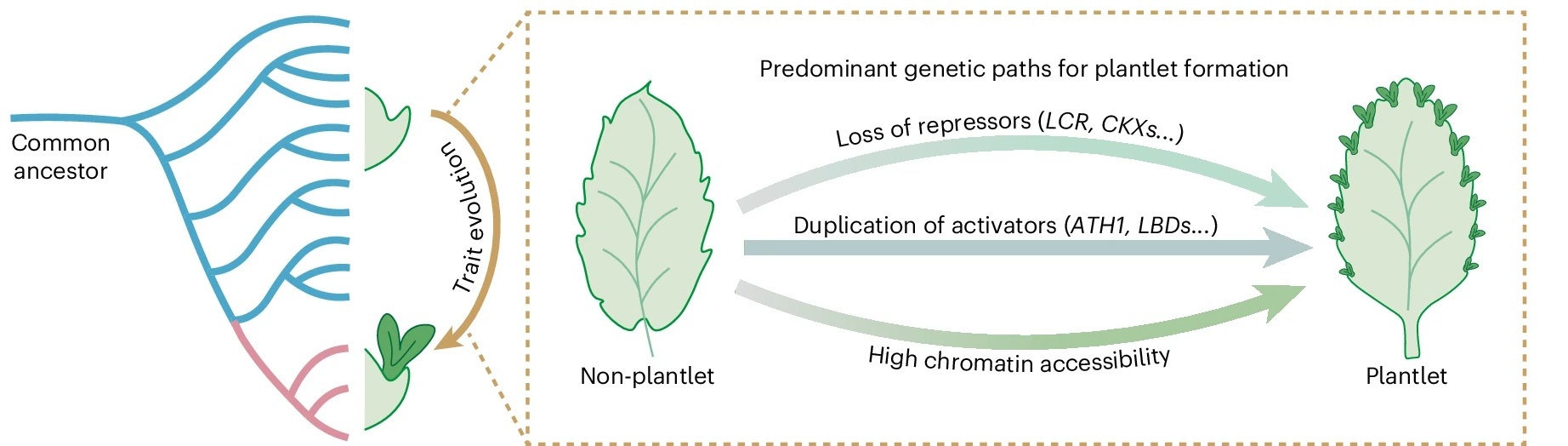 Kalenchoe plants, sometimes called “Mother of Thousands” are instantly recognizable by the abundance of little plantlets that form on their leaf margins. Kalenchoe daigremontiana is probably the most recognizable species, in which plantlet formation is constitutive, but other species in this genus are readily induced to make plantlets. In a new study, Meng et al. investigated the genetic pathways that lead to this ability to clonally propagate. They started by generating high-quality reference genomes for three Kalenchoe species, which revealed that many gene families associated with organogenesis are expanded in this genus. Furthermore, many of these genes such as WUS and WOX3a are in a enhanced chromatin accessibility state as compared to other plants, which likely renders them more susceptible to activation in somatic tissues. The authors additionally looked at genes that were “extremely lost” in the Kalenchoe genomes and identified one in particular, LEAF CURLING RESPONSIVENESS (LCR), that is a strong suppressor of shoot and axillary meristem activity. When the authors expressed the Arabidopsis LCR gene in K. daigremontiana, plantlet formation was drastically decreased. Furthermore, lcr mutants of Arabidopsis showed increased shoot regeneration from explants. Through the investigation of this fascinating group of plants, the authors identified key genes that can be edited to promote regeneration of important crop plants. (Summary by Mary Williams @PlantTeaching.bsky.social) Nature Plants 10.1038/s41477-025-02214-3