
One ARGONAUTE protein governs sexual reproduction in brown algae
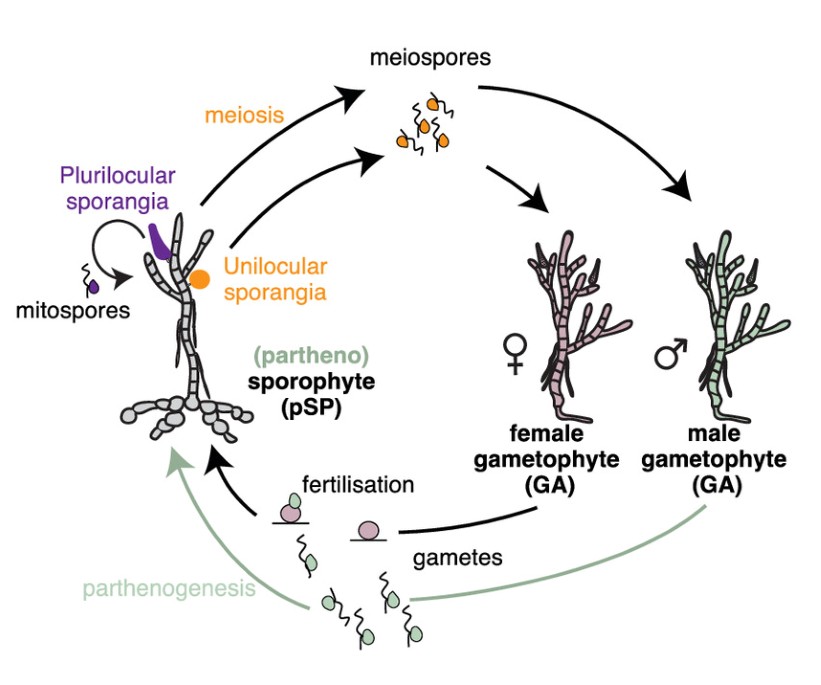 Across multicellular eukaryotes, ARGONAUTE (AGO) proteins are the core of RNA silencing, steering development, defense, and stress responses by biding small RNA guides to seek out genes for repression. In plants and animals, these functions are distributed across multiple AGO homologs that support a wide range of regulatory processes. A notable exception to this pattern is observed in brown algae, a diverse group of multicellular algae, in which several species rely on a single AGO protein to control key aspects of their sexual life cycle. Bukhanets et al. revealed that in Ectocarpus this lone AGO protein is essential for controlling the critical transition from sporophyte to gametophyte. When AGO is disrupted, algae still grow normally as sporophytes and even complete meiosis, however, the resulting meiospores are mostly inviable or, instead of becoming gametophytes, germinate and develop again as sporophytes, shutting down germline establishment and gamete production. Surprisingly, this dramatic developmental breakdown occurs without major transcriptional changes, even though AGO is loaded with small RNAs. The authors point out a mode of AGO control in algae that acts mainly after transcription, fine-tuning gene expression at the post-transcriptional level to determine the germline fate. Brown algae therefore represent a rare case in which a complex multicellular organism uses one AGO protein to control key developmental processes and a compelling reminder that biological complexity does not always require molecular excess. (Summary by Fengoula Avgeri, @AvgeriF) PNAS 10.1073/pnas.2518712123