


Insights into pyrenoid structure
Plant Science Research WeeklyAs close relatives of land plants, green algae provide insights into variations on photosynthesis. Many algae including Chlamydomonas reinhardtii have carbon-concentrating structures called pyrenoids that enrich CO2 around Rubisco, minimizing the competing oxygenation reaction. In a recent preprint,…
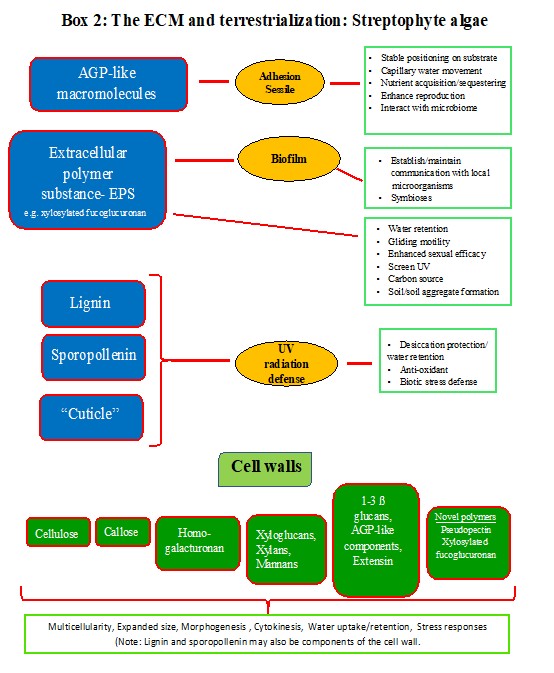
Review: How the extracellular matrix of streptophyte algae contributed to plant terrestrialization
Plant Science Research WeeklyCompared to their aquatic relatives, early land plants faced many challenges, such as a lack of buoyancy, harmful UV light, the challenge of nutrient uptake, and the need to avoid desiccation. In a fascinating review (part of the Plant Physiology focus collection on early land plant evolution), Domozych…
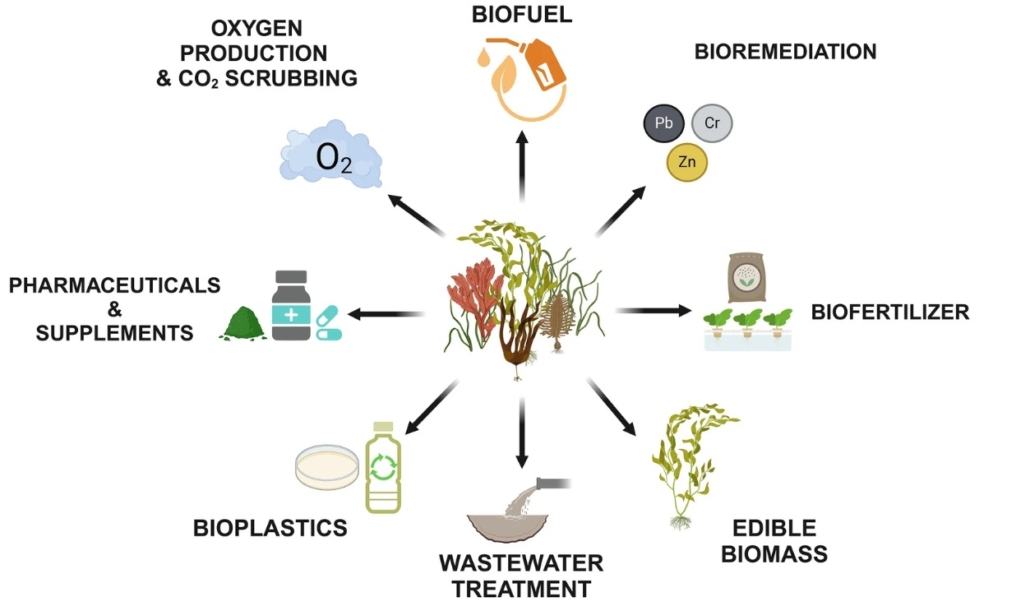
Review. Growing the future in orbit: Applications of macroalgae for food, air, and life support in space
Plant Science Research WeeklyPlants and other photoautotrophs have potential to support astronaut needs, including food production, atmospheric and water recycling, and the generation of pharmaceuticals and biofuels. A recent review by Murphy et al. provides a brief historical overview of microalgae and cyanobacteria research in…
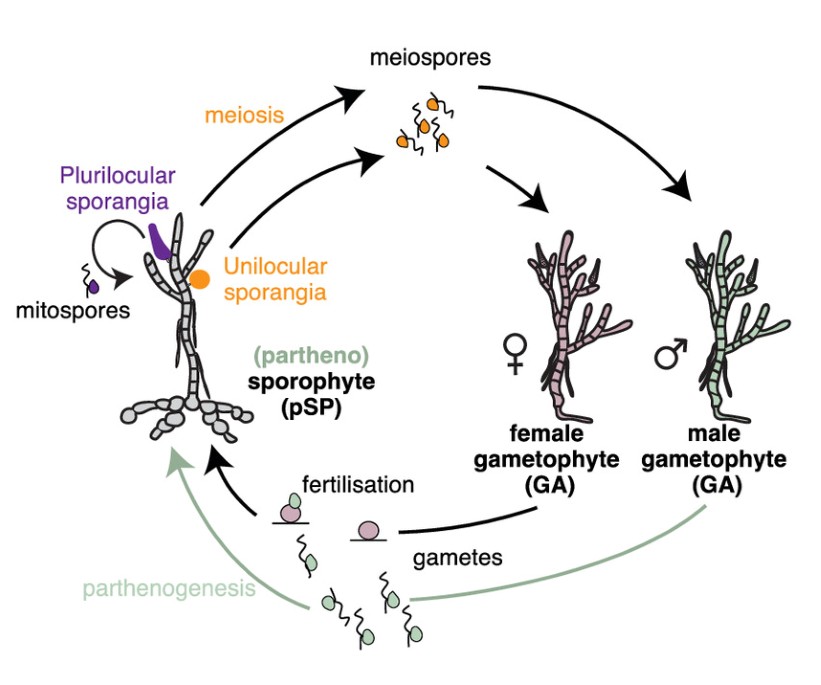
One ARGONAUTE protein governs sexual reproduction in brown algae
Plant Science Research WeeklyAcross multicellular eukaryotes, ARGONAUTE (AGO) proteins are the core of RNA silencing, steering development, defense, and stress responses by biding small RNA guides to seek out genes for repression. In plants and animals, these functions are distributed across multiple AGO homologs that support a…
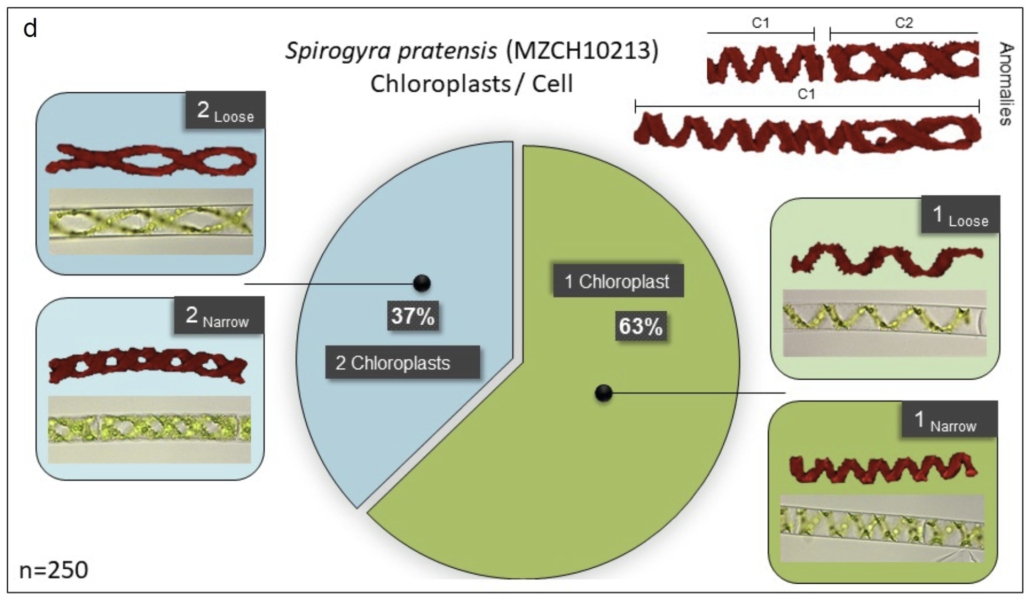
The Spirogyra genome and the origin of that spiral chloroplast
Plant Science Research WeeklyI expect we’ve all been captivated by images of the beautiful spiral chloroplasts in the Spirogyra genus of filamentous algae, and who could forget that name? A new paper by Goldbecker et al. presents the genome of Spirogyra pratensis, uncovering not only some insights into this remarkable structure,…

Review: Synthetic algal genomes
Plant Science Research WeeklyAs photosynthetic organisms, algae can harness solar energy to do useful things, from environmental cleanup to producing fuels and other beneficial molecules. This review by Goold et al. provides an overview of how algae can be valuable platforms for synthetic biology and metabolic engineering through…

RAF-like protein kinases mediate a deeply conserved, rapid auxin response
Plant Science Research WeeklyThe definition of a phytohormone has not always been clear, though most plant biologists agree that phytohormones can be defined as endogenous molecules capable of triggering signaling cascades and associated responses by binding to specific receptors. They have been extensively studied in flowering…

Small RNAs and nutrient deprivation in Chlamydomonas
The Plant Cell: In a NutshellLi et al. find a class of small RNAs that might affect algal tolerance to nutritional stress.
Yingshan Li and Heriberto Cerutti - School of Biological Sciences and Center for Plant Science Innovation, University of Nebraska-Lincoln, NE 68588-0666, USA
Background: Noncoding RNAs are not translated…
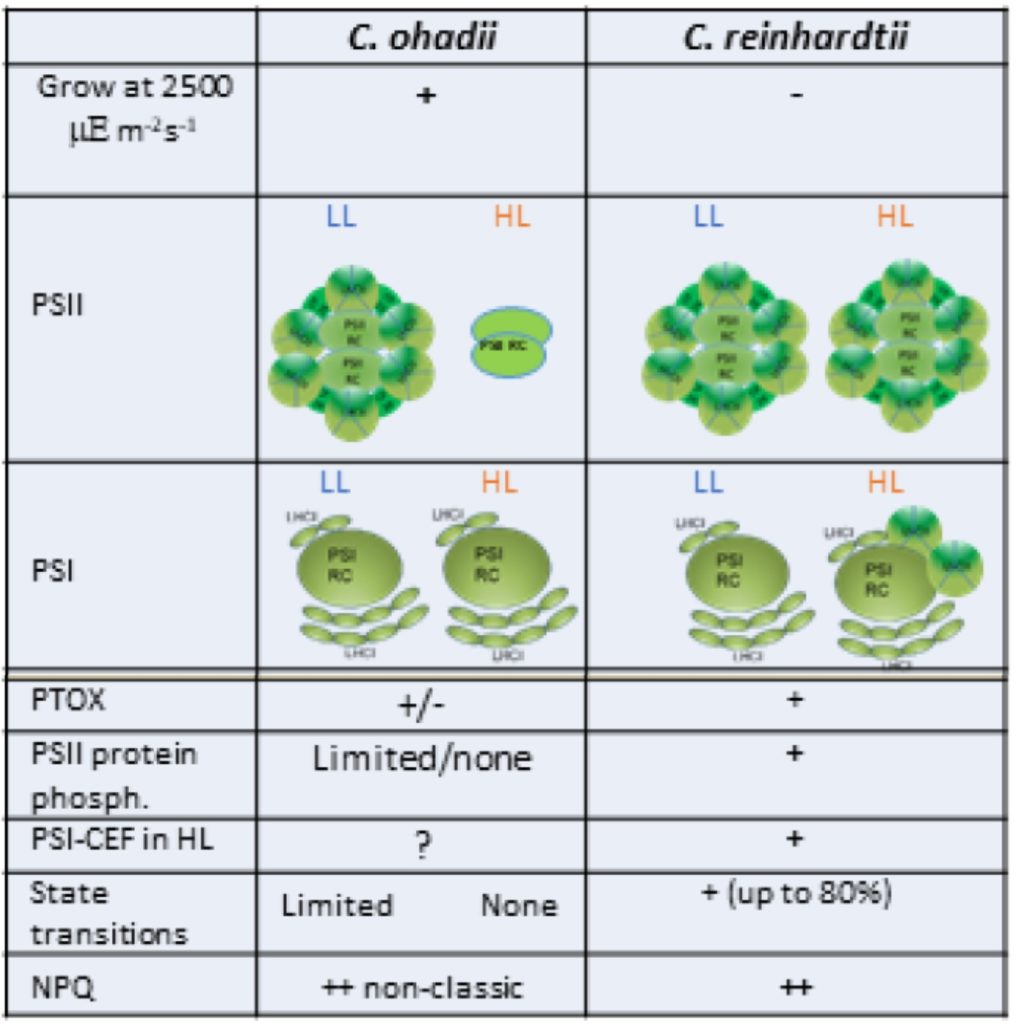
A unique photoinhibition protection mechanism in Chlorella ohadii that thrives in extreme high-light intensities
Plant Science Research WeeklyIn plants and algae, excessive light can damage the photosystem and lead to a decrease in photosynthetic capacity, a process called photoinhibition (PI). Levin et al. showed that Chlorella ohadii isolated from the Negev desert in Israel lacks or has limited capability of the usual photoprotection mechanisms…